
The Walk That Shows the Real Chongqing
You have already seen Chongqing. Raffles City floating its glass sky bridge above the two rivers, the cable car sliding across the Yangtze, the whole skyline glittering at night from a hilltop lookout. Those images are real. They are also the version of the city that fits inside a phone screen.
The real Chongqing is the one you walk into. It is vertical, layered, and quietly contradictory, and it reveals itself on foot, in the old core, where the ground beneath you keeps changing its mind about which floor it is.
This is the walk I built to show it.
Where locals look down on the famous view
We begin in Daijia Alley, a narrow alley most visitors pass without noticing. From here you look out over Hongya Cave the way locals do, from above, rather than from the river where every photo is taken. Same landmark, completely different city.
The alley itself rewards slowing down. It holds some of the best boutique cafés in Chongqing and a neighborhood hotpot house where, in the morning, you can watch the staff prepare the day's ingredients. The whole scene composes itself like a painting.
One turn off the main road
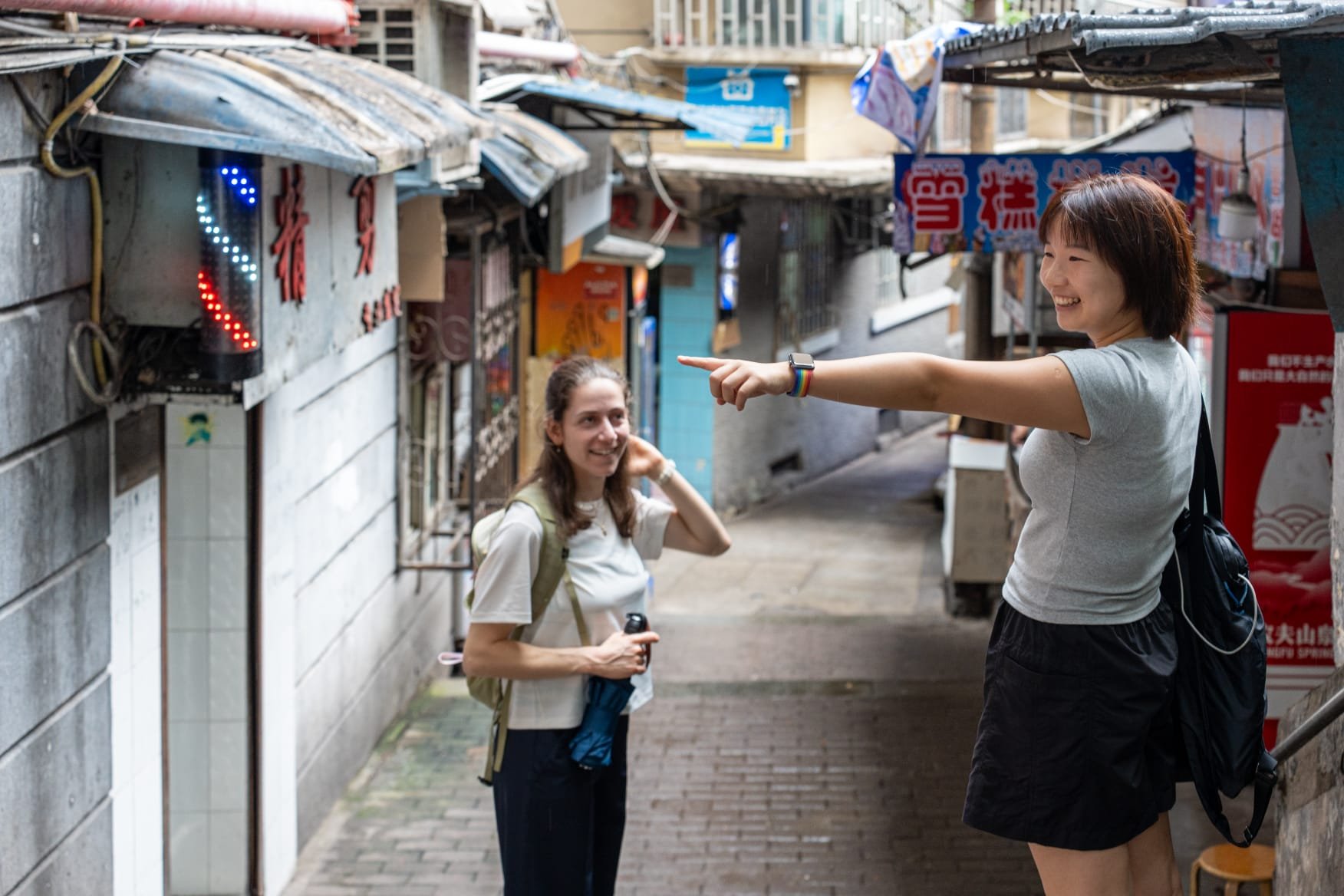
From Linjiangmen we slip off the main road and into a web of small alleys, and within a few steps the city changes texture. This is the way into Dajing Alley, where the old residents of Yuzhong still live. The traffic falls away, laundry hangs overhead, someone is cooking lunch behind an open door. You have stepped out of the Chongqing built for visitors and into the one people actually live in.
The layers of time, hidden in plain sight
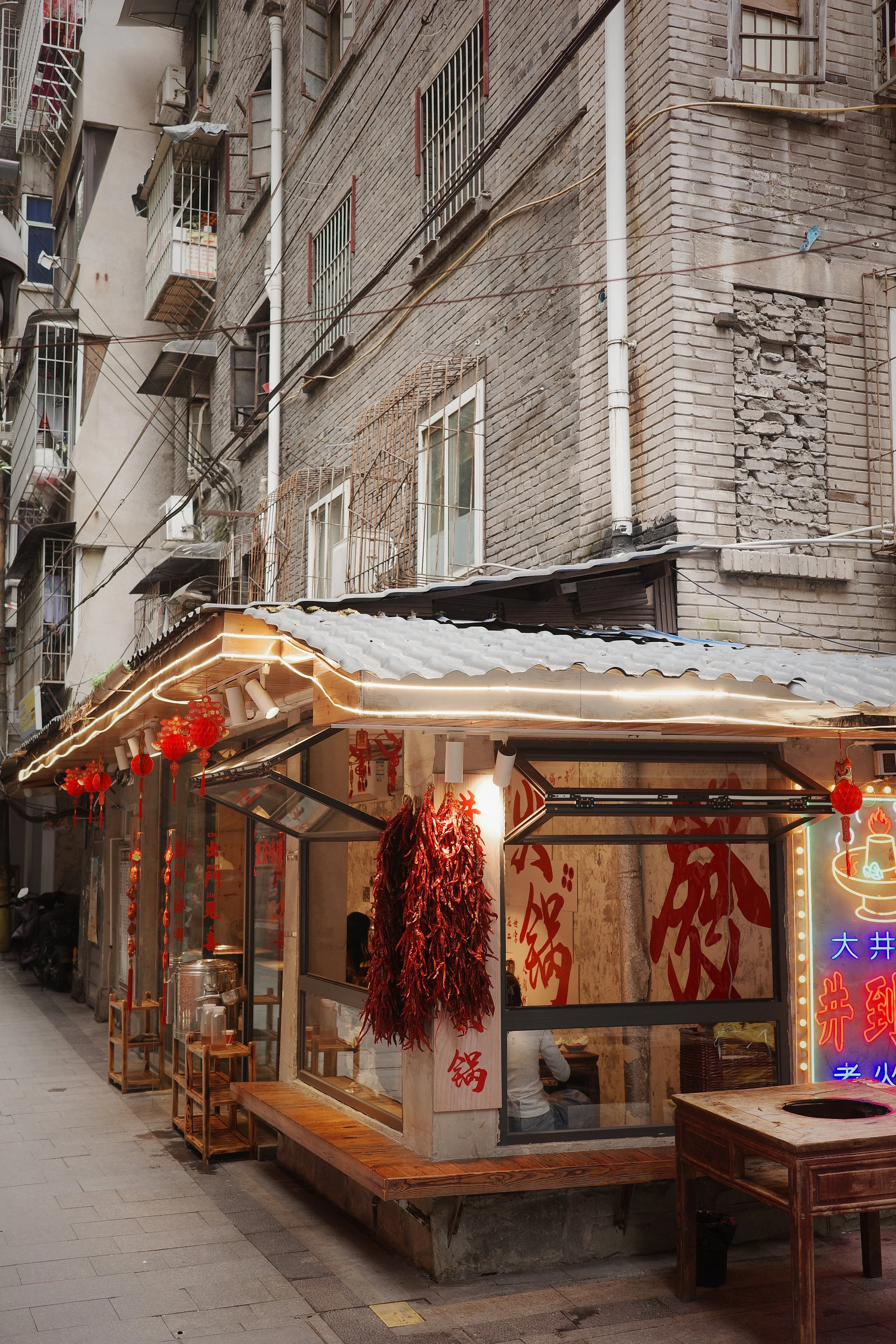
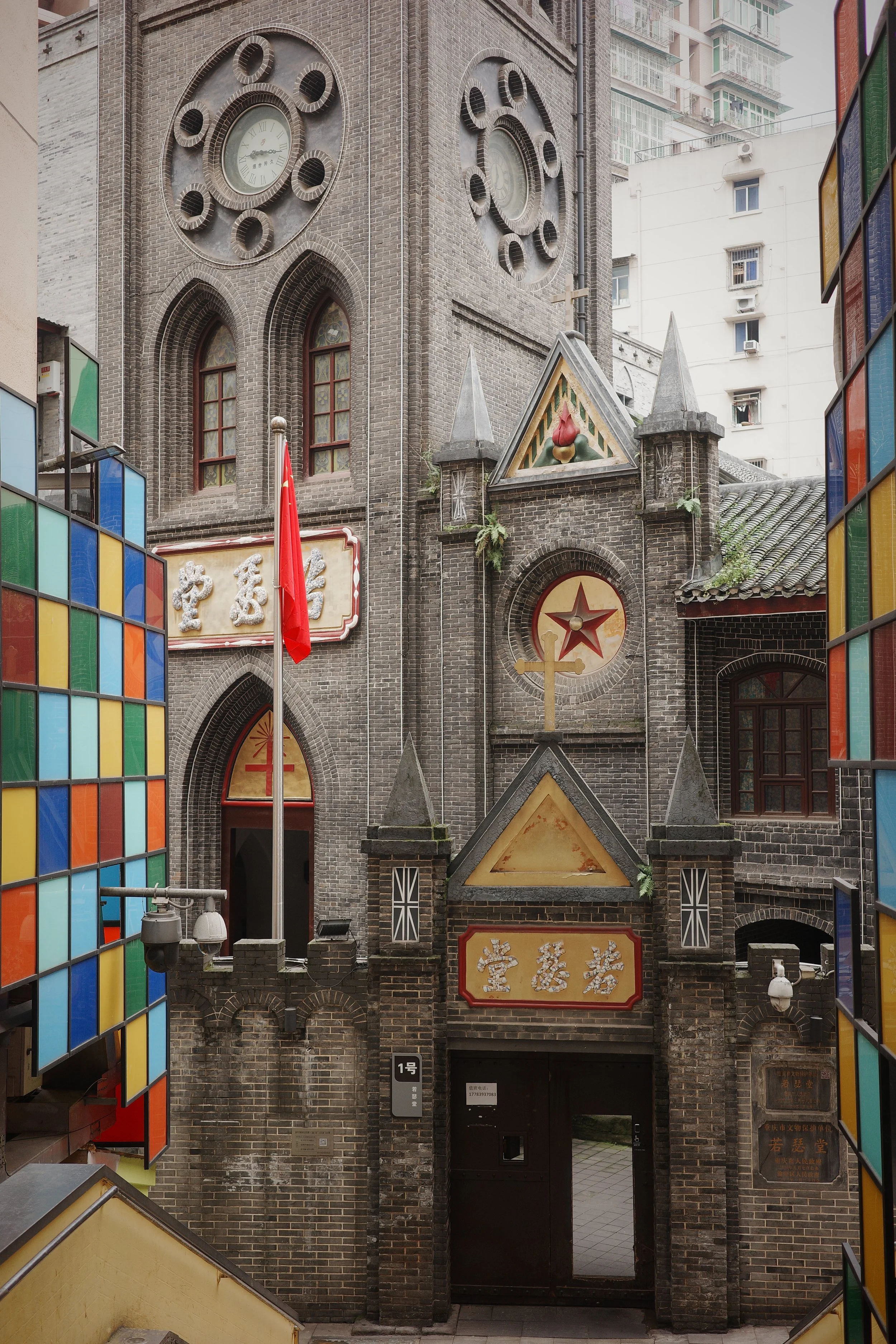
From there we go deeper into these lanes. We pass the wartime site of Chongqing's daily newspaper and reach St. Joseph's, the oldest Catholic church in the city. This gothic church now sits buried among dense residential towers, lonely and stubborn, still guarding a piece of Chongqing's memory.
Then we arrive at Tongyuan Gate, the oldest surviving city gate. Old Chongqing was built on the Yuzhong peninsula with seventeen city gates, nine open and eight closed, a layout that served both feng shui and the wartime strategy of confusing an approaching enemy. “Tongyuan” means the gate toward faraway places. It was the only gate facing land, and beyond it once laid an unmanaged field of wild graves.
In the early twentieth century, the mayor Pan Wenhua decided to break the limit the gate had always marked, extending the city westward. He invited a Tibetan Buddhist living buddha to build the Bodhi Vajra Pagoda just outside the gate, to console the spirits whose graves had been moved. That pagoda still stands in the center of downtown today, hidden under layer upon layer of newer buildings. Many people walk past it every day without knowing it is there.
A table in the middle of the day
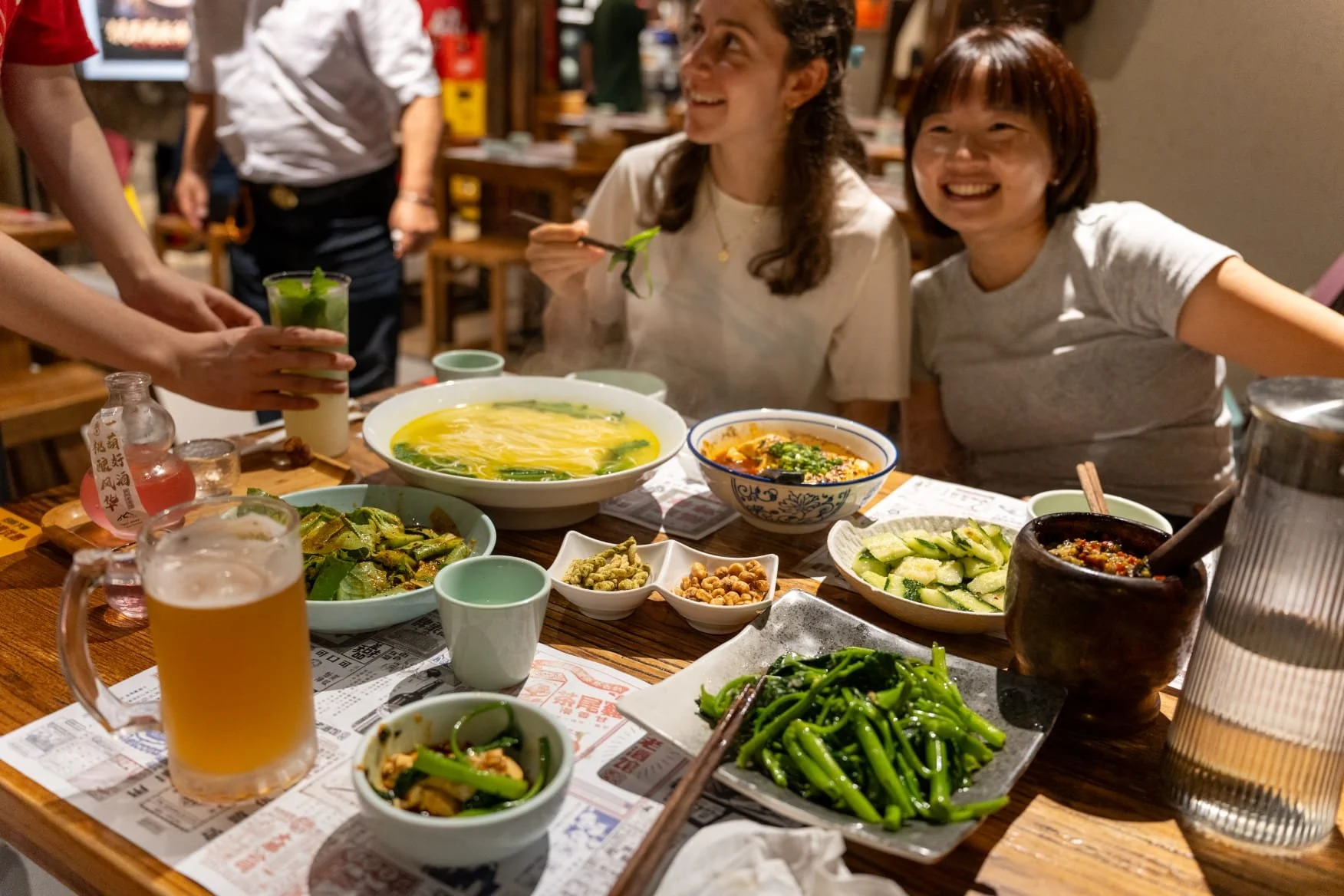
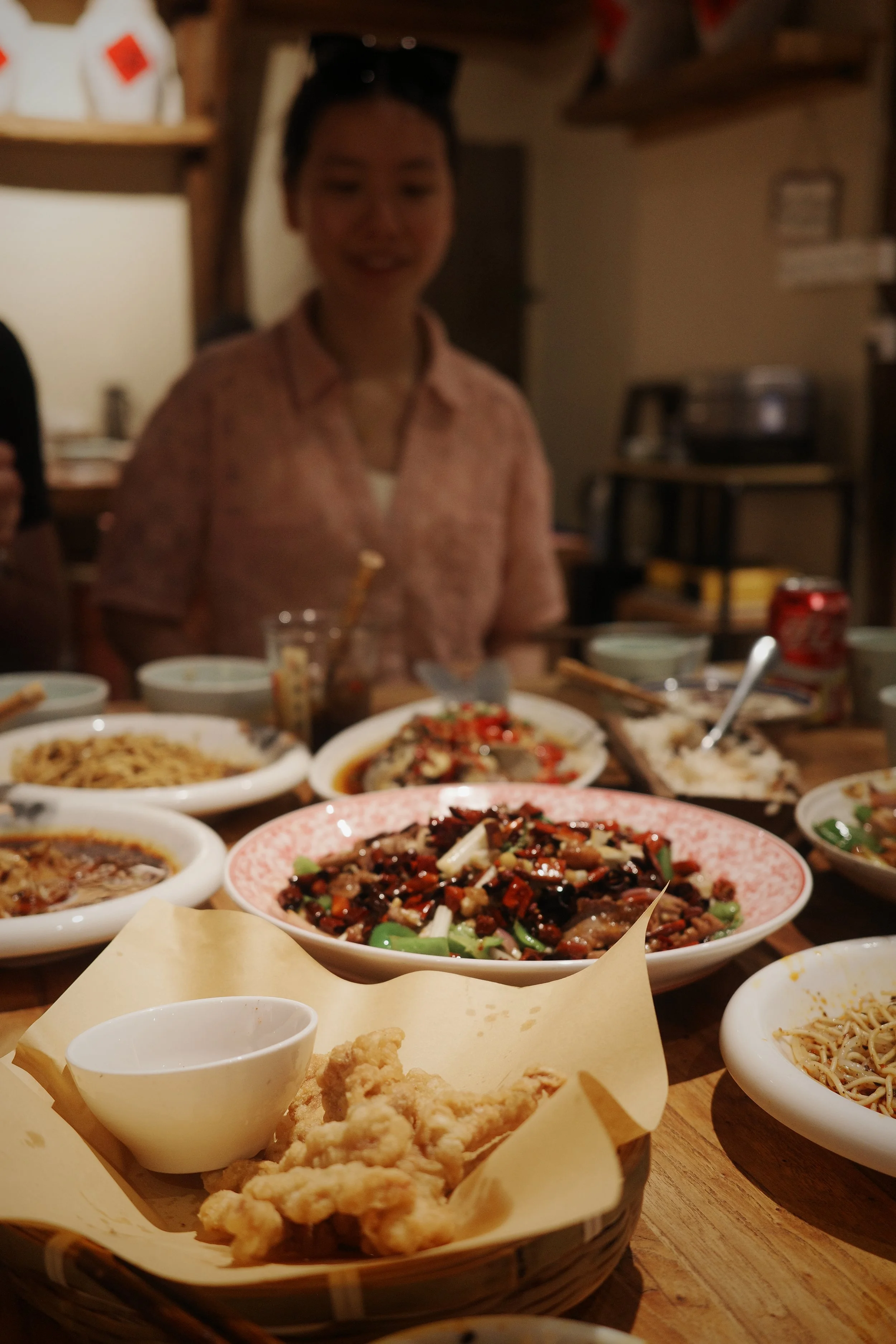
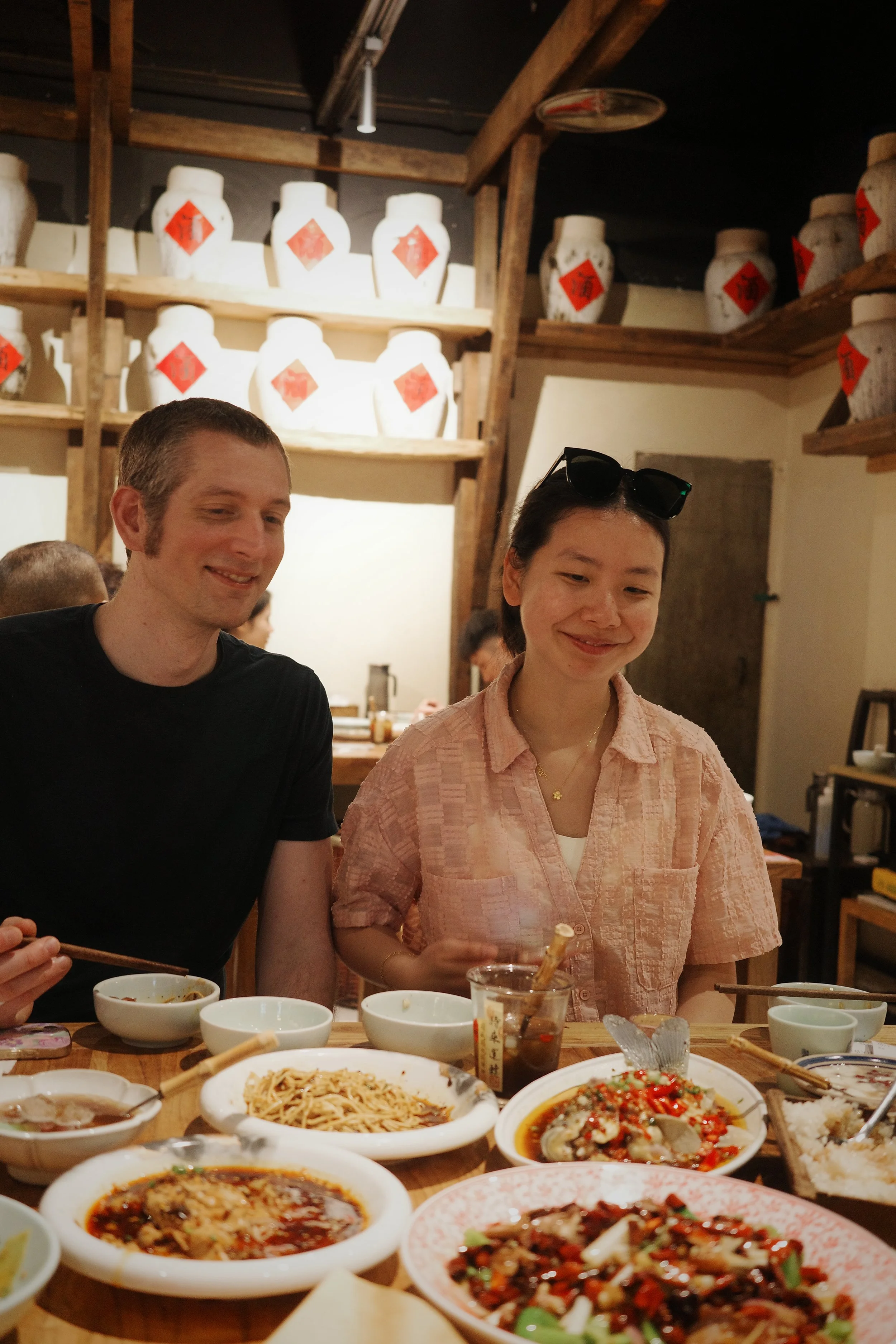
By midday we sit down at a tavern locals love, the kind of place that pours its own homemade fruit wine and serves Chongqing food the way it is meant to taste. This is where the day breathes.
The upper city, the way it actually lives
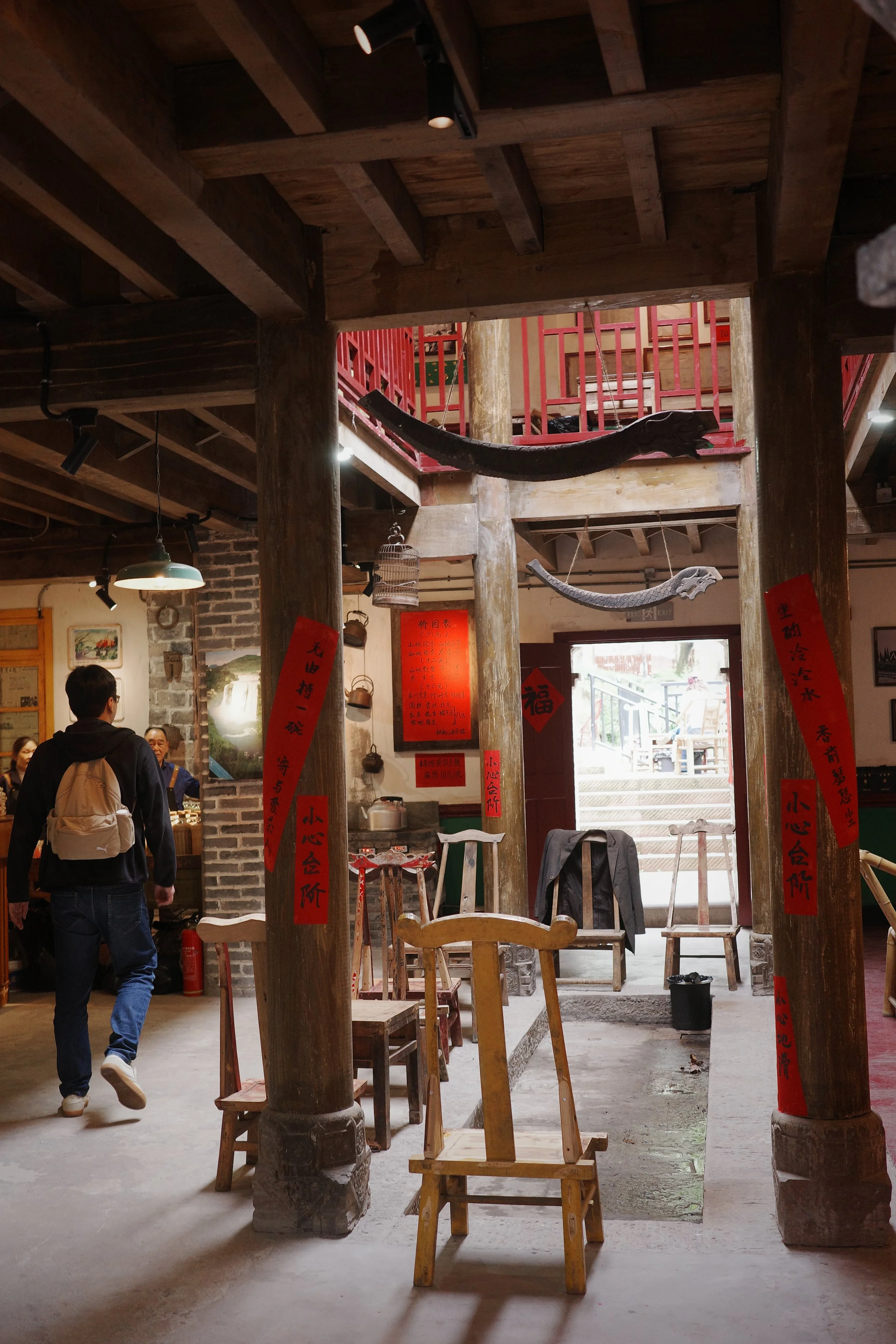
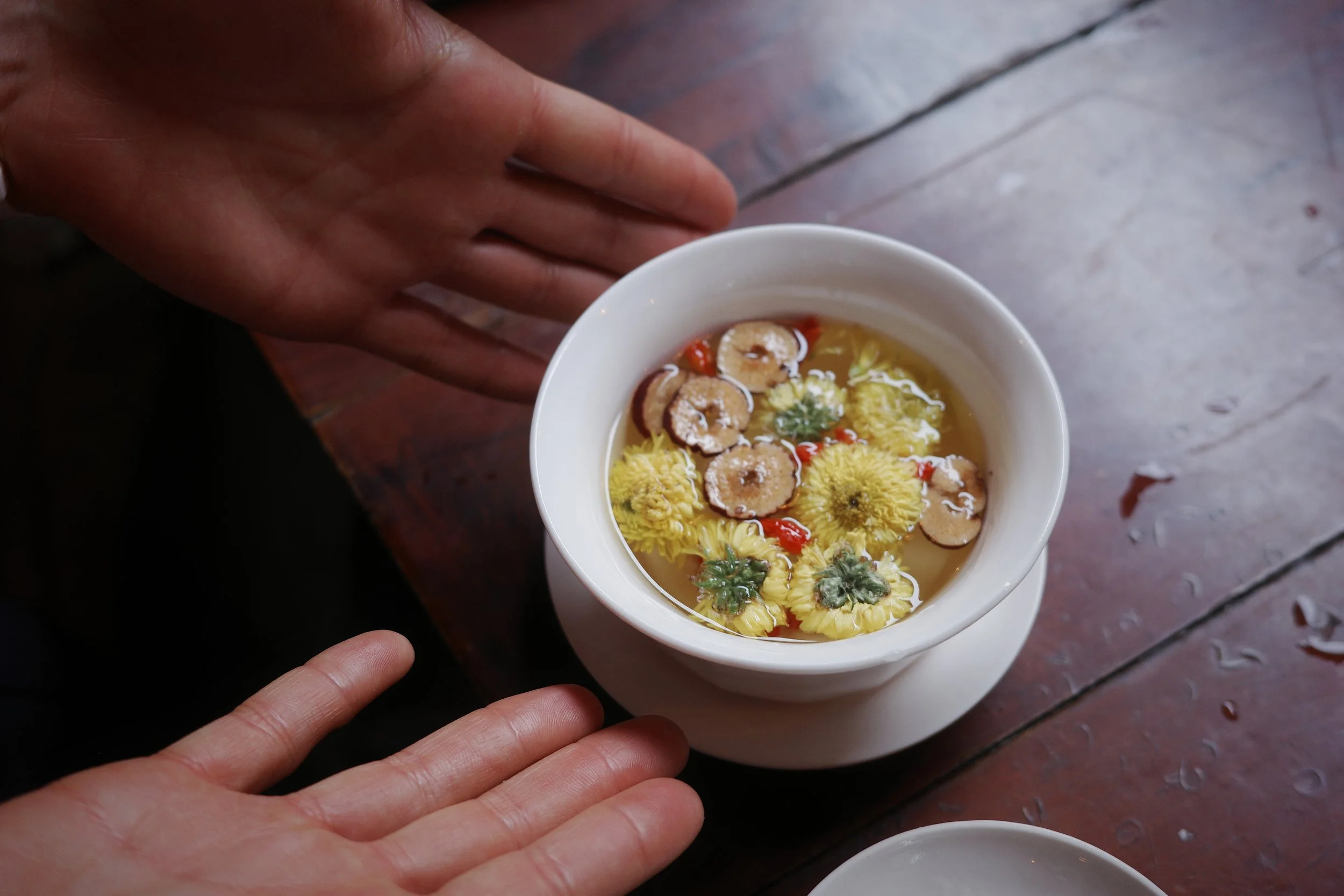
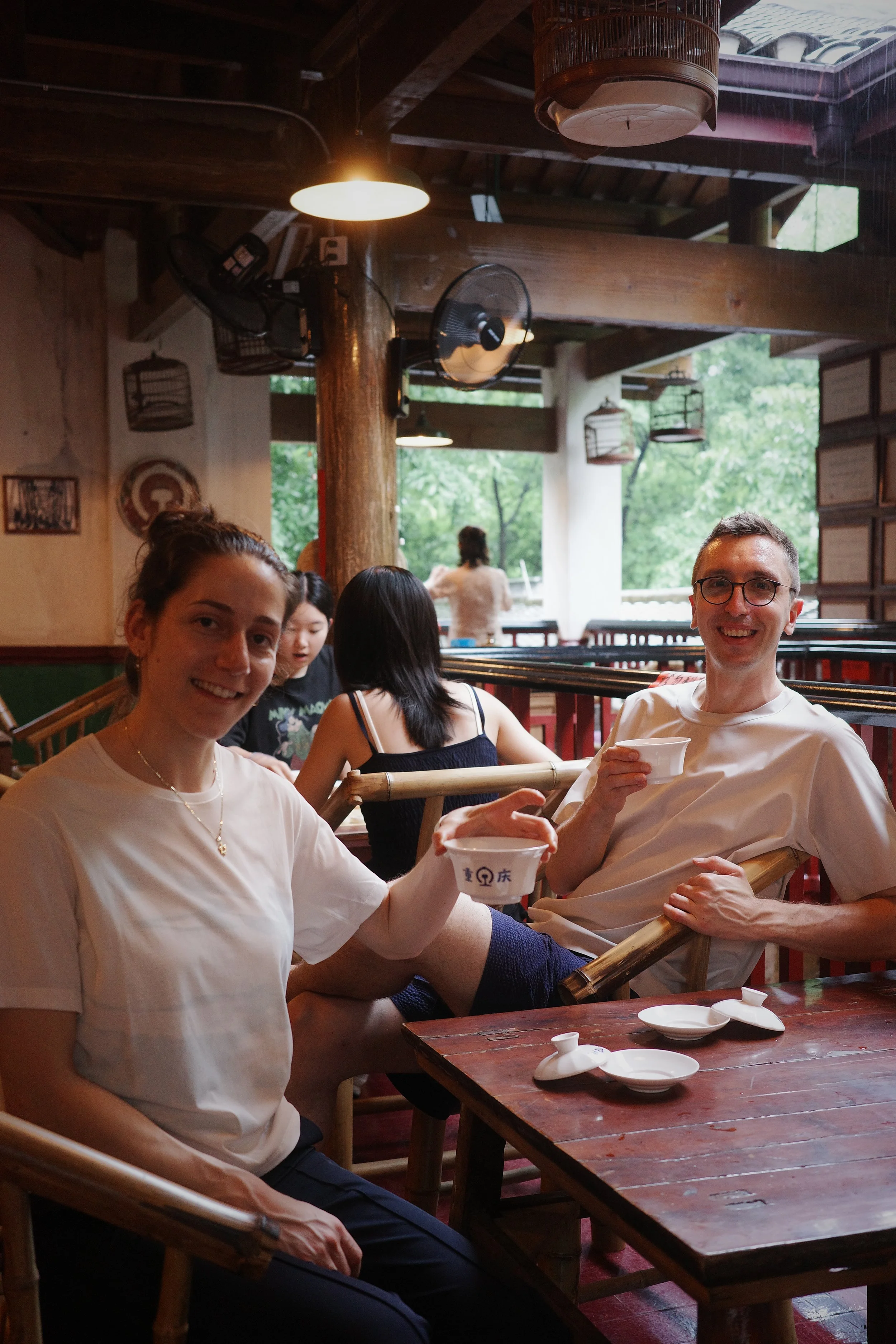
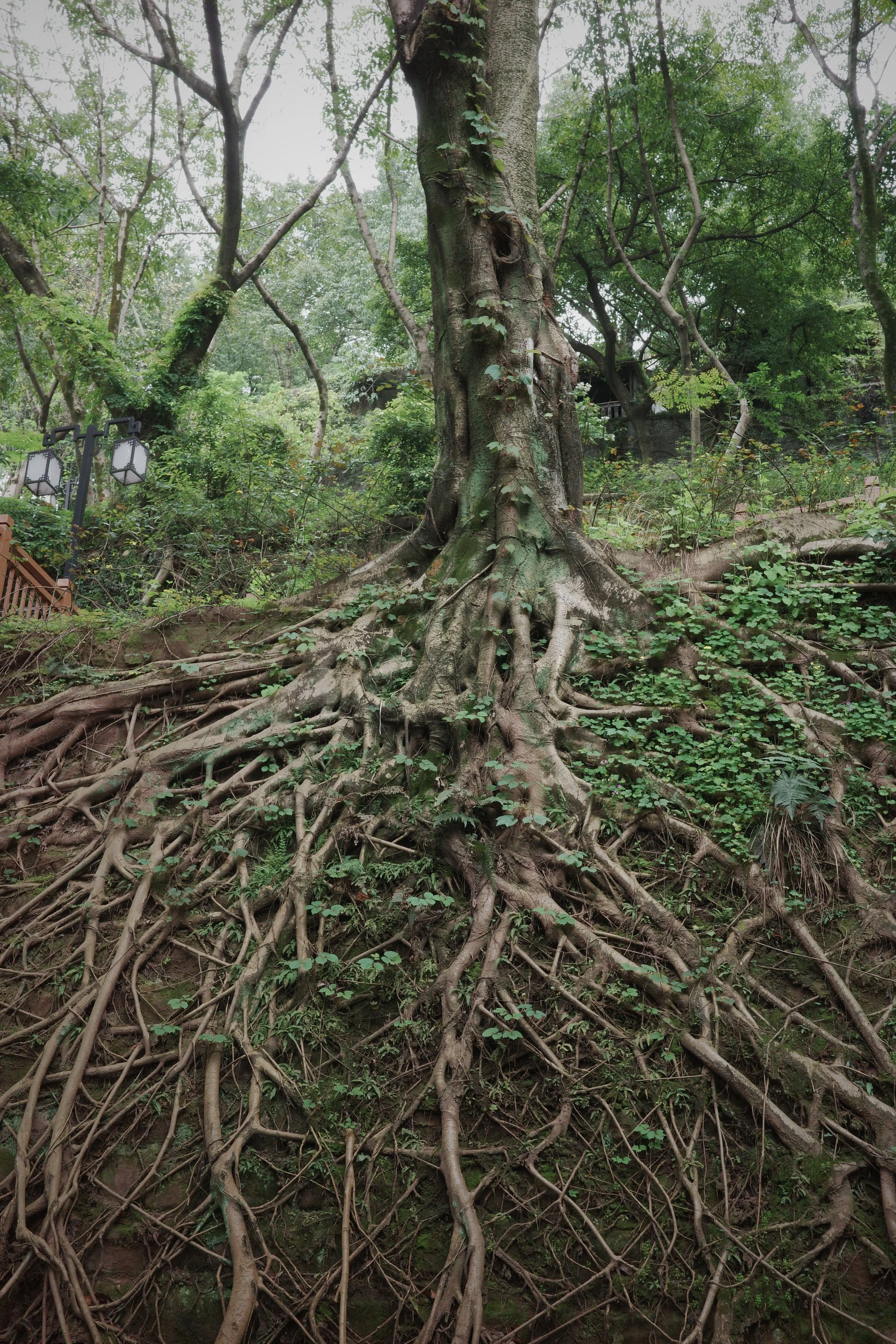
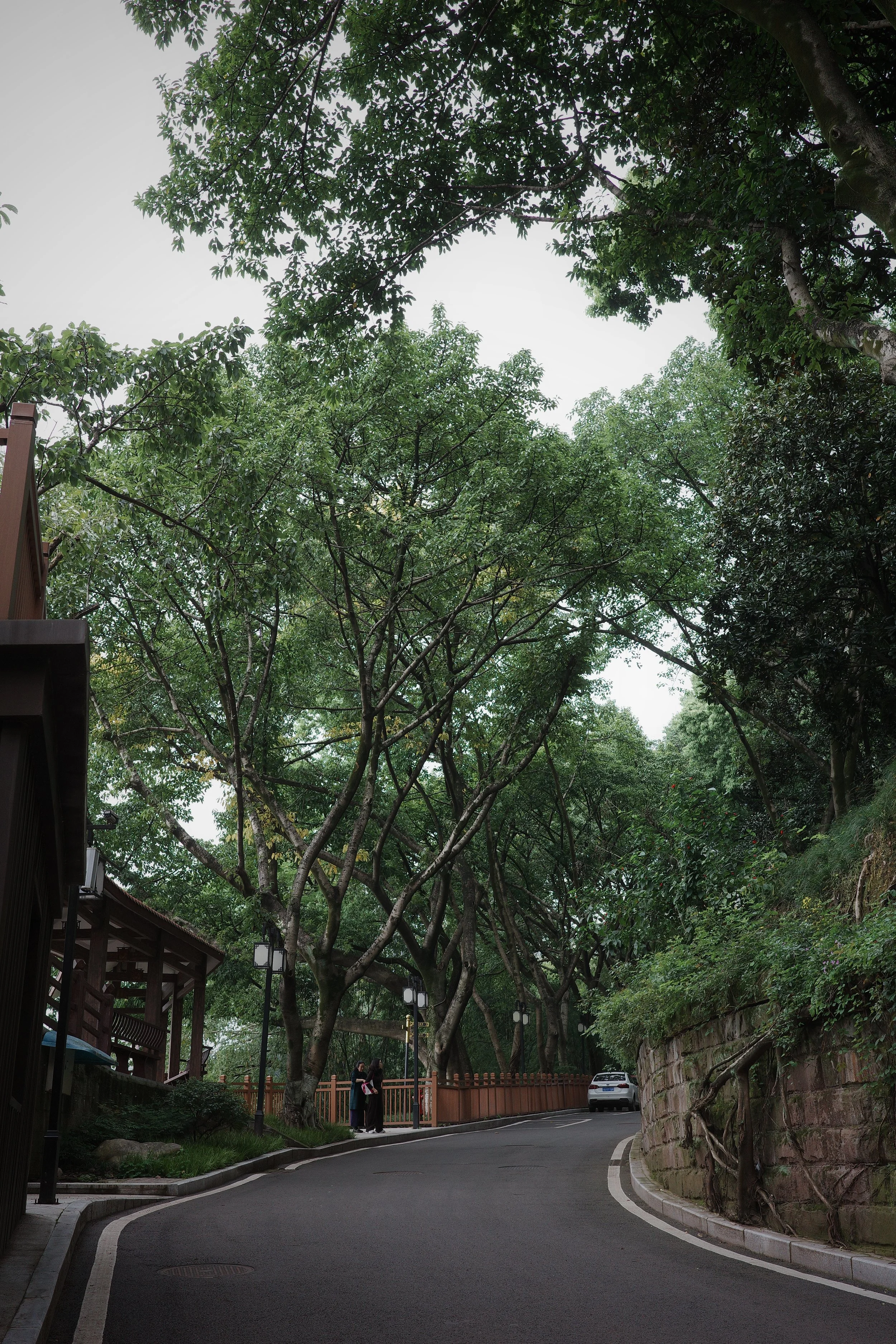
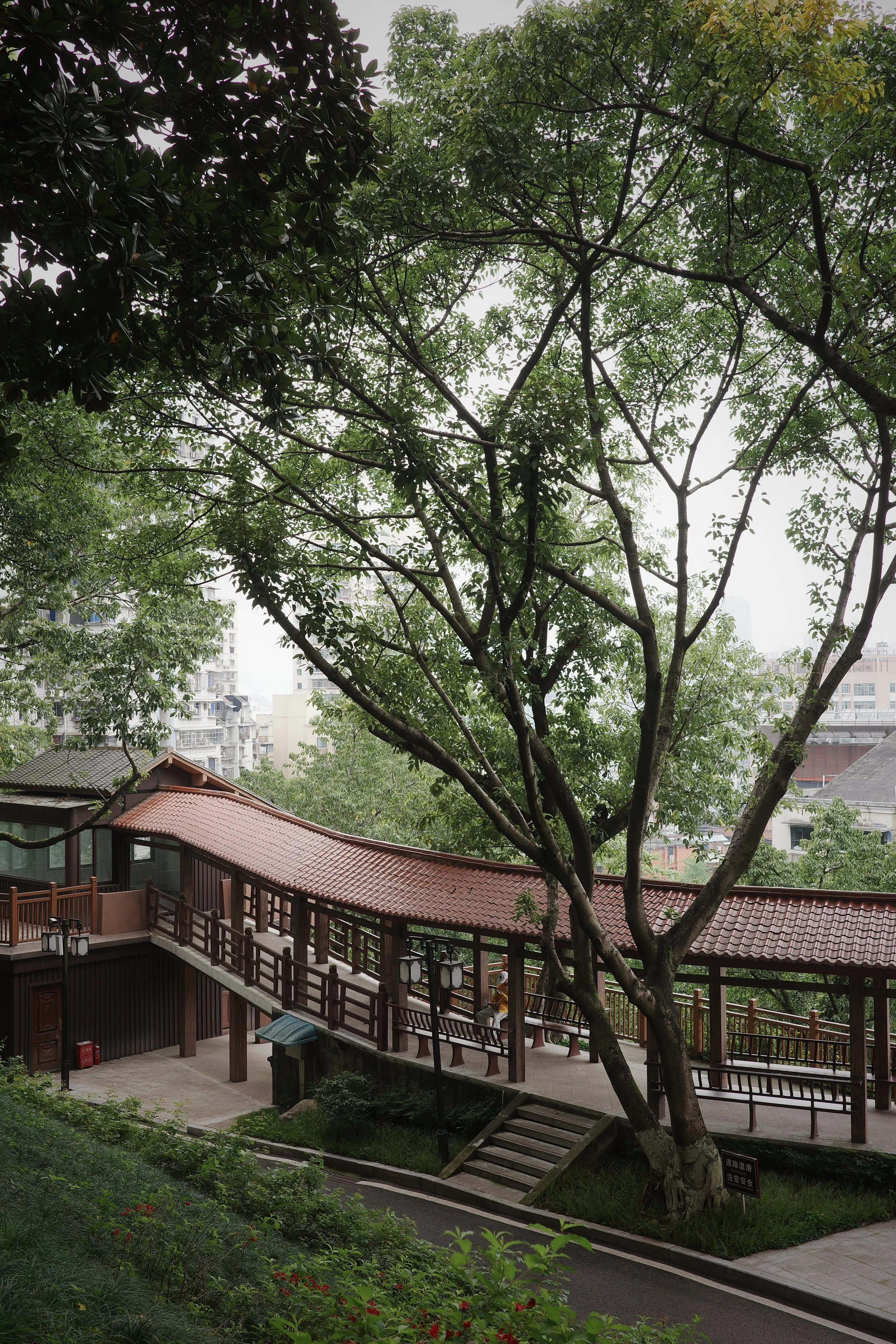
In the afternoon we climb into Pipashan Park, a green oasis hidden in the center of the city, and look out over the full sweep of Yuzhong. Up here you can watch how people actually live. In the old teahouse below sits the history of the Chongqing - Chengdu railway, and the traditional Chongqing lifestyle of spending an entire afternoon on a single cup of tea.
Down into the lower city
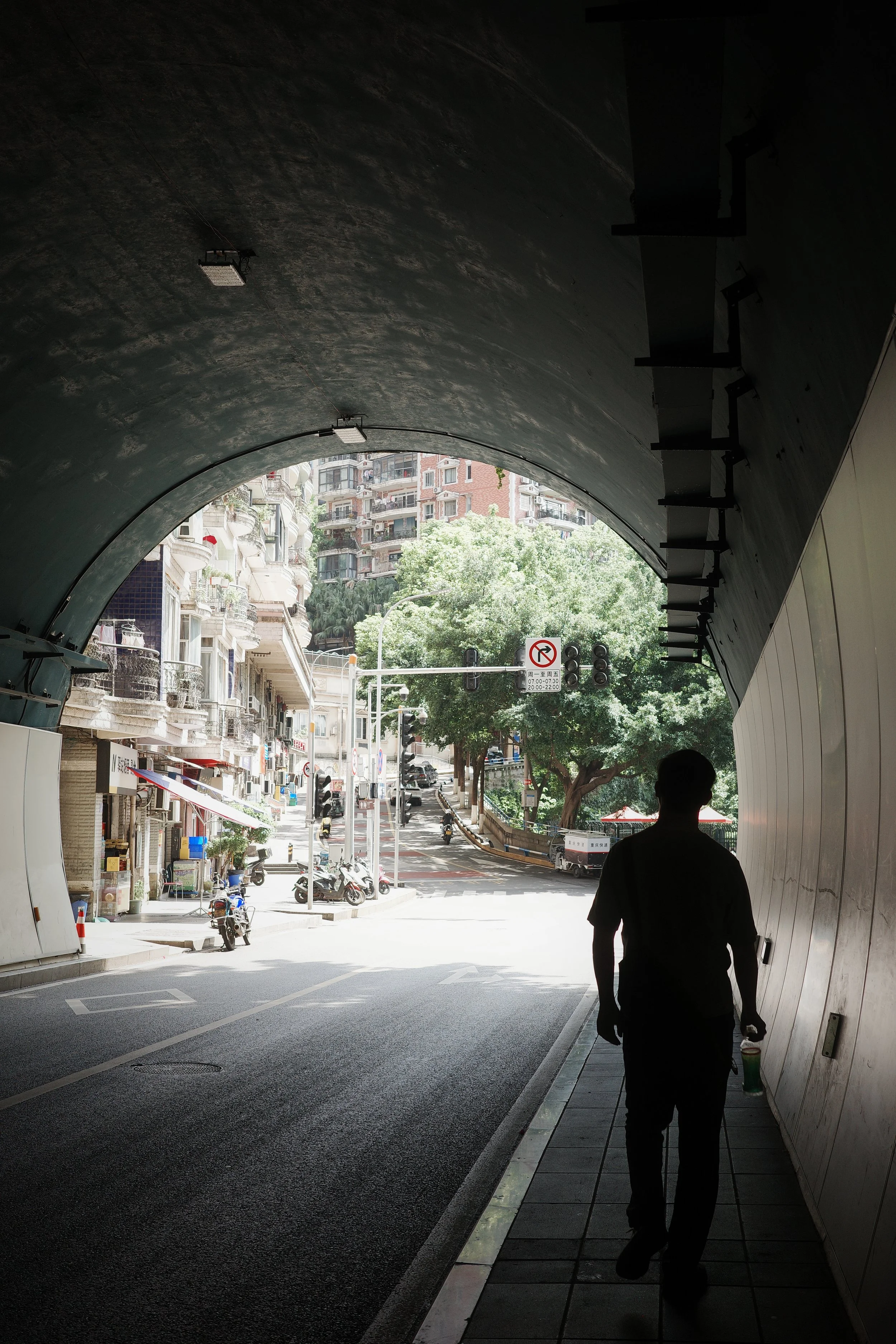
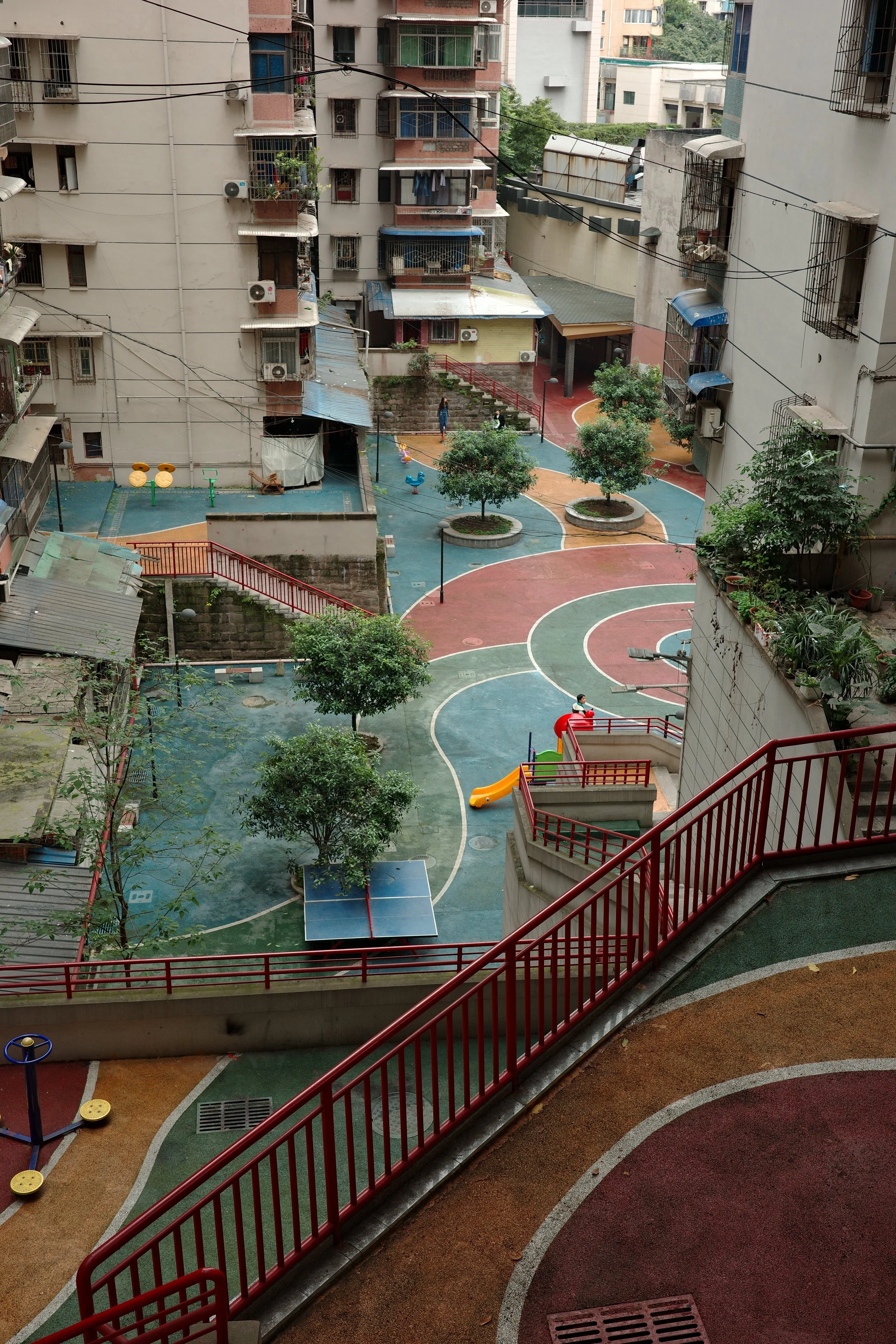
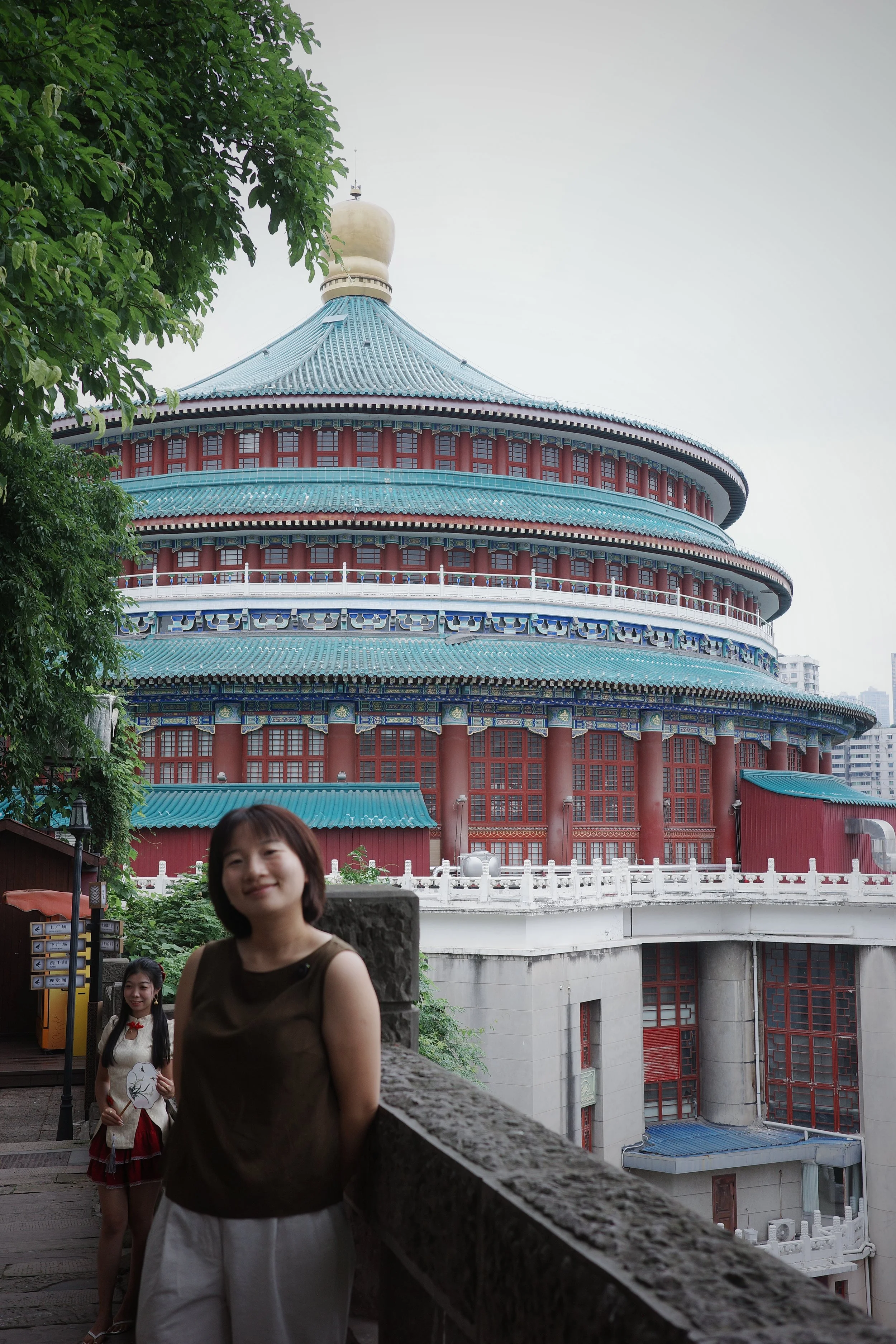
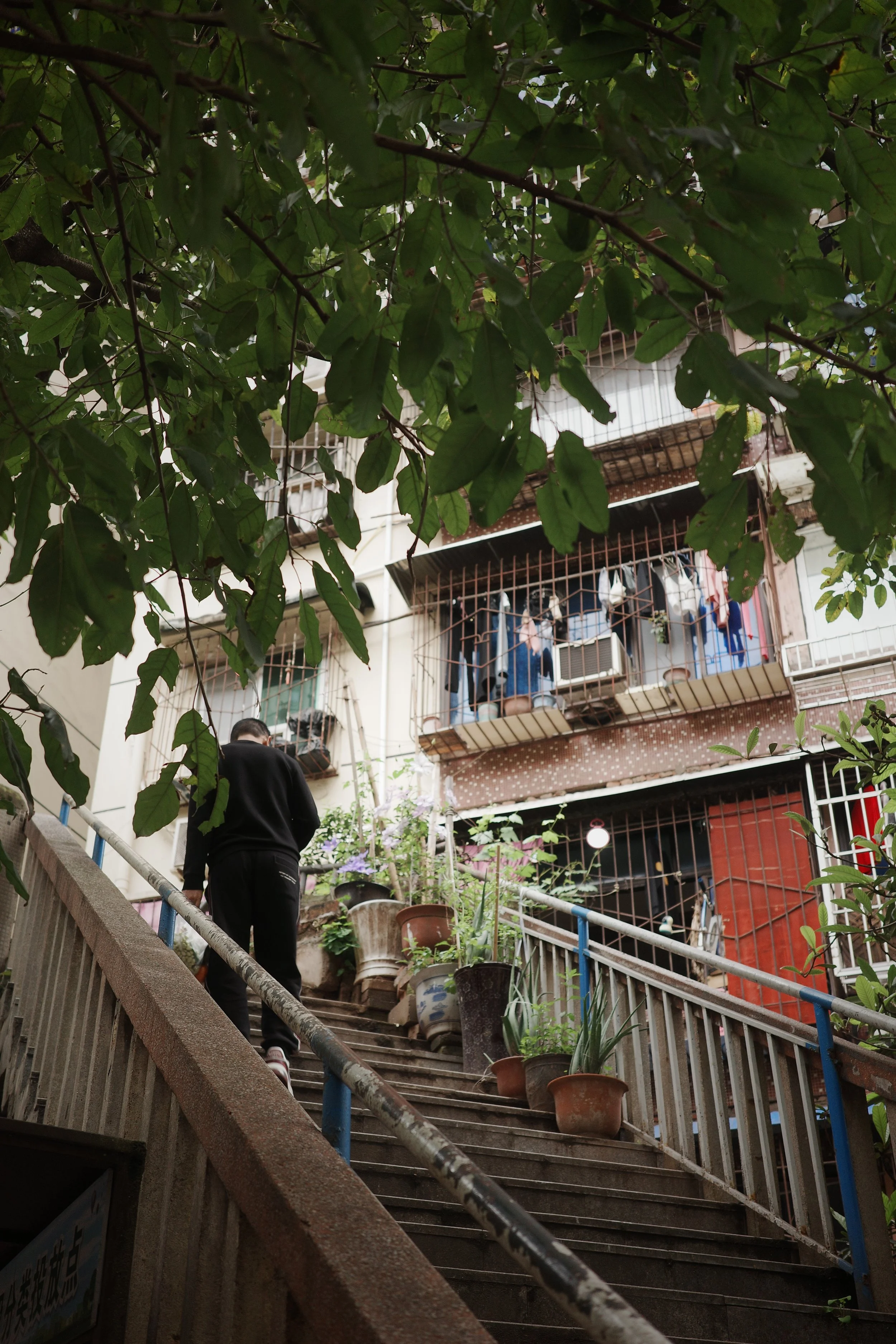
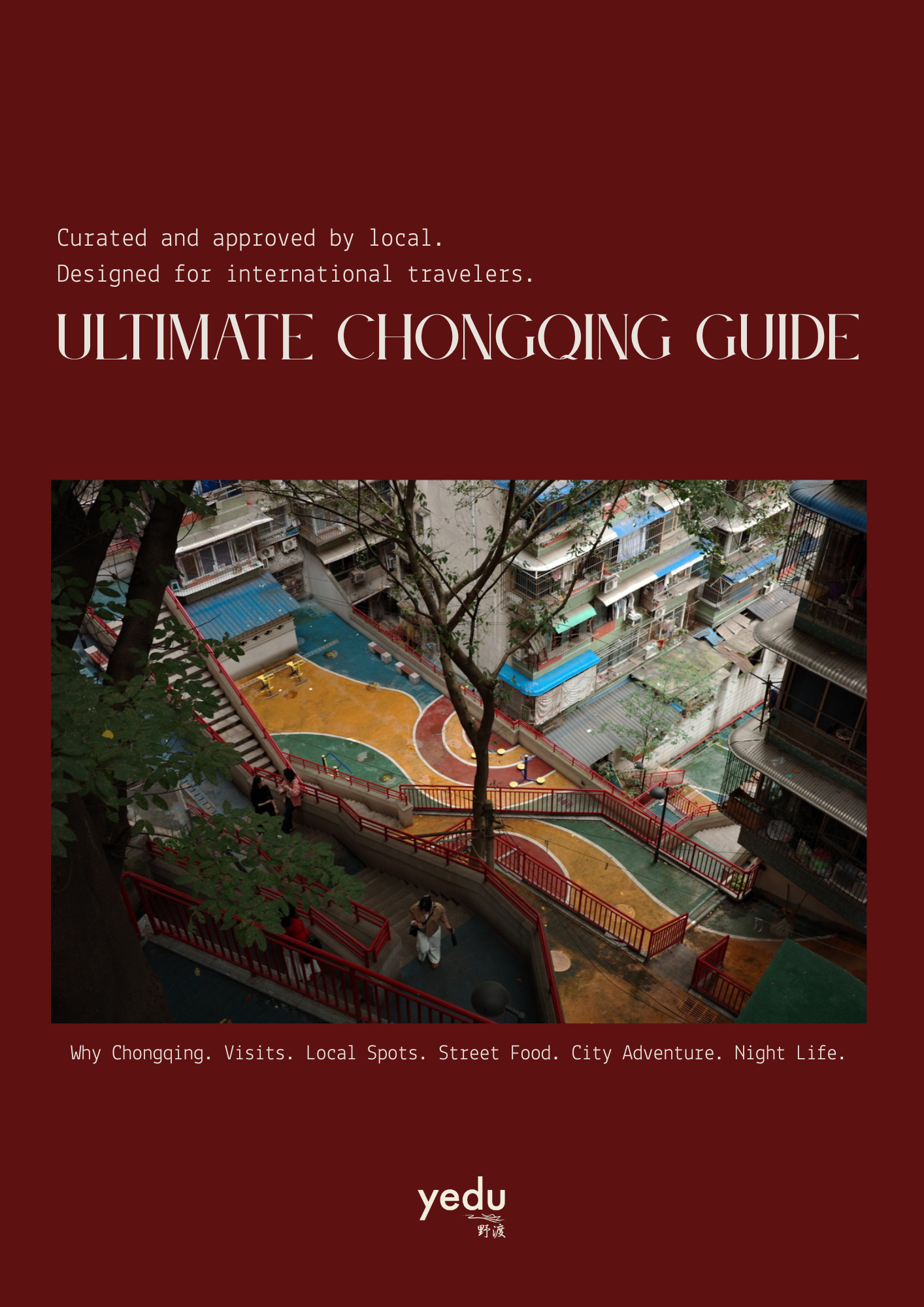
We make our way into the lower city through the dreamcore residential blocks of Linhua Road, where you can see how Chongqing people carve their own passages and living spaces out of a three dimensional city. Through a tunnel, from the height of Ma'anshan, we look down on one of the most striking buildings in the city: the People's Auditorium, built in 1954 and still hosting performances and large gatherings today.
Where the city shows all its levels at once
The day ends along Zhongshan Fourth Road, one of the most beautiful streets in Chongqing, where we slip into the Zengjiayan walkway that locals keep to themselves. You step off a busy downtown street onto a green path along the river, and here you can see the city running on every level at the same time: the walkway under your feet, the road beside the water, the monorail lifted above it, the apartments overhead, and the traffic moving on the far bank of the Jialing.
In a single day, from one riverbank to another, from the upper city to the lower, you read several centuries of the story behind this magical, impossible place.
This is Chongqing at its most real. This is the Chongqing you cannot Google.
Yedu's full-day walk runs Tuesdays, Thursdays, and Saturdays, for small groups only. If you would like to see this Chongqing in person, you can find the walk here.
New to China? Start with the free China First Timer Kit. Or just write to contact@yedutrip.com if you have any questions about this city, I personally check and reply every single message.
Seven hours, one local, the full shape of the mountain city.
Chongqing is a city best understood on foot. The hills, the staircases, the neighborhoods stacked on top of each other - none of it makes sense from a map. It only clicks when you're in it.
A full day gives you the whole arc: old lanes in the morning, a proper local lunch, and by afternoon you're on a ridge watching the Yangtze bend around the city. We walk through residential steps, hillside temples, ancient trials, and viewpoints only locals know. No rushing, no script, just a discovery day with enough time to actually read a city.
Come with good shoes and curiosity. Leave understanding why Chongqing doesn't look like anywhere else in China.