
3 Days in Chongqing: The Itinerary I'd Give a Friend
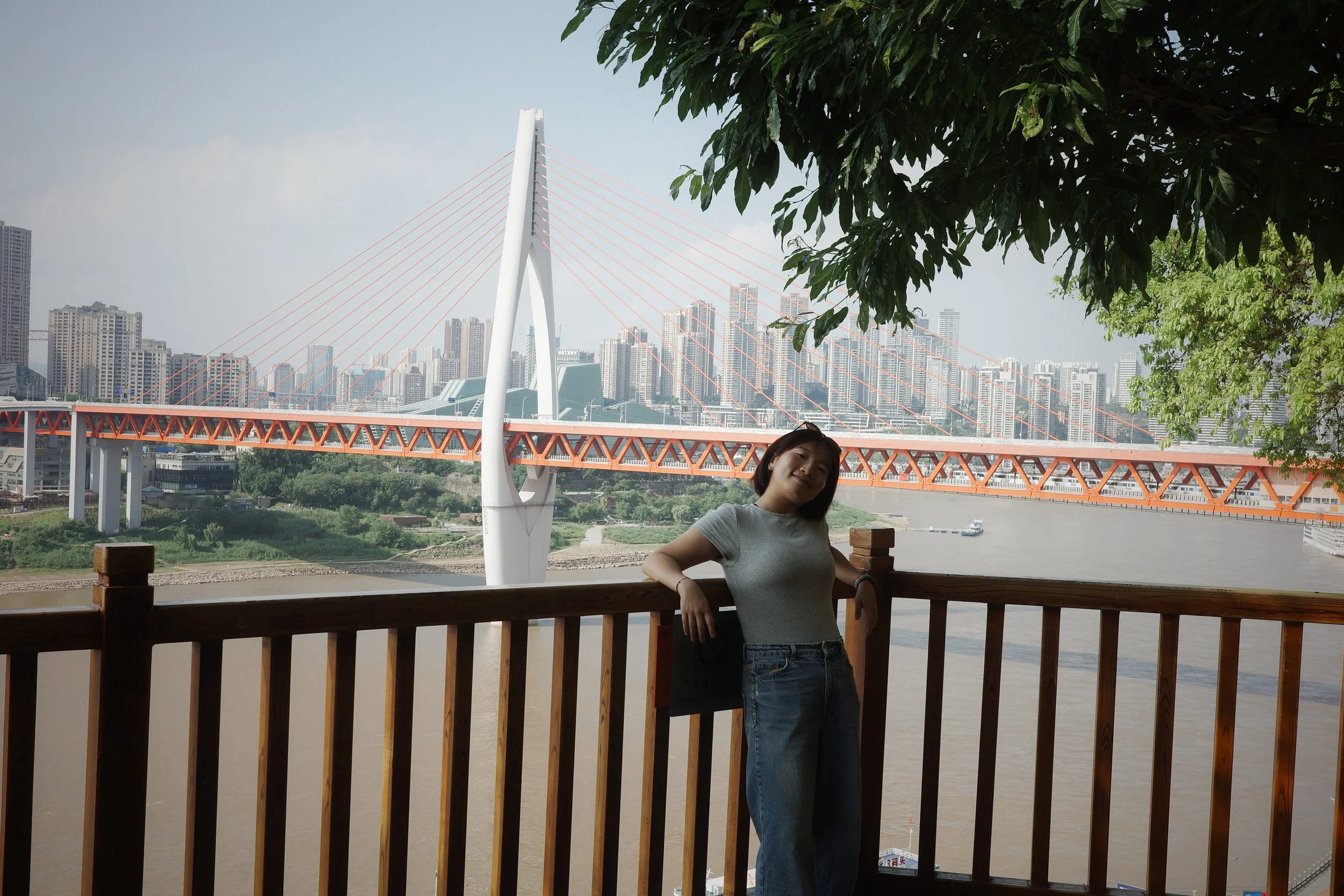
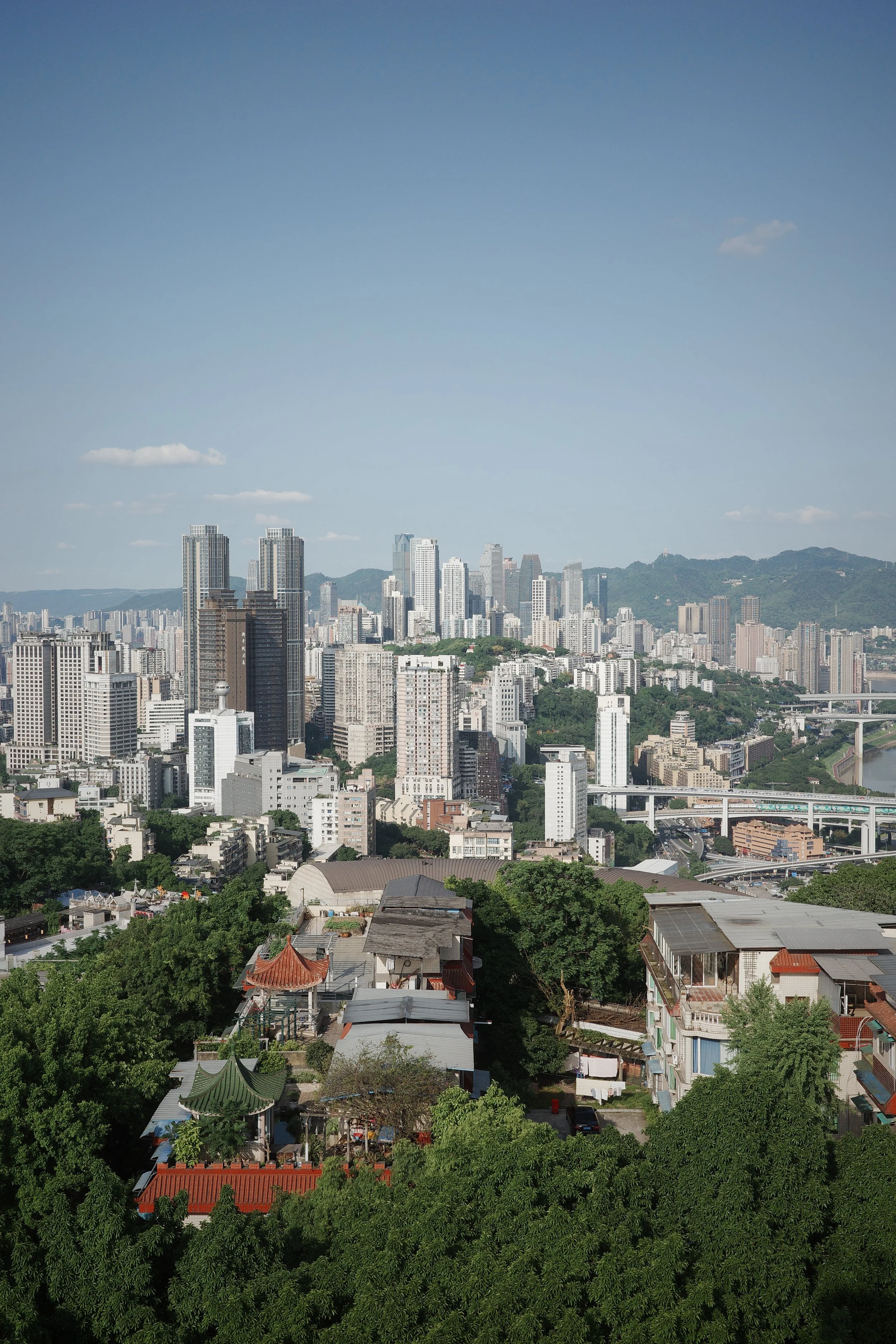
View from Daijia Alley, Qiansimen Bridge and Grand Theatre in the background
I grew up on these slopes. Then I left for ten years (Hong Kong, Shanghai, Paris) and came back with both a visitor's eyes and a local's memory.
This is the three days I'd actually plan for a friend coming visit. Not the algorithm's version of Chongqing, the authentic one.
A quick thing to understand before you go: Chongqing is vertical. It folds over two rivers, stacks whole neighborhoods on top of each other, and hides a coffee shop one floor below a temple. People call it 8D for a reason. Three days is enough to fall for it. It is not enough to know it.
Here's how I'd recommend you spend them. Day 1 is for the icons. Day 2 is to actually feel the place. Day 3 is yours to choose for a day trip.
Day 1: The Classic and the Viral
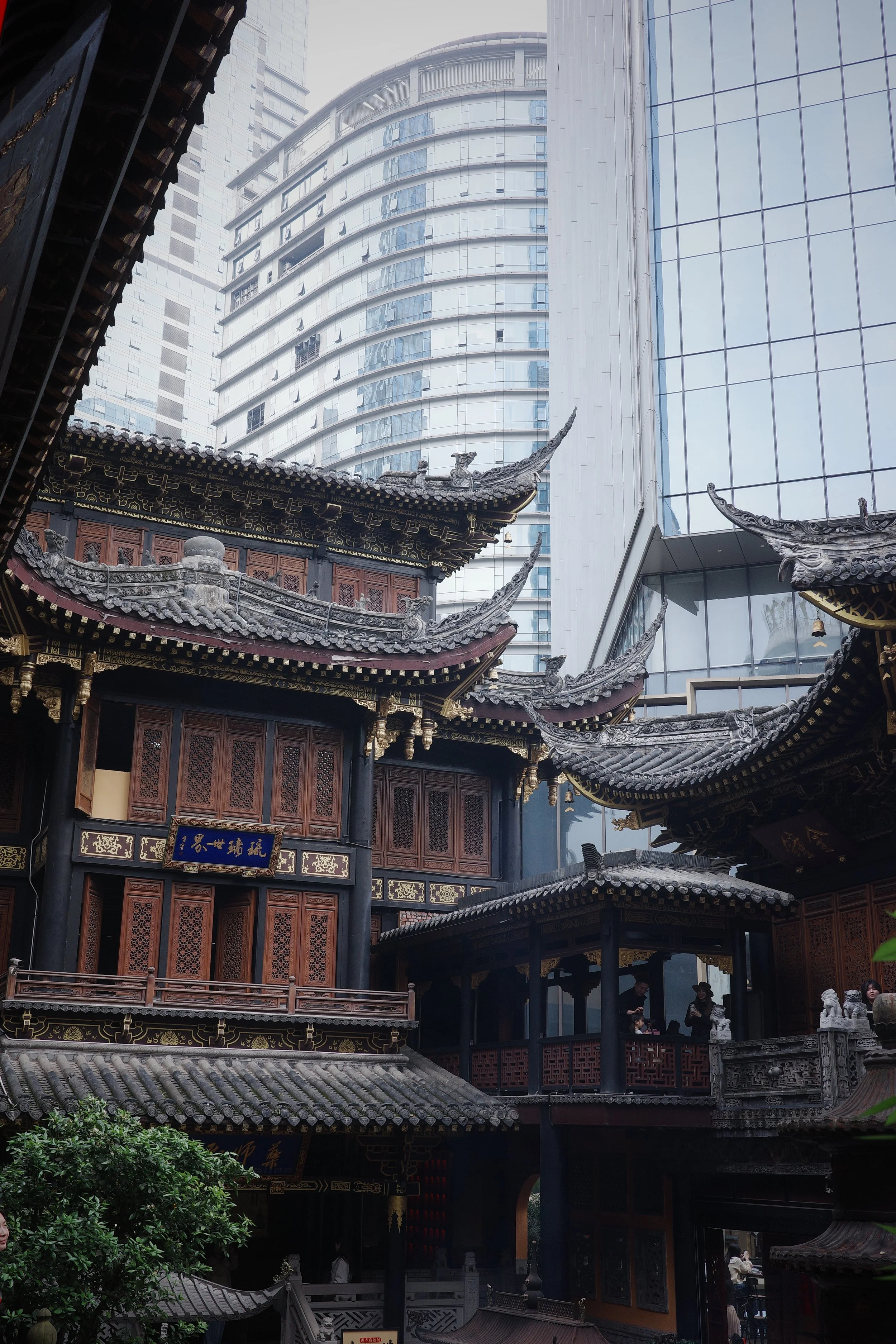
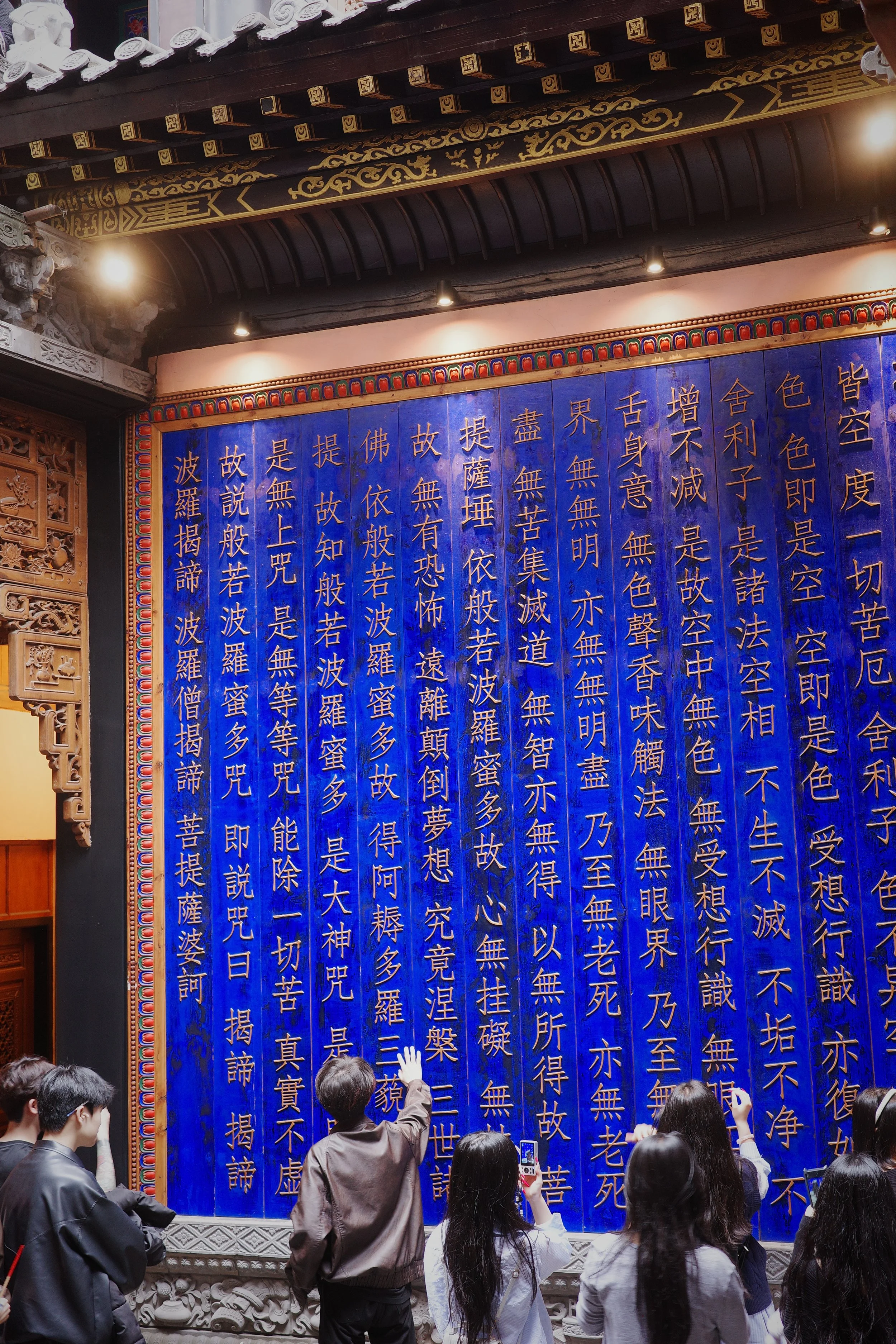
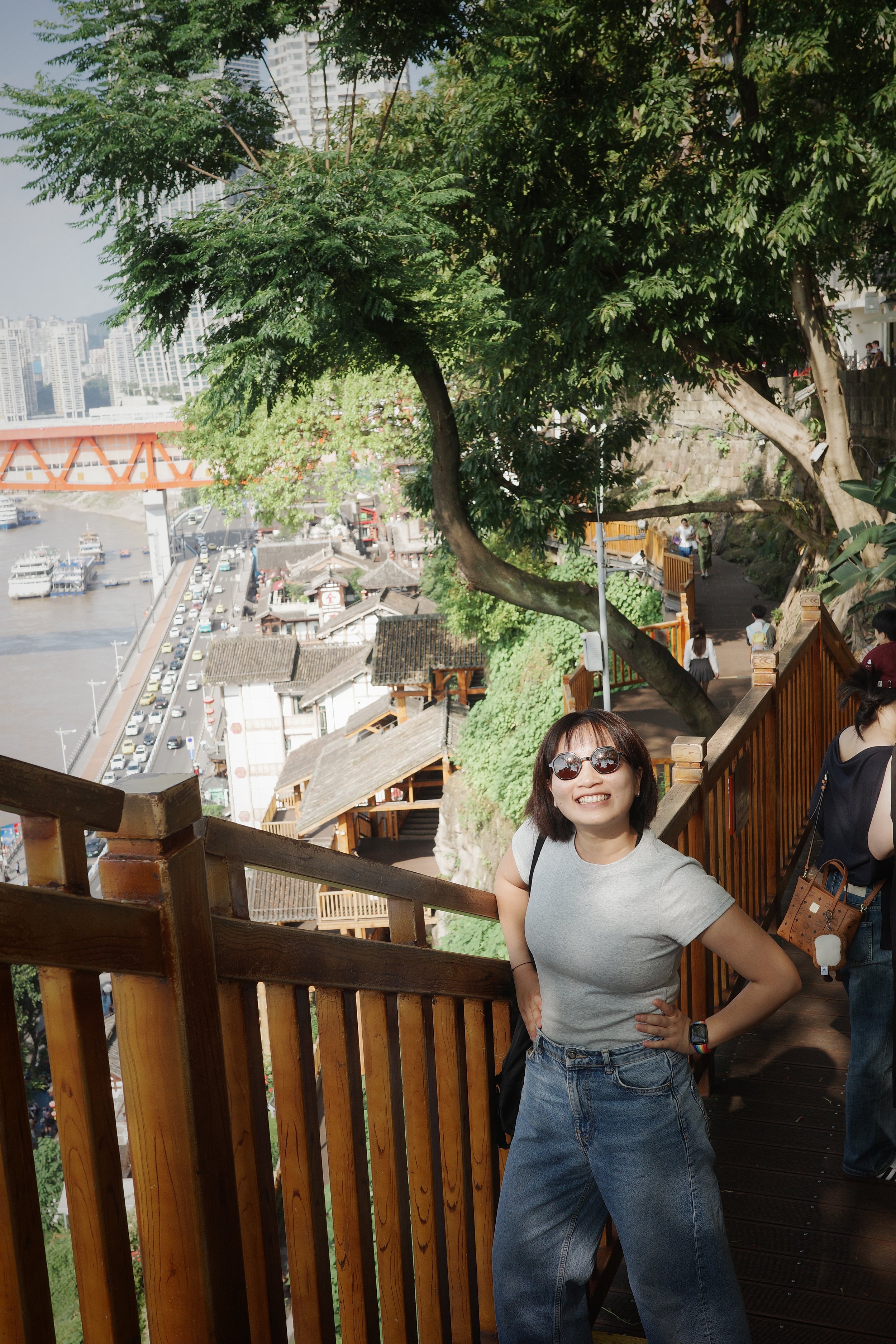
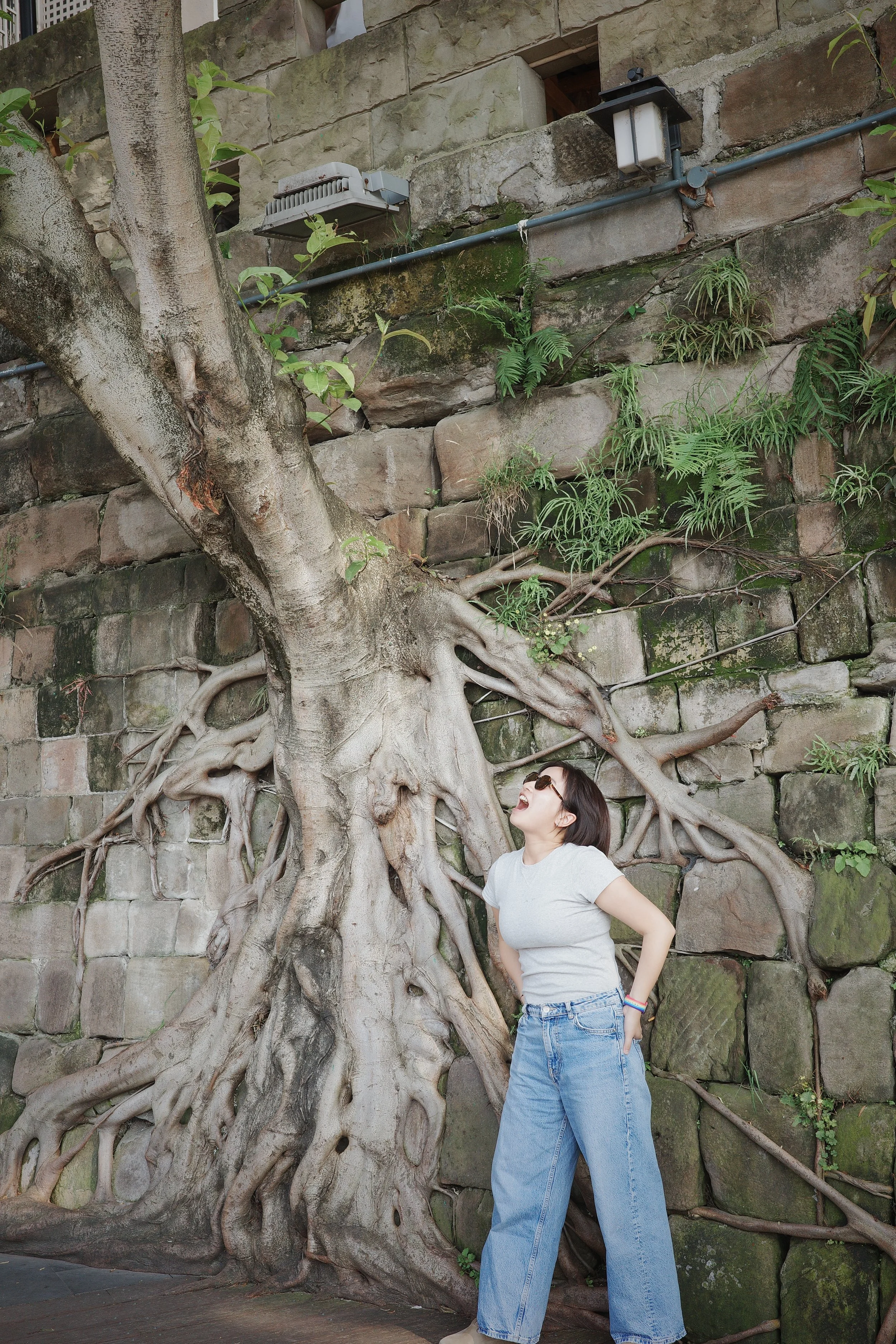
Old city in the morning, photo spots in the afternoon. It's a full day, so treat the last stop as optional if you'd rather slow down.
10:00 Luohan Temple 罗汉寺.
Start at the heart of the city. This Buddhist temple goes back to the Northern Song dynasty (1064), rebuilt in the Qing (1885), and today it sits swallowed by glass towers. That contrast is the whole point: walk in and you see yesterday's Chongqing and today's reflecting off each other. Photographers love it for exactly this reason, and once you stand in the courtyard with skyscrapers rising behind the old eaves, you'll understand why.
11:00 Daijia Alley 戴家巷 for a morning coffee.
A riverside lane most visitors never find. It's the best place to look out over Hongyadong, and it quietly holds some of the best coffee and hotpot in the city. Slow morning territory.
12:00 Kuixinglou 魁星楼 (yes, that viral spot).
The one TikTok made famous, the proof that Chongqing is 8D. You think you're walking in at ground level, and you're actually 22 floors up. Here's the part the videos leave out: for locals this is just a building you pass through, part of a hospital, and plenty of local people who live here (including my parents) still don't know why it went viral. That gap is my favorite thing about it.
12:30 Lunch at Zhaoji Restaurant 赵记食店.
Hidden in an old residential neighborhood, this is the Chongqing stir-fry experience at its most unfiltered.
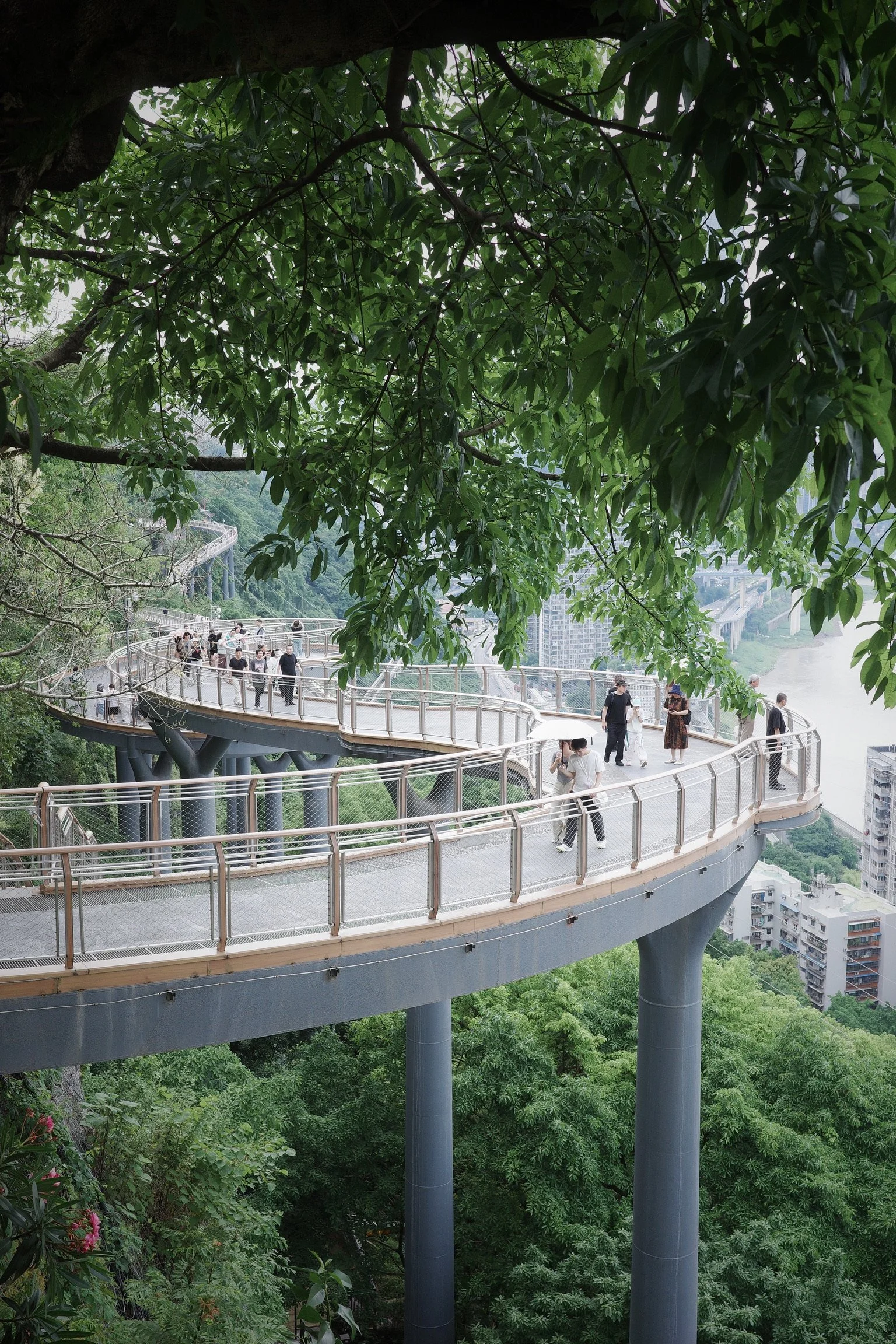
15:00 Eling Park and the Eling Walkway 鹅岭公园.
Up on the high ground of Yuzhong peninsula, this was once the private garden of a wealthy Chongqing merchant, Li Yaoting, built in 1909, later opened to the public. The new Eling Walkway, finished in 2025, gives you one more way to see the city: a panorama from above, where you can watch the famous line 2 metro going through building while you stand on a path suspended over the rooftops.
17:00 Liziba Station 李子坝, the train through the building.
The famous monorail that runs straight through an apartment block. Walk down from Eling Park and you arrive right at it, a natural way to end the day.
Tight first day. Skip one stop if you want to breathe.
Day 2: Mountain and River
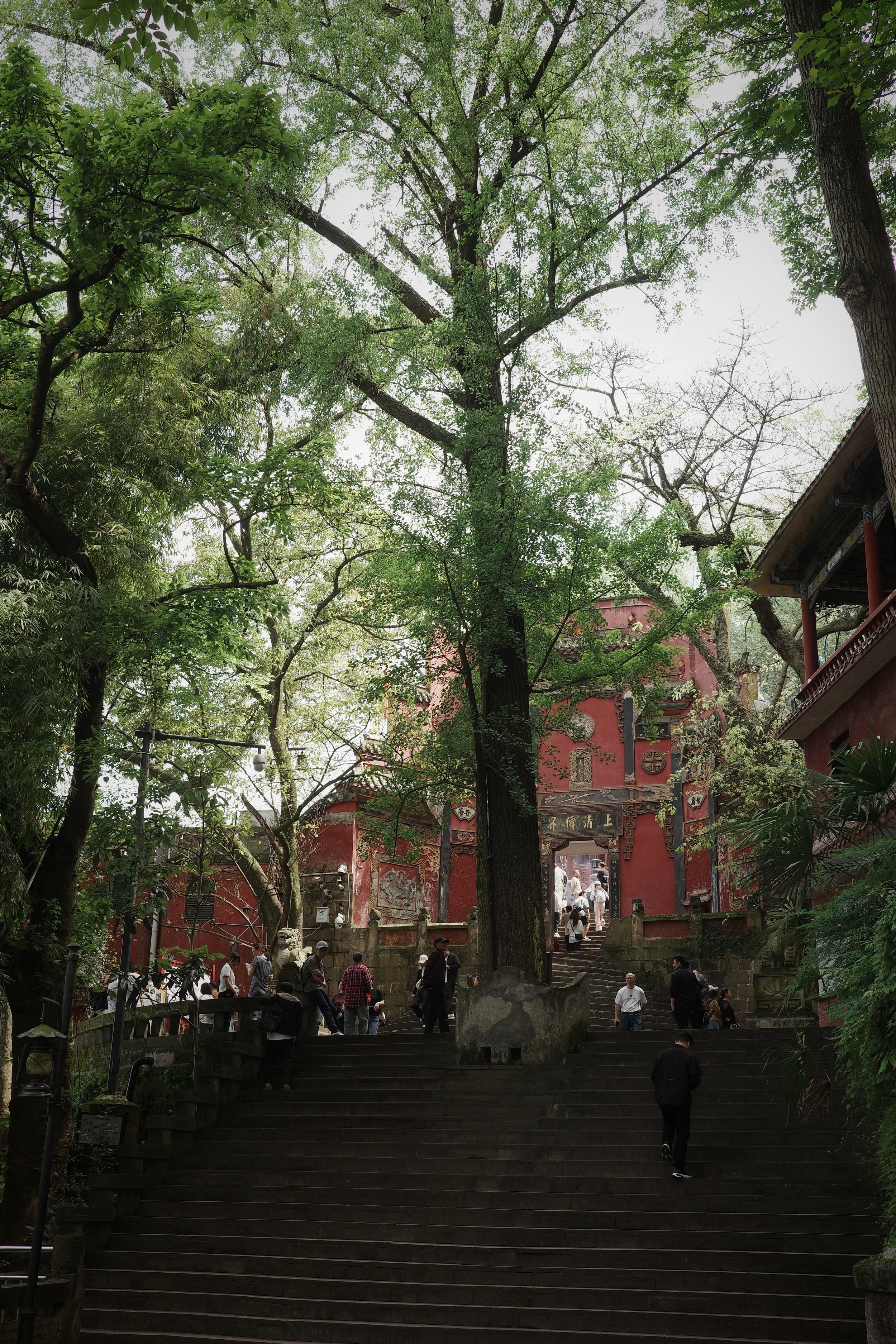
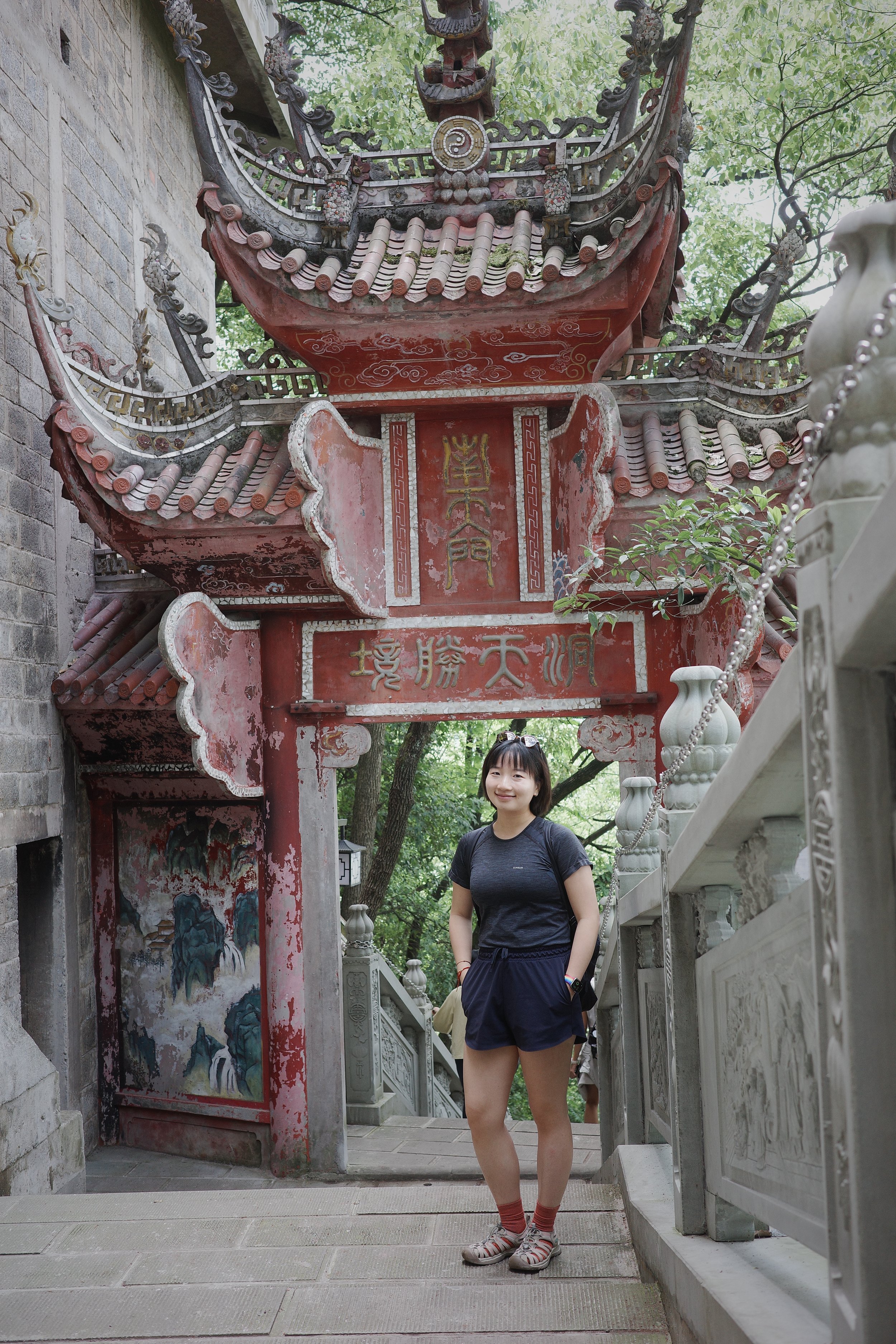
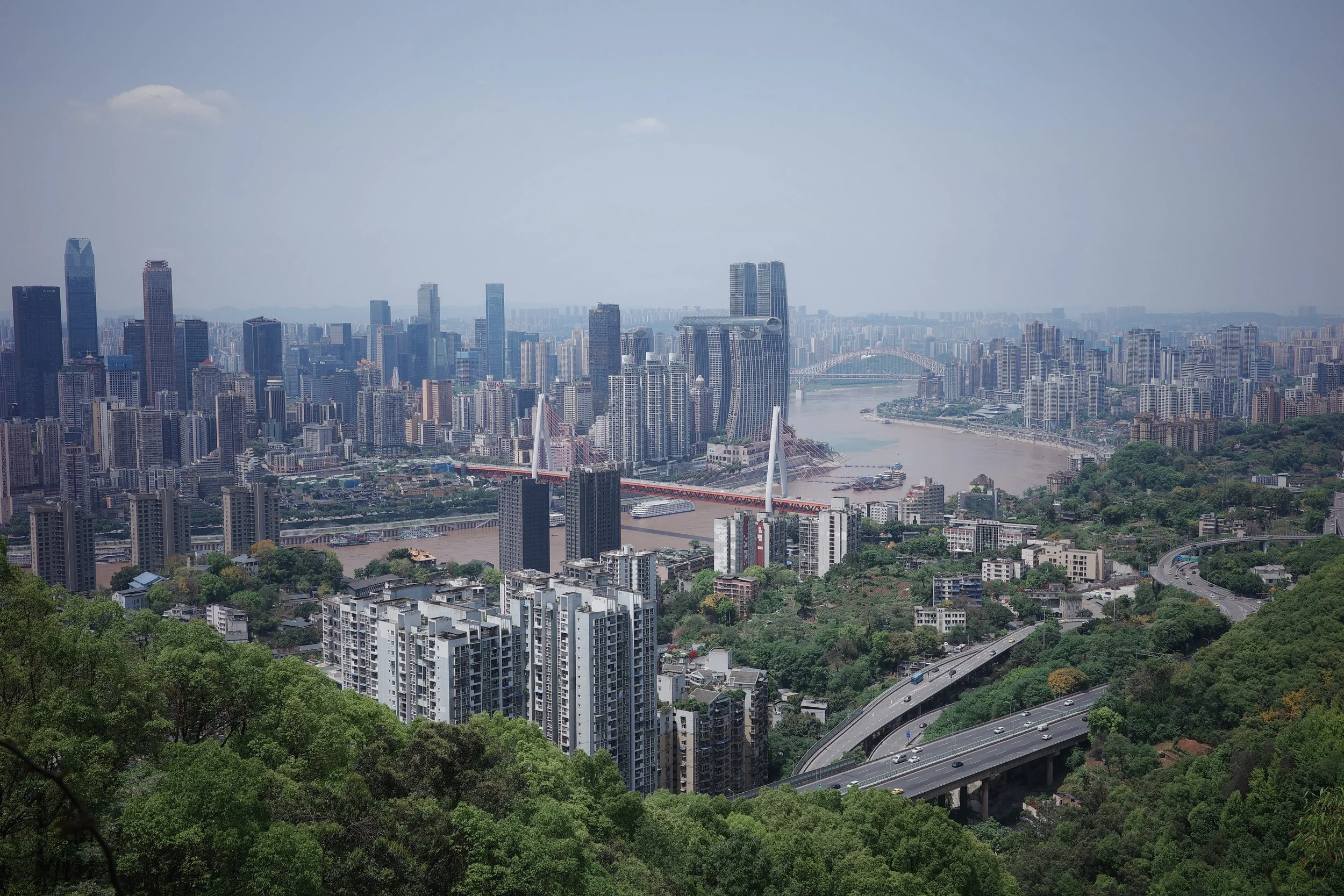
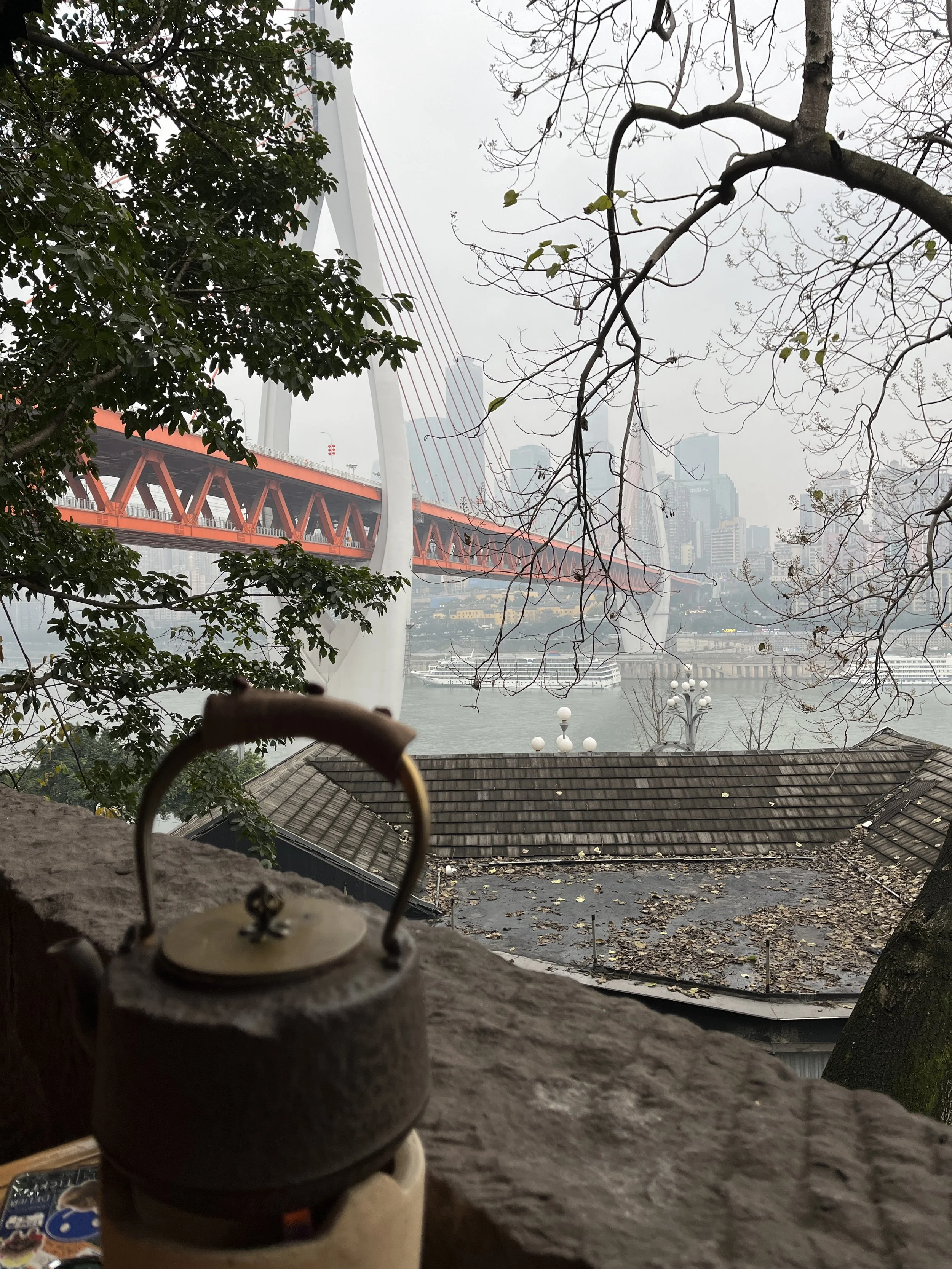
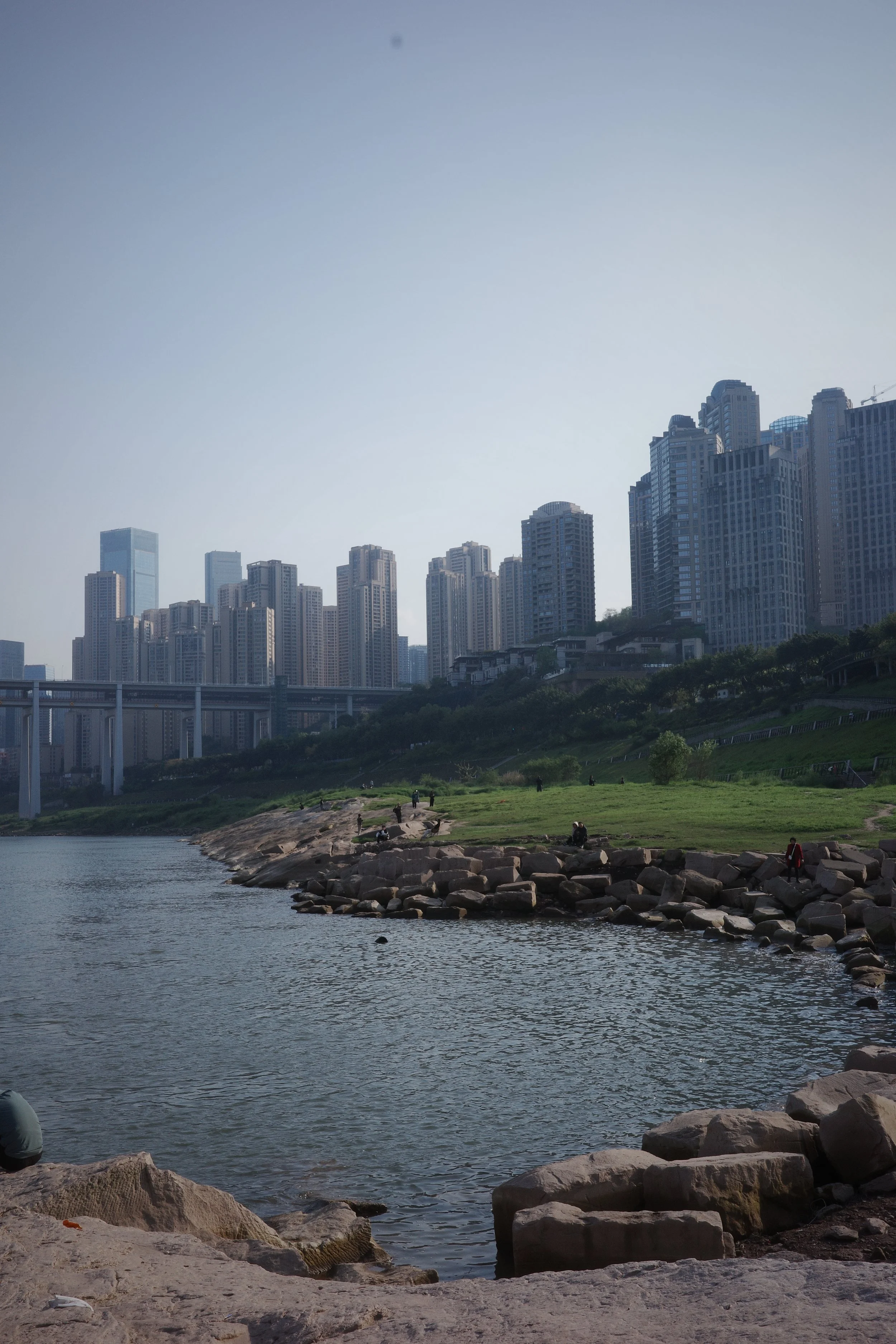
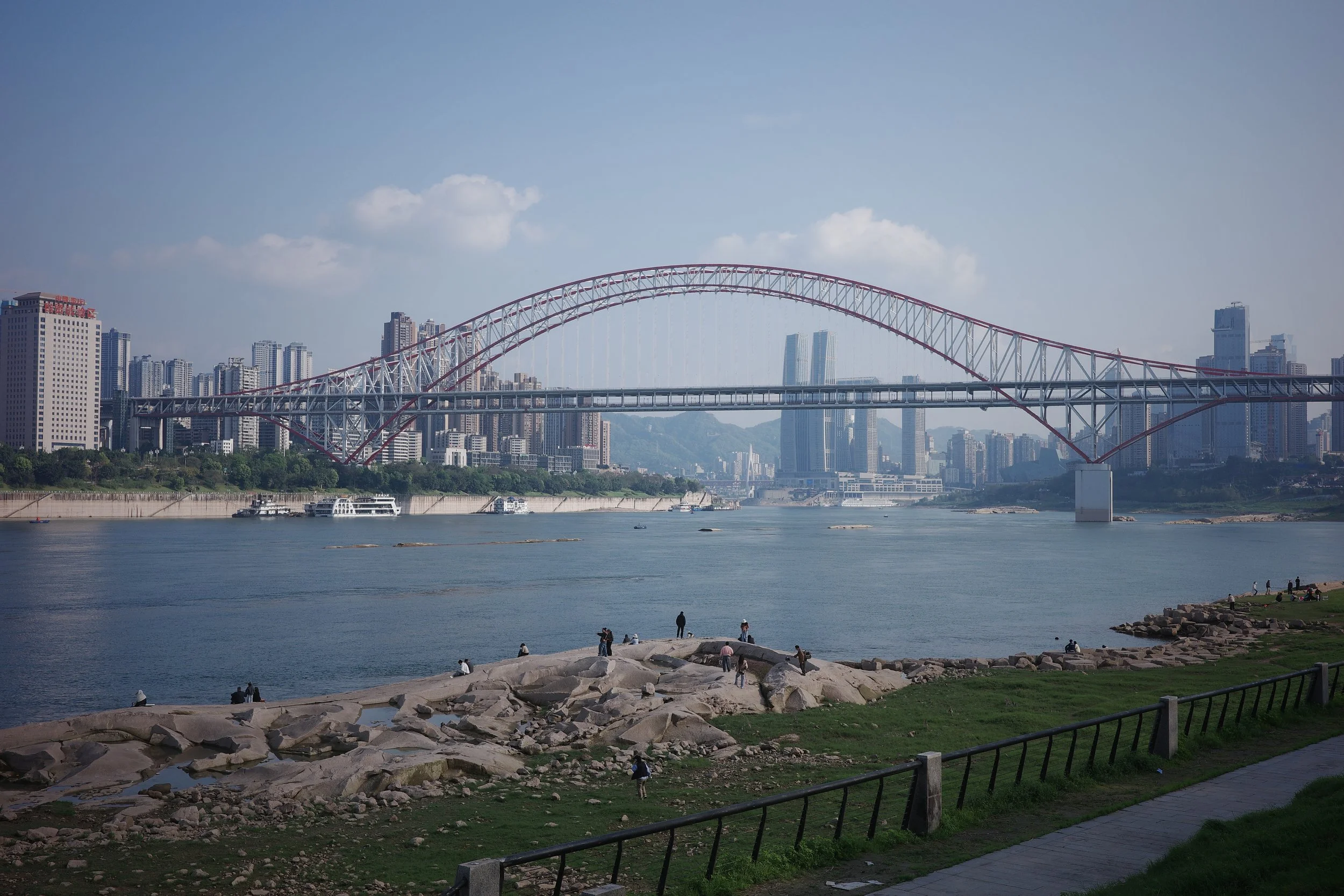
Hiking morning, golden hour finish. This is the second day to live the city instead of just photographing it.
10:00 Hike up Nanshan mountain 南山 to Laojun Temple 老君洞.
A forest trail that starts in the middle of the city. In thirty minutes you go from traffic and noise into real forest, then arrive at the oldest Taoist temple in Chongqing, around 800 years old. The panorama from up here is the best reward, giving the full angle to see the whole Yuzhong Peninsula, and there's a calm in the incense smoke that's hard to find downtown.
12:00 Lunch at the vegetarian restaurant inside Laojun Temple.
Probably the restaurant with the best view of the city serving vegetarian dishes of great quality and affordable price.
14:30 Xiahaoli 下浩里 for an afternoon coffee.
Below Nanshan mountain, along Nanbin Road, this is a newly developed block you shouldn't skip. It's built into the slope along the river, folding an old street together with new independent shops, half heritage, half present day. Look for Wuyinmen Coffeeshop 悟饮门 and Heshan Teahouse 和山茶食店 while you're there.
18:00 Jiangbei Riverside Park 江北嘴江滩公园 for the Hongyadong view.
Cross the two rivers over to the north bank and one of the most beautiful riverside parks in the city. From this bank you get the full sweep of Hongyadong lit up across the water. Find a rock or a patch of grass, let the river breeze hit you, and you're doing the most Chongqing thing: nothing in particular, by the river, in no hurry. If it's Saturday, stay for the drone show at 8:30PM.
A note on logistics: this day looks simple on paper, but the order, the transit between Nanshan and Jiangbei, and the timing that lands you at the river for golden hour are where it gets fiddly. The exact transit steps, timing, and what to skip on a tighter schedule are all in the Ultimate Chongqing Guide.
Day 3: Pick Your Ending
One day trip out of the city. Three flavors, each a full day. Pick by mood.
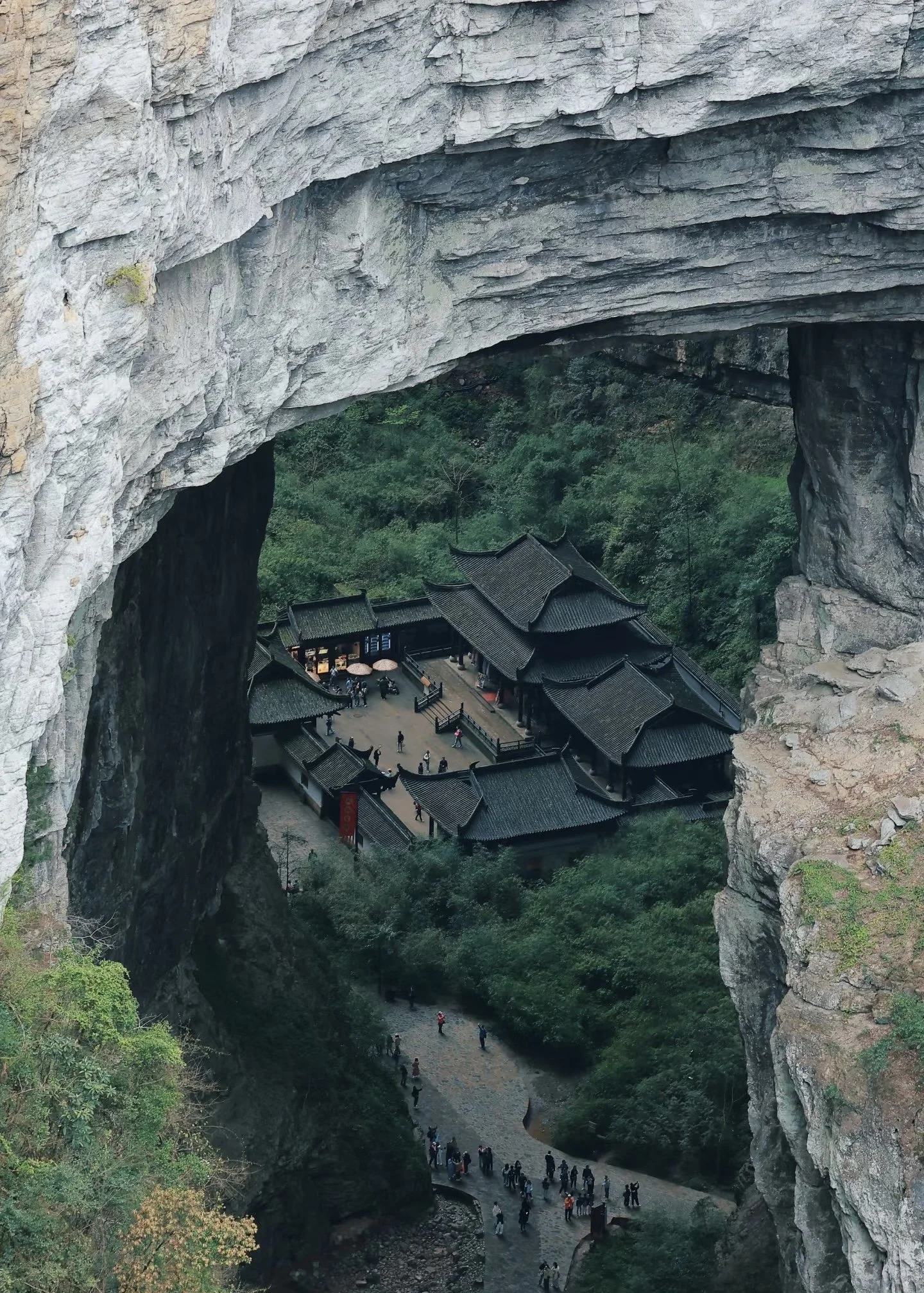
Wulong Karst Park, the Transformers landscape.
Spectacular karst country: natural bridges, sinkholes, otherworldly stone. It went global as a filming location for Transformers: Age of Extinction, and it's the obvious choice if you love nature and hiking. Best for hikers and nature lovers.
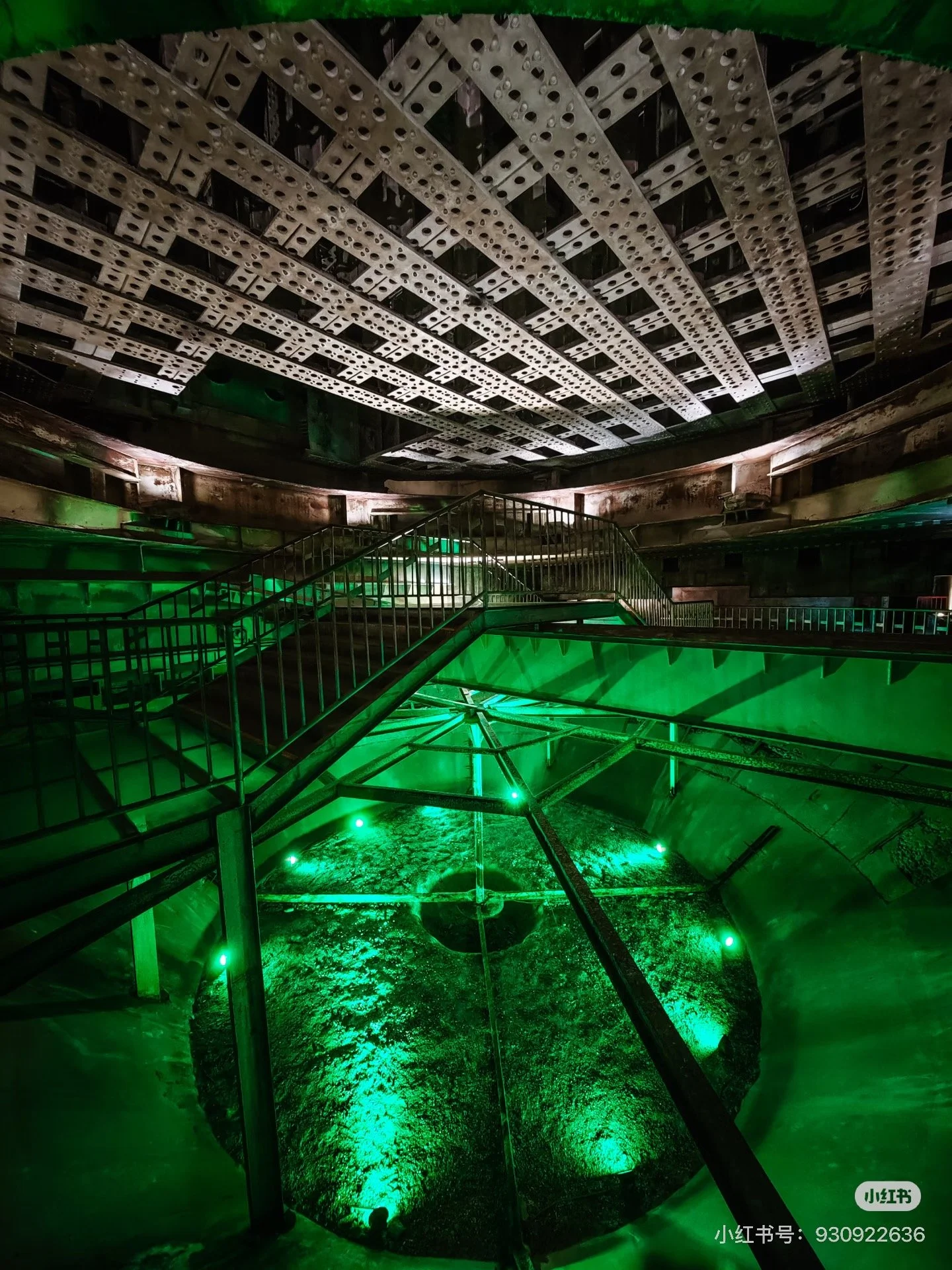
816 Nuclear Project, a Cold War rabbit hole.
A secret nuclear plant buried in a mountain for sixty years. Sixty thousand people gave their lives' work to it, and the project was never put into use. There's no radiation risk at all, just a genuinely stunning piece of Cold War history you can walk through. Best for explorers.
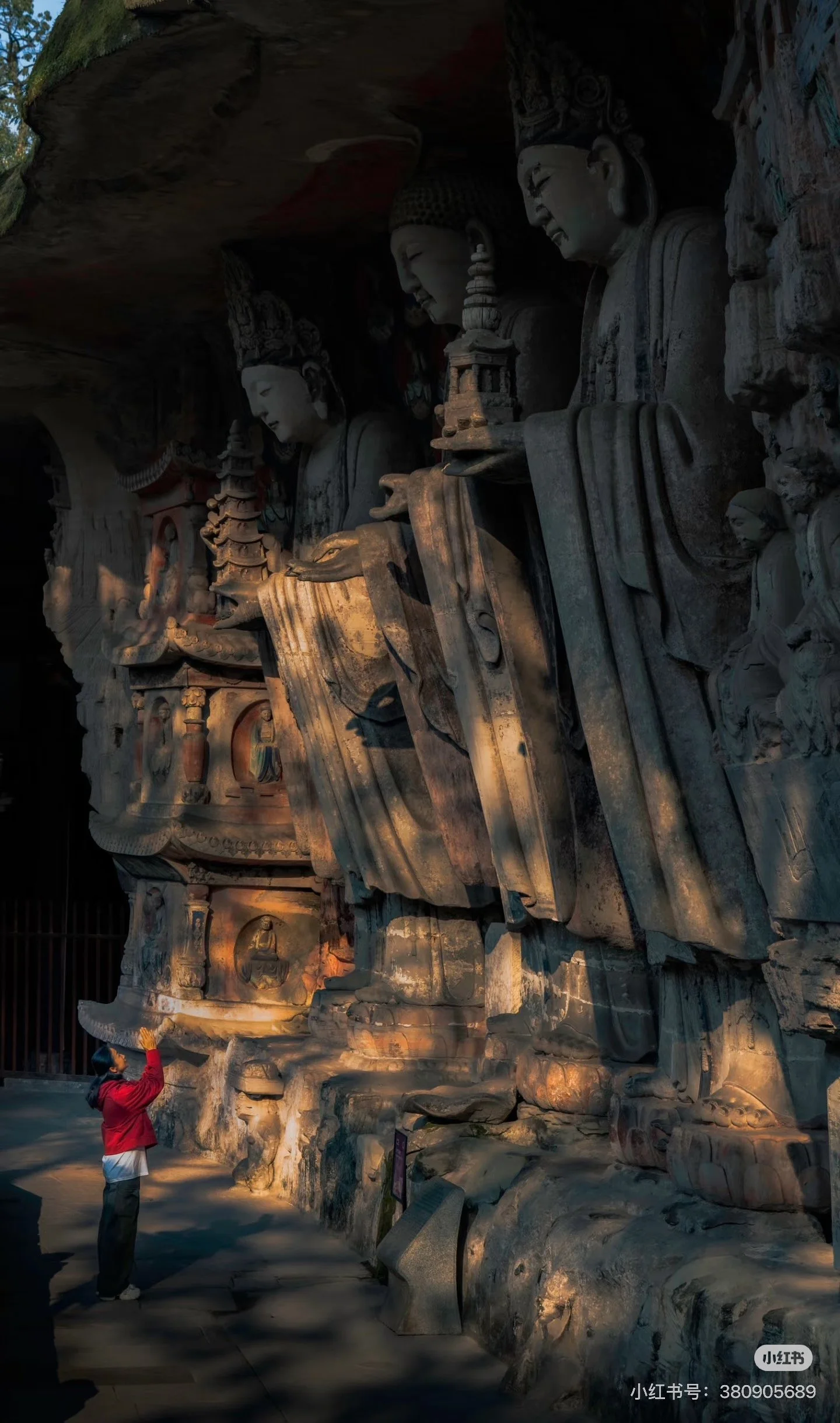
Dazu Rock Carvings, 1200 years of stone Buddhas.
The most breathtaking ancient sculptures around Chongqing, begun around 650 CE and carved across five dynasties (Tang, Song, Yuan, Ming, Qing). What makes them special is that alongside the religious scenes there's daily, worldly, human life cut into the stone. UNESCO World Heritage, and most foreign travelers miss this place entirely. Best for history and art lovers.
A Few Things People Ask
Is three days enough for Chongqing?
Enough to see the icons, feel the rhythm, and take one trip out of the city. Not enough to reach everything, which is a good reason to leave wanting more. This itinerary is built to feel full without feeling rushed.
Do I need to speak Chinese?
No. The stops here are doable with a translation app and a bit of curiosity. The harder part is knowing where to go and in what order, which is exactly what this guide and the Walk are for.
How much walking is it, really?
A fair amount, and a lot of it is up and down. Chongqing rewards comfortable shoes and a relaxed pace. Take the coffee/tea stops, they turn the climbs into part of the fun instead of a chore.
When's the best time to come?
Spring (March to April) and autumn (October to November) are the easy wins: cool, clear, comfortable, and short, so they go fast. Summer is real heat. Winter is moody in the unique way, fog settling over the skyline.
I broke all of this down properly in Is Chongqing Worth Visiting? if you want the full season-by-season read.
Plan It Yourself, or Come With Me
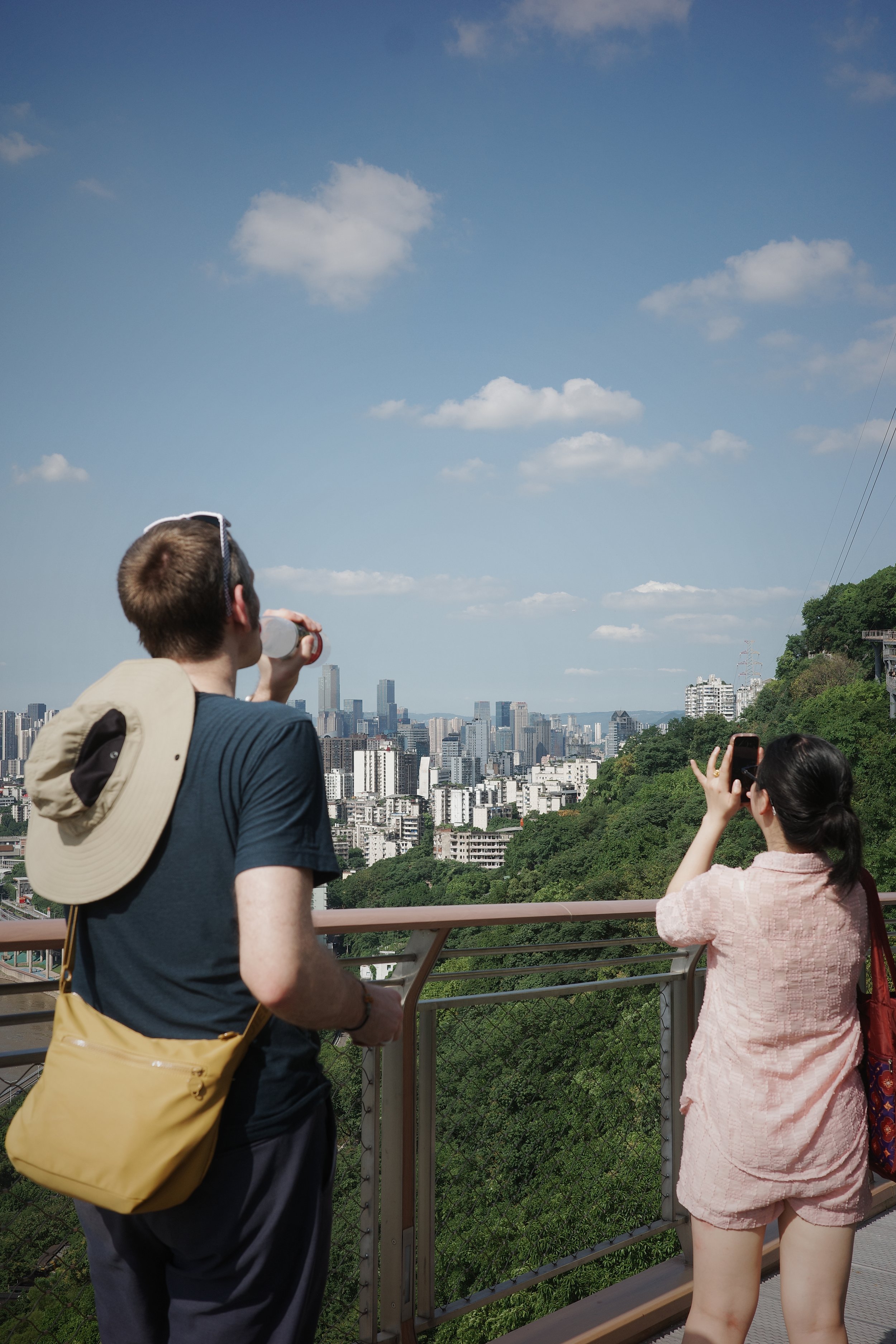
View from Eling Walkway with Yedu guests
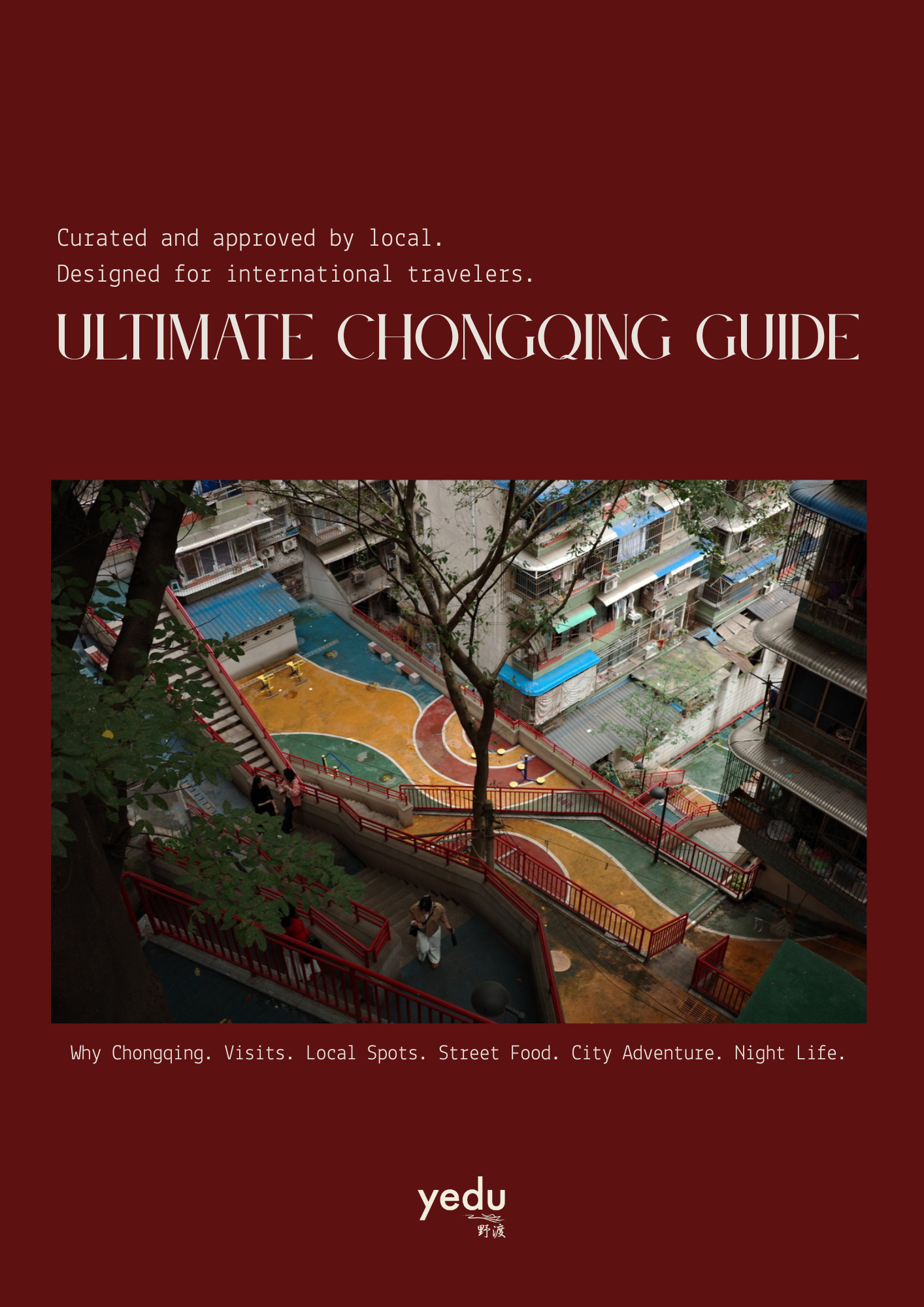
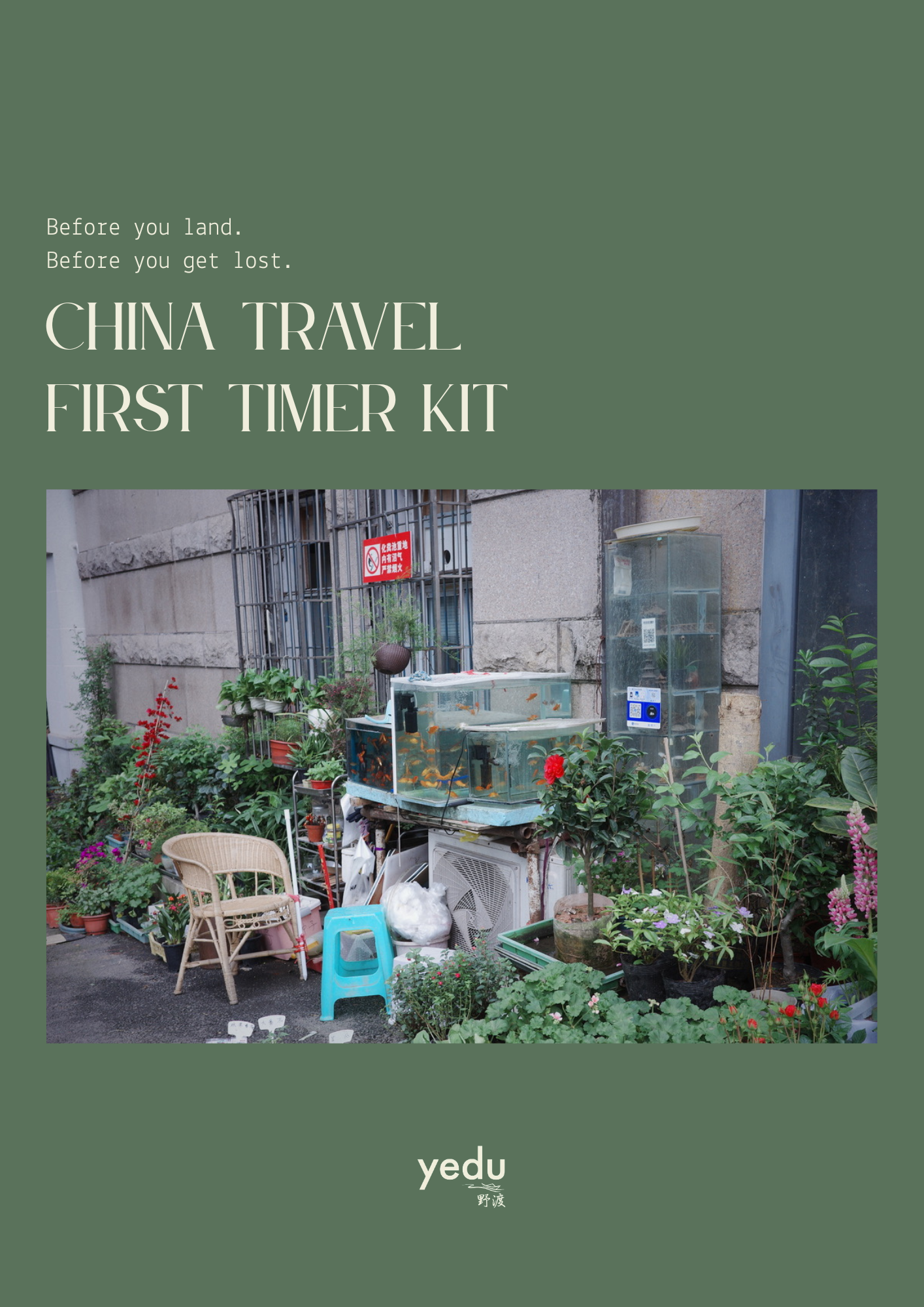
This blog gives you the structure. If you want the rest: the precise timing, the transit, where to eat, and what to skip, it's all in the Ultimate Chongqing Guide.
And if you'd like to understand the city like a local and with a local, the Walk is Yedu showing you the Chongqing by walking, in person, the way we'd show a friend.
Seven hours, one local, the full shape of the mountain city.
Chongqing is a city best understood on foot. The hills, the staircases, the neighborhoods stacked on top of each other - none of it makes sense from a map. It only clicks when you're in it.
A full day gives you the whole arc: old lanes in the morning, a proper local lunch, and by afternoon you're on a ridge watching the Yangtze bend around the city. We walk through residential steps, hillside temples, ancient trials, and viewpoints only locals know. No rushing, no script, just a discovery day with enough time to actually read a city.
Come with good shoes and curiosity. Leave understanding why Chongqing doesn't look like anywhere else in China.