
Chongqing Hotpot: How to Eat It Like You Belong There
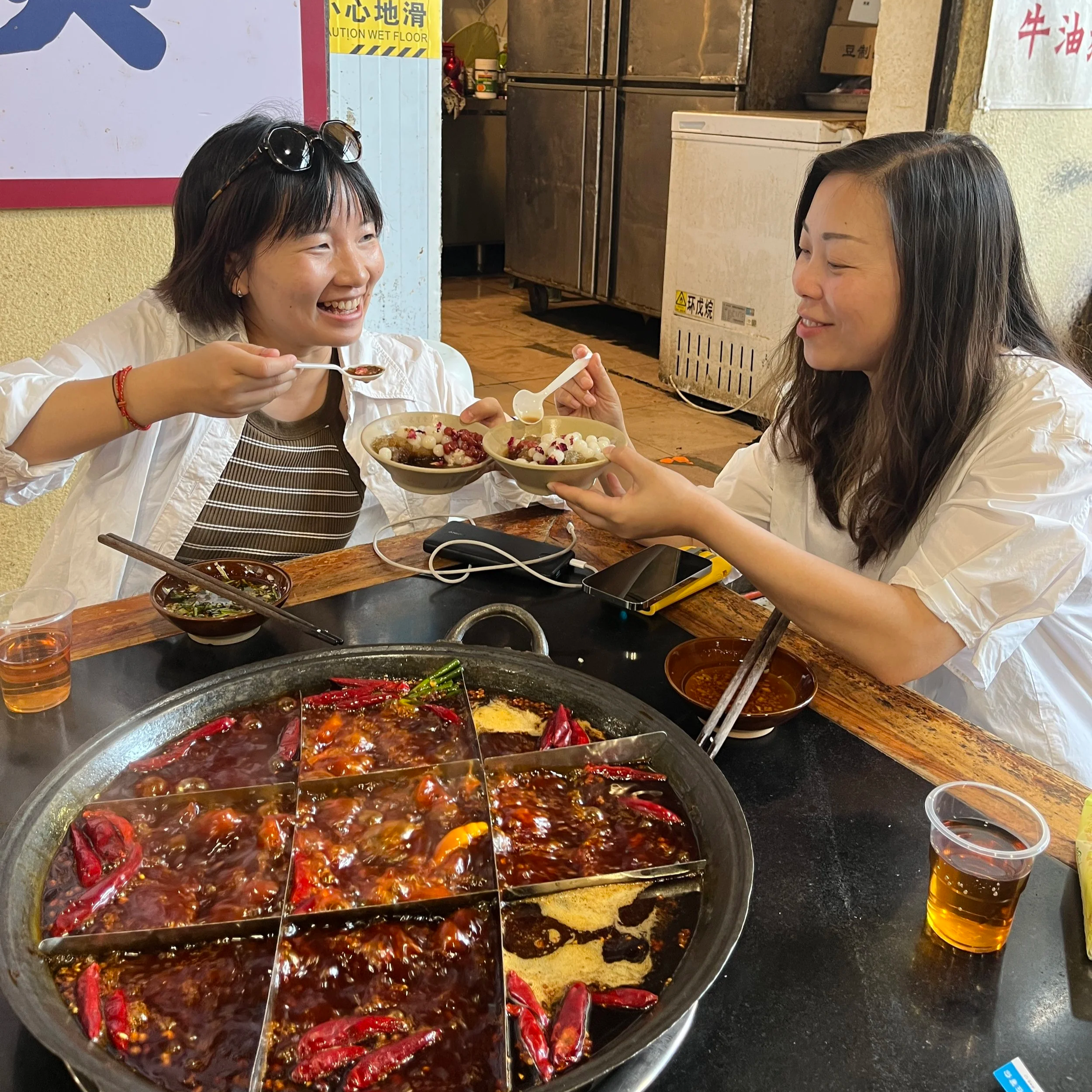
Lan Hotpot in Chongqing
Nobody in Chongqing remembers a hotpot night only for the food. They remember the steam fogging up someone's glasses. The table getting louder as the night goes on. The moment a stranger passes you napkins without being asked. Hotpot here isn't a dish you order. It's a room you walk into, and the most lively way to know what Chongqing culture is about.
This Isn't the Hotpot You Think You Know
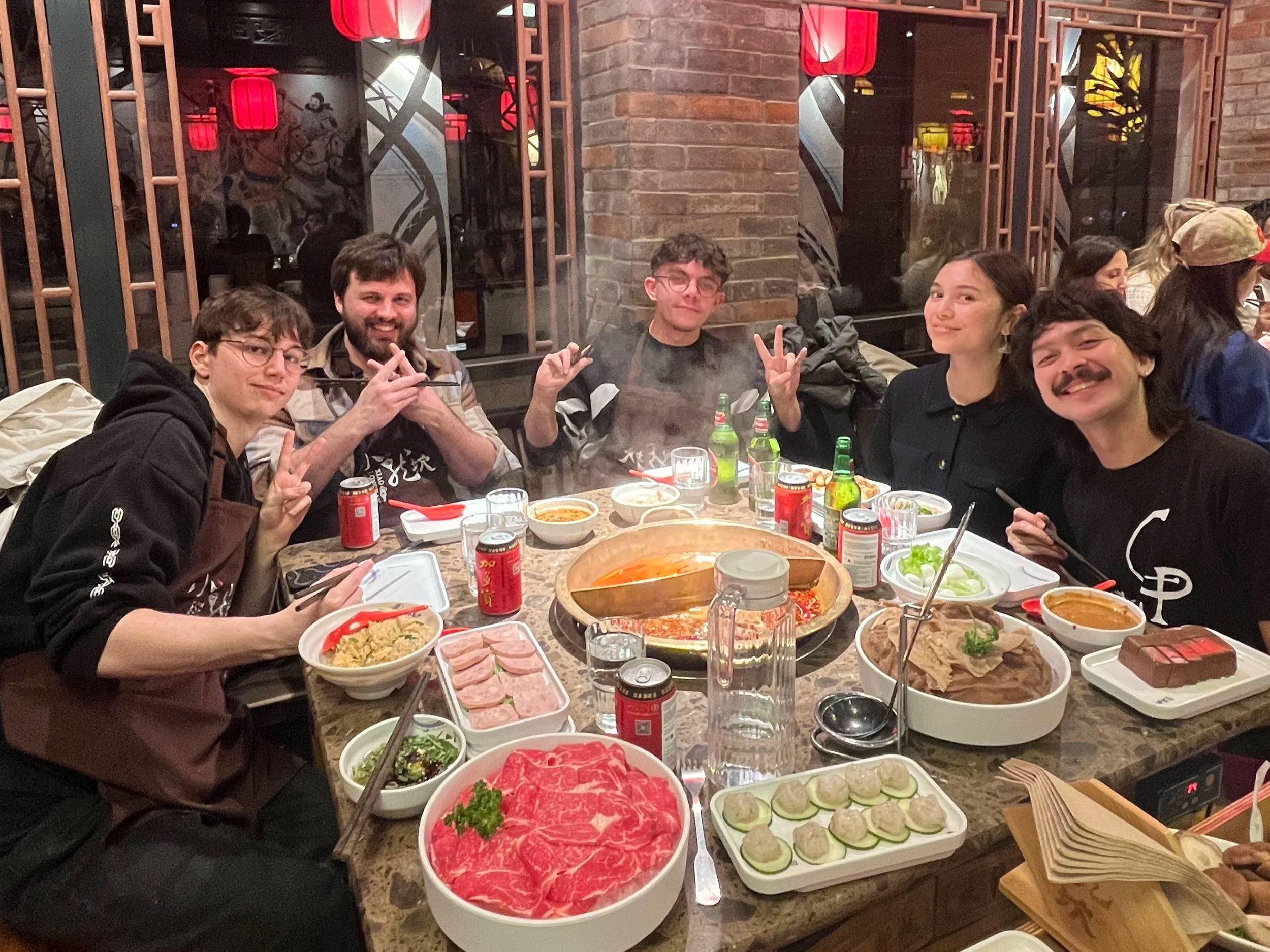
Xiaolongkan Hotpot in Paris
Hotpot started as dockworkers' food, boiled up cheap and fast on the riverbanks. It kept people warm in a city that gets damp and cold in ways that surprise everyone who visits. It didn't become a sit-down restaurant dish until the 1930s. Before that it was just what you ate to get through the day on the water.
It's become popular in recent years, first nationally, then internationally, now you can easily find a Chongqing hotpot place in any big city in the world. (btw my favorite one in Paris is Xiaolongkan :)
Even the divided 9-grid pot you still see today started as a way for restaurant owners to charge fairly when strangers shared one pot and needed to split the bill without a fight. Strangers sharing one pot and figuring out how to make it work. That's still the tradition at a hotpot table, whether you're a dockworker in 1900 or a table of six on a Friday night now. But now people use it more to divide the heat area in the pot and cook different ingredients in different zones.
The Broth Does the Work
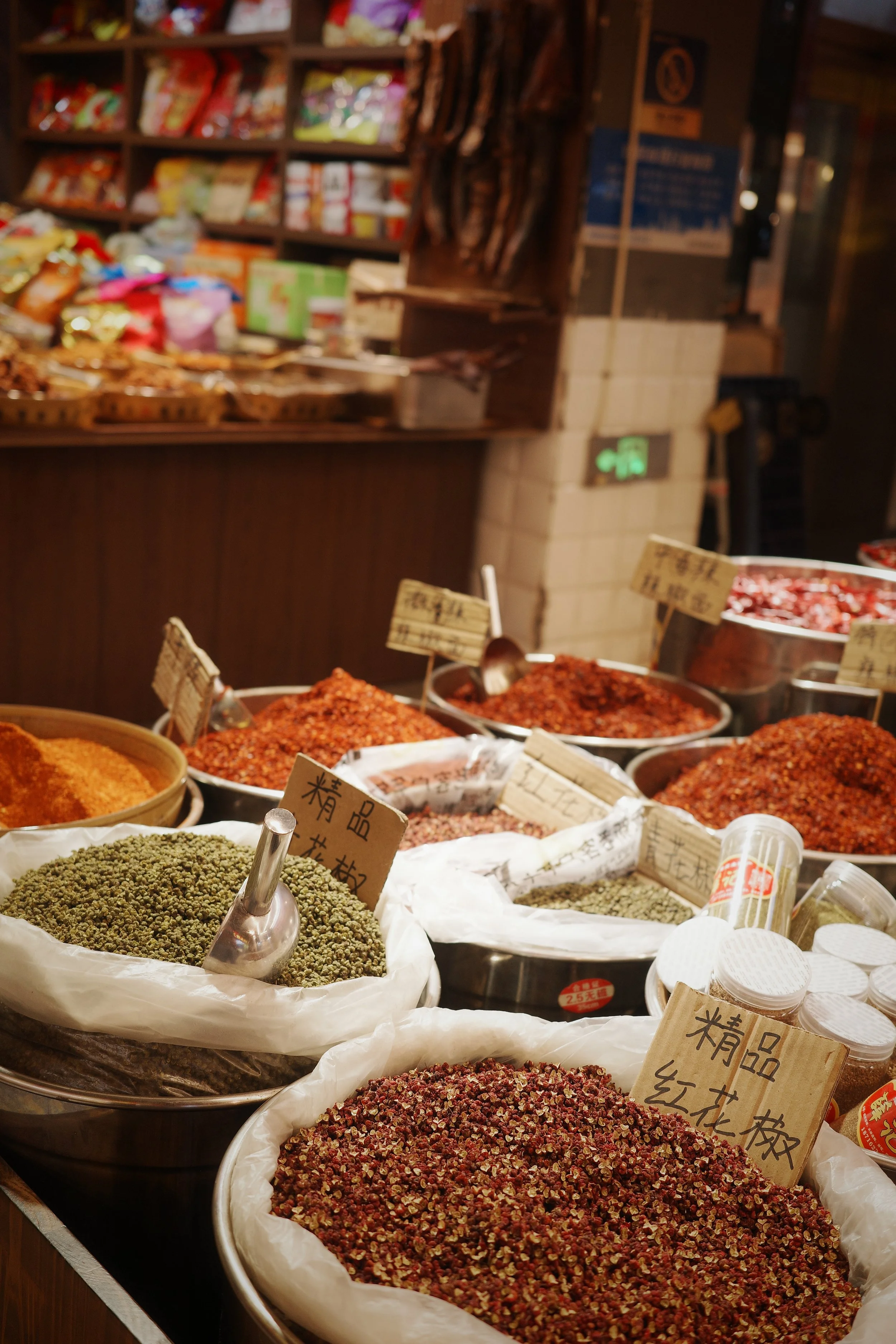
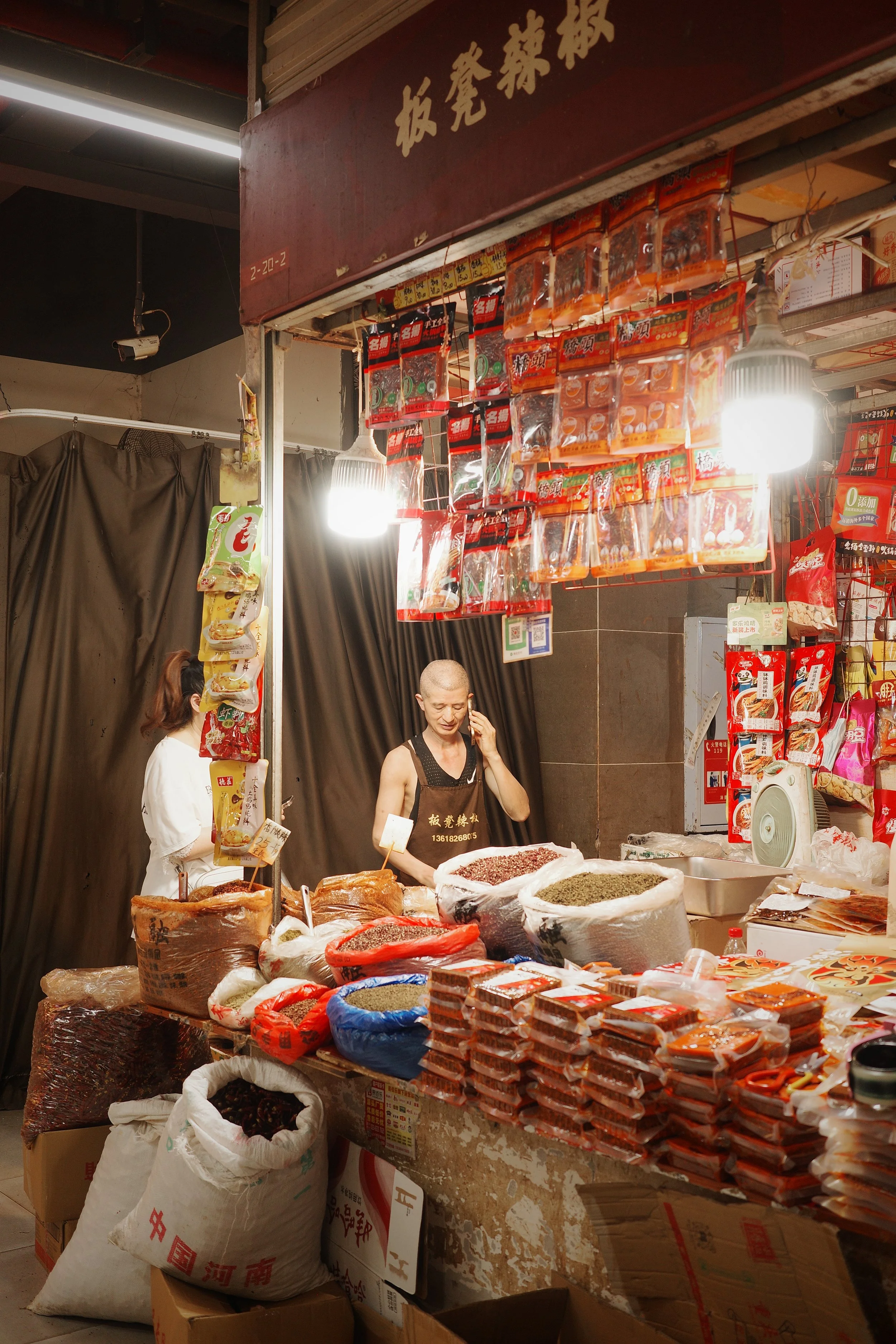
If your only hotpot experience is somewhere back home, or shabu-shabu at a Japanese place, forget what you know before you sit down. Most hotpot outside Sichuan and Chongqing runs on a clear or mild broth, and the flavor comes from dipping sauces.
Chongqing does the opposite. The broth is beef tallow and dried chilies, fried down slow with Sichuan peppercorn until it turns a deep, glossy red. You're not adding flavor at the end. You're cooking inside flavor that's already doing everything.
That's why locals will tell you Chongqing hotpot isn't spicy for the sake of being spicy. The heat and the numbing peppercorn buzz are the flavor itself, not a warning stapled on top.
The rule is simple for Chongqing hotpot: all the ingredients are served raw on the table, and people throw them into the pot (meat first, veggies last) and cook them directly. Although the traditional hotpot ingredients are mainly organs, that's totally avoidable nowadays as there's also a large variety of normal meat, seafood, and vegetables to choose from.
How to Order Without Freezing Up
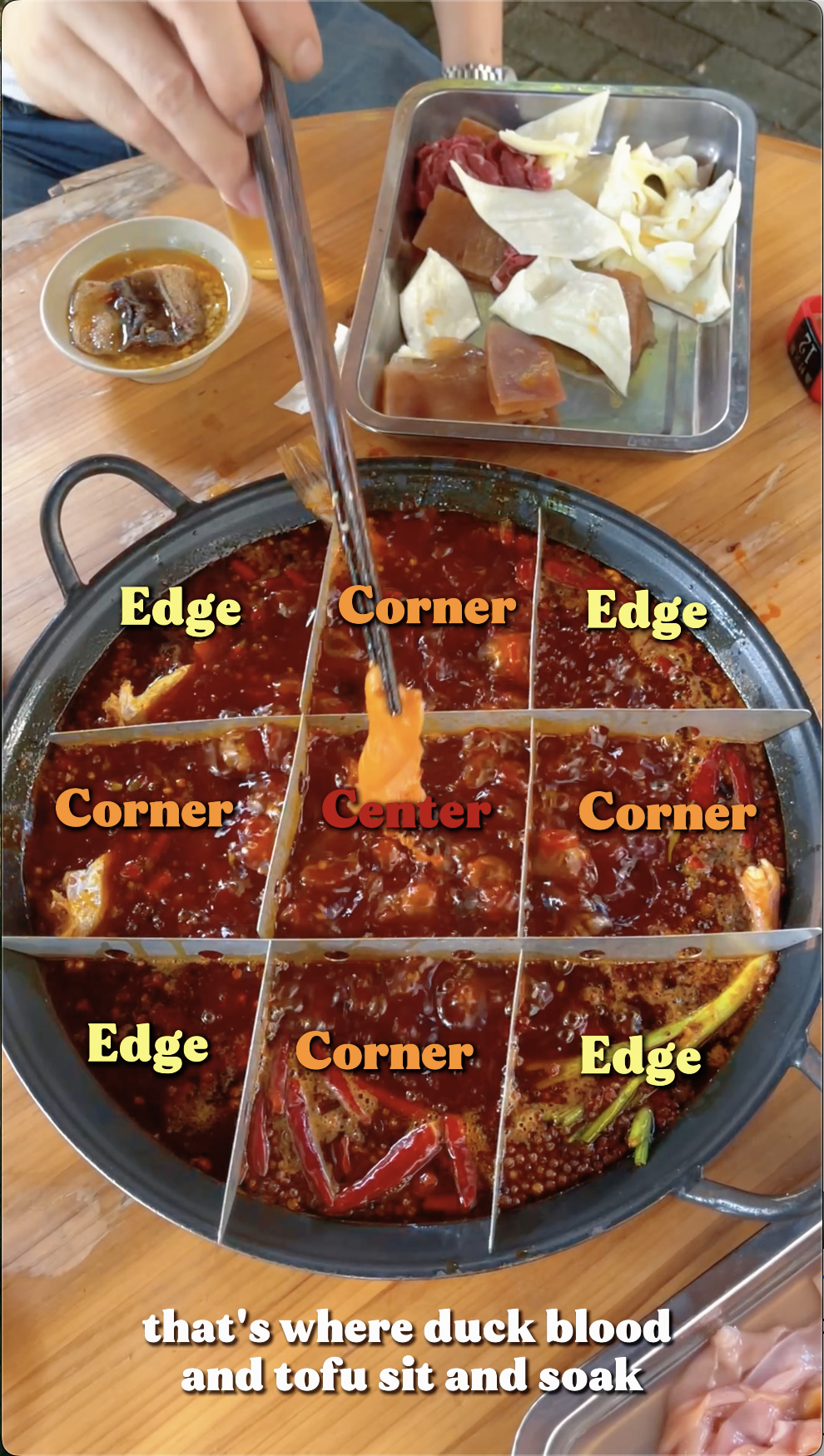
Here's what actually happens once you sit down.
The pot. Default is full red broth, beef tallow, properly numbing. If you don't want to commit your whole meal to it, ask for 鸳鸯锅 (spicy and mild mixed pot), split between red broth and a milder one. Plenty of locals order it this way too. It's not a tourist move, it's just practical.
The spice level. You'll be asked mild, medium, or extra spicy. Most locals actually order mild these days. That surprises visitors who assume spicier means more authentic. It doesn't. It means you know your limit and you're not performing toughness for a pot of soup. Some places now offer something even lighter than "mild," so ask your server what's available before you commit.
The dipping sauce. The sauce station looks like chaos the first time, rows of bowls and ingredients you don't recognize. But don't be afraid: the real Chongqing combination is sesame oil and minced garlic, full stop. From there people add cilantro, chopped scallion, a splash of oyster sauce, sometimes vinegar to cut the heat. What you won't add is the thick sesame paste that's standard up north, the flavor doesn't go well with the spicy broth. Adding that here is like asking for ketchup at a wine tasting.
The ordering system. Older spots hand you a paper sheet and a pen, you tick boxes and hand it back. Newer places use a phone system. Either way, nobody expects you to fully know the menu. Point, ask, or let your server walk you through it (or use your translation app).
One thing that might surprise you: dessert shows up in the middle of the meal, not after. Shaved ice or bingfen 冰粉 (a cold, jelly dessert) often lands on the table mid-hotpot, and locals eat it between bites to cool down. Looks strange the first time you watch someone alternate a spoonful of ice with a mouthful of chili oil. Try it once and it makes sense immediately.
As for drinks, locals go for Wong Lo Kat (王老吉), a sweet herbal tea believed to cool you down from the inside, or Weiyi peanut milk (唯怡豆奶) or Yeshu coconut milk (椰树椰汁), which genuinely takes the edge off the spice better than water ever will.
The Unwritten Rules at the Table
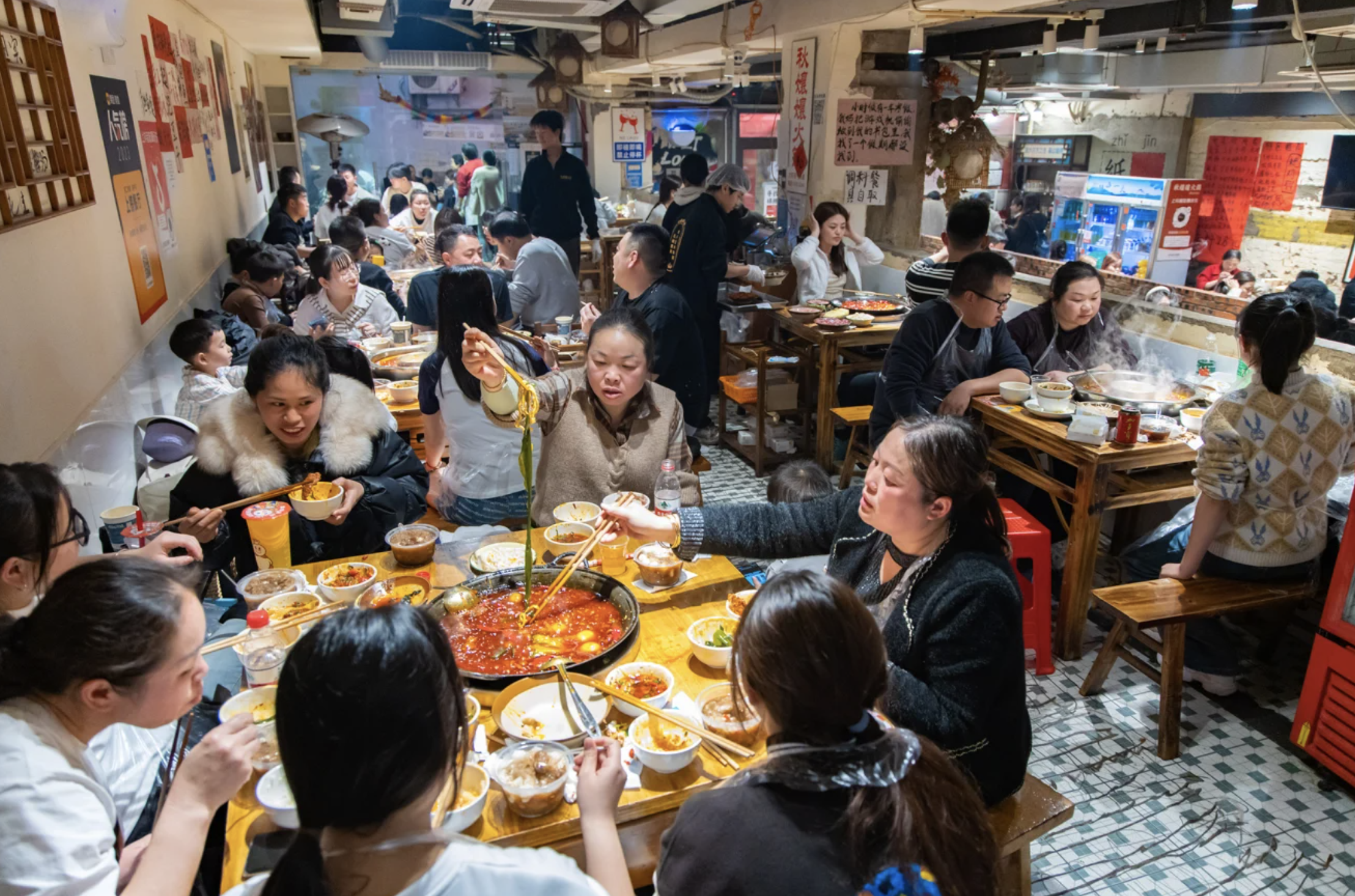
Hotpot is where Chongqing does its socializing, and it carries the same loud, unpolished energy the city is known for everywhere else. Some uncles in undershirts pouring beer after dark. Drinking games called out with fingers, a local tradition called huaquan (划拳). The volume climbing all night. Nobody at that table is performing for anyone.
There's no season or mood that rules hotpot out. Good news, bad news, freezing winter, humid summer night, doesn't matter. If something needs celebrating or someone needs cheering up, the answer in Chongqing is almost always the same: let's go get hotpot. It's less a meal and more the default setting for spending time with people.
That's the real reason a shared pot of boiling chili oil has stayed at the center of this city for a hundred years. It was never only about the food.
Three Ways to Go Deeper
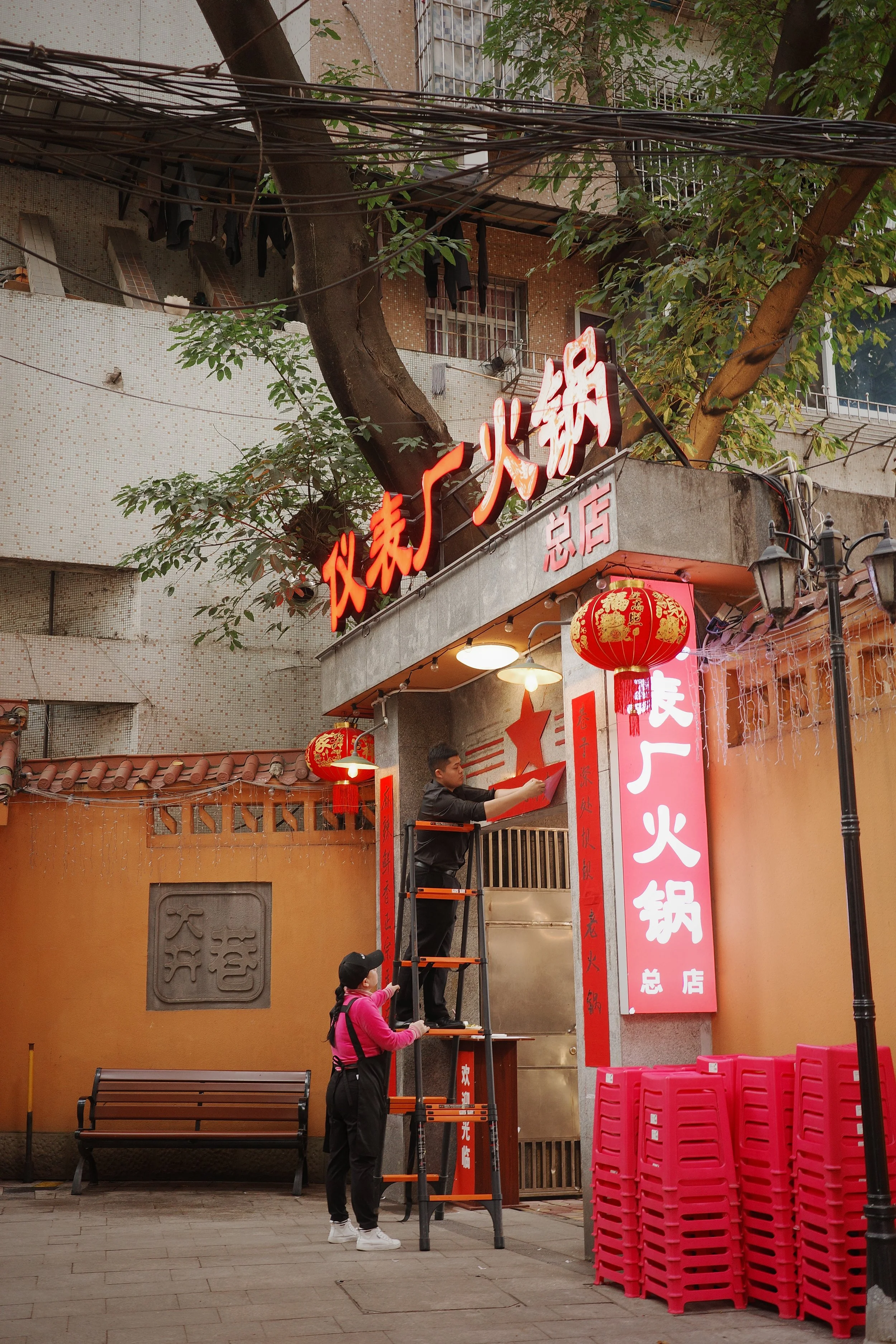
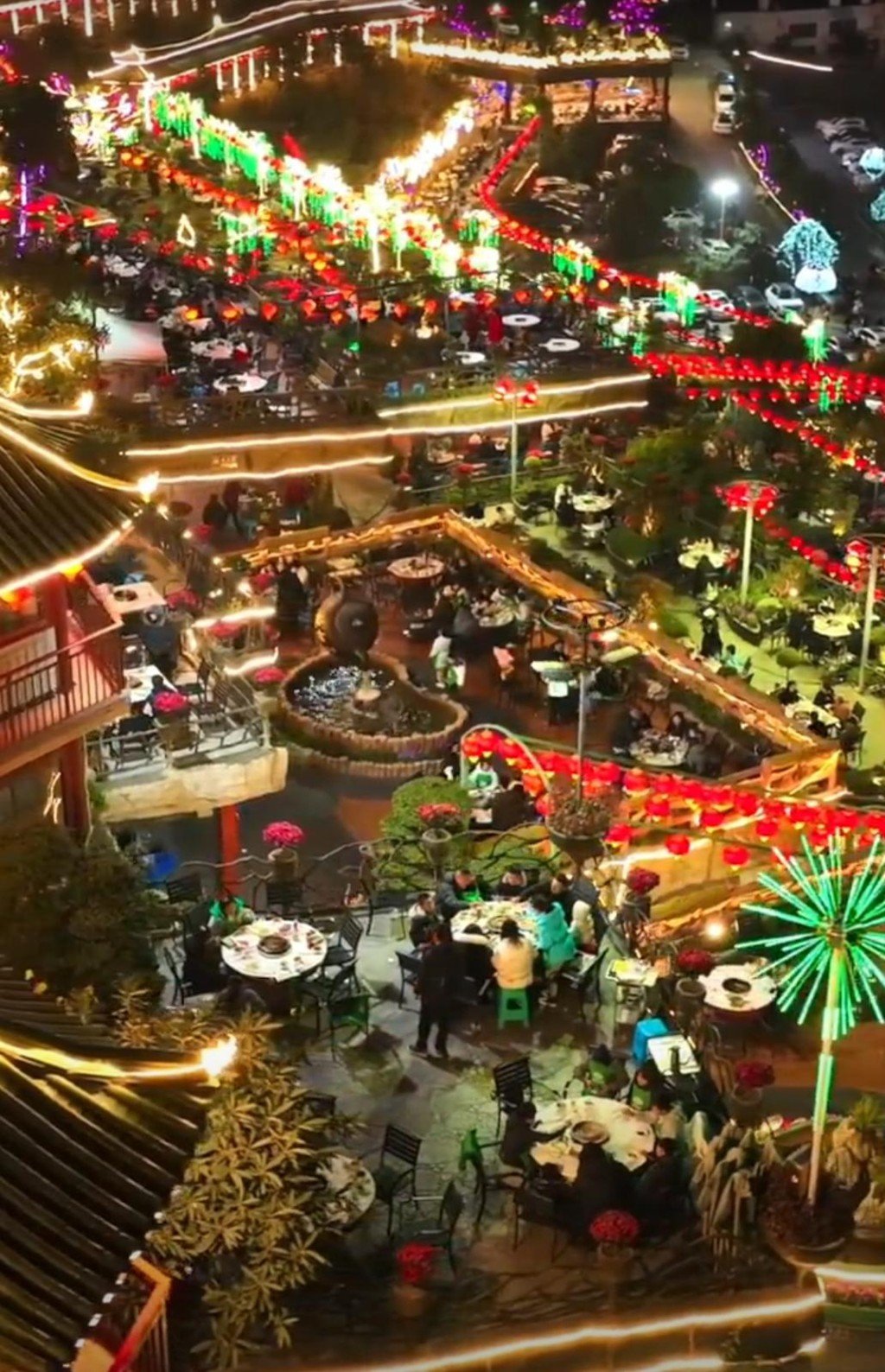
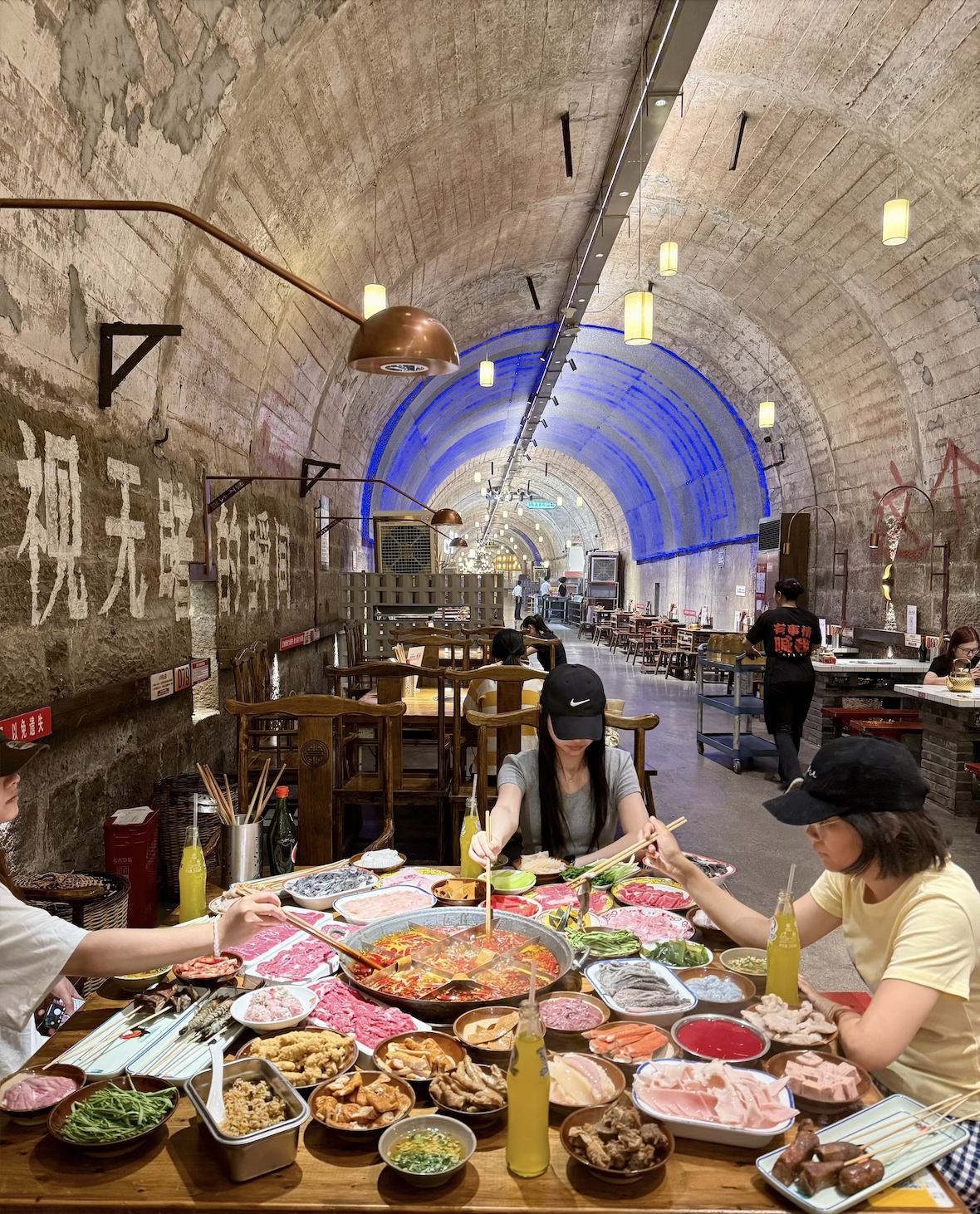
If you want the most unfiltered version of a Chongqing hotpot night, here's where I'd send you, depending on what you're after.
For the most local: 仪表厂火锅 (Yibiaochang Hotpot), tucked into the courtyard of a former factory compound. Tables spilling into the open air, no English map will ever show you this one, and that's exactly where the city actually eats.
For the most spectacular: 枇杷园火锅 (Pipa Garden Hotpot), a Guinness World Record holder for the largest hotpot restaurant, built across an entire hillside south of the city like a terraced park. You could spend the whole evening just walking the grounds before you even sit down.
For the most unexpected: 地下之城火锅 (Air Raid Shelter Hotpot), built inside a massive underground WWII bunker. Chongqing has a habit of turning hard history into something communal and loud, and this is that instinct taken to its most literal extreme.
None of these are on your tourist guidebook, and I put 70+ places like this in my Ultimate Chongqing Guide to let you navigate my city like a local.
Or want us to build a hotpot night straight into your Chongqing itinerary or city walk? Check our walk tour or custom itinerary solution, we'll take it from there.
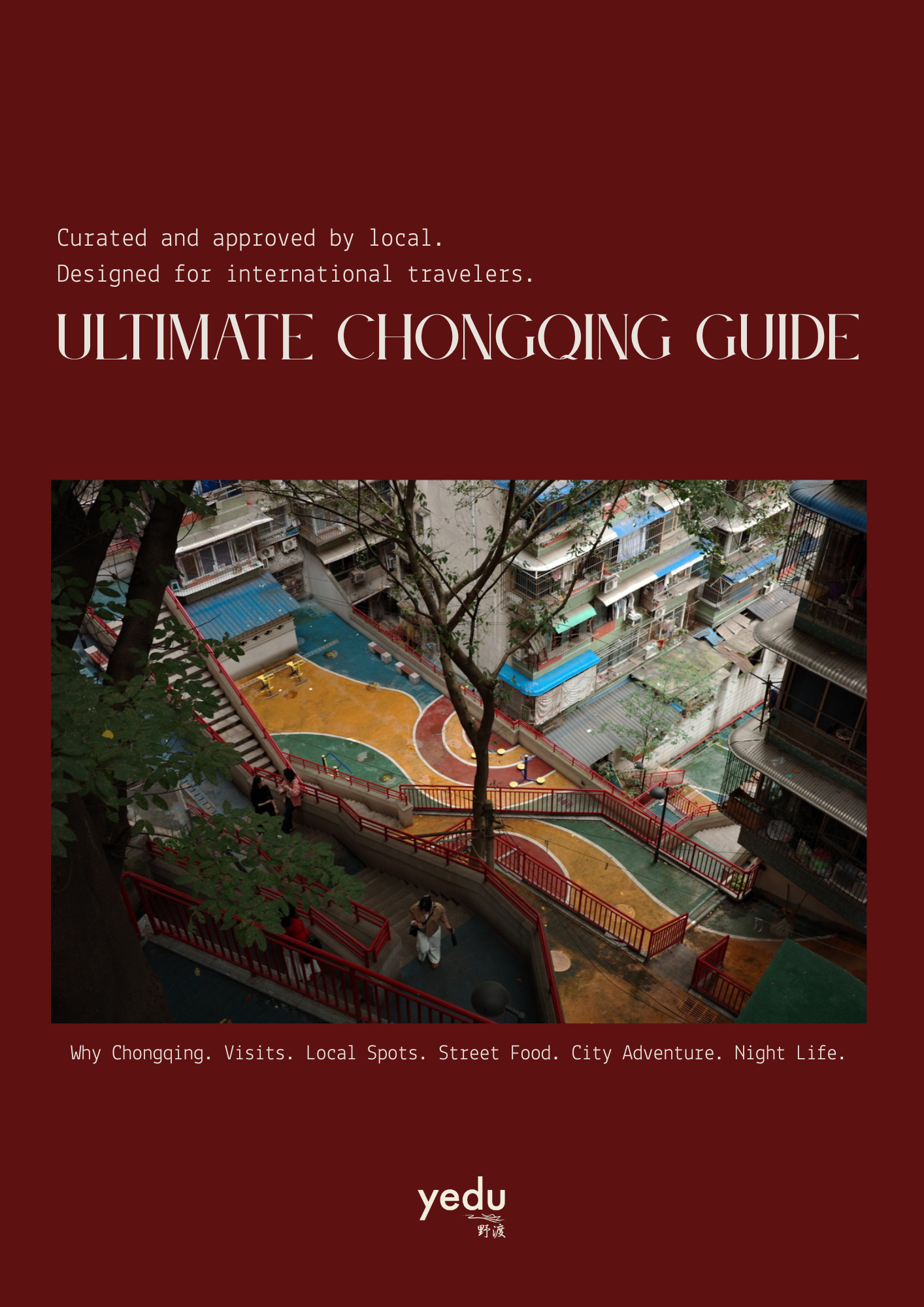
Seven hours, one local, the full shape of the mountain city.
Chongqing is a city best understood on foot. The hills, the staircases, the neighborhoods stacked on top of each other - none of it makes sense from a map. It only clicks when you're in it.
A full day gives you the whole arc: old lanes in the morning, a proper local lunch, and by afternoon you're on a ridge watching the Yangtze bend around the city. We walk through residential steps, hillside temples, ancient trials, and viewpoints only locals know. No rushing, no script, just a discovery day with enough time to actually read a city.
Come with good shoes and curiosity. Leave understanding why Chongqing doesn't look like anywhere else in China.