
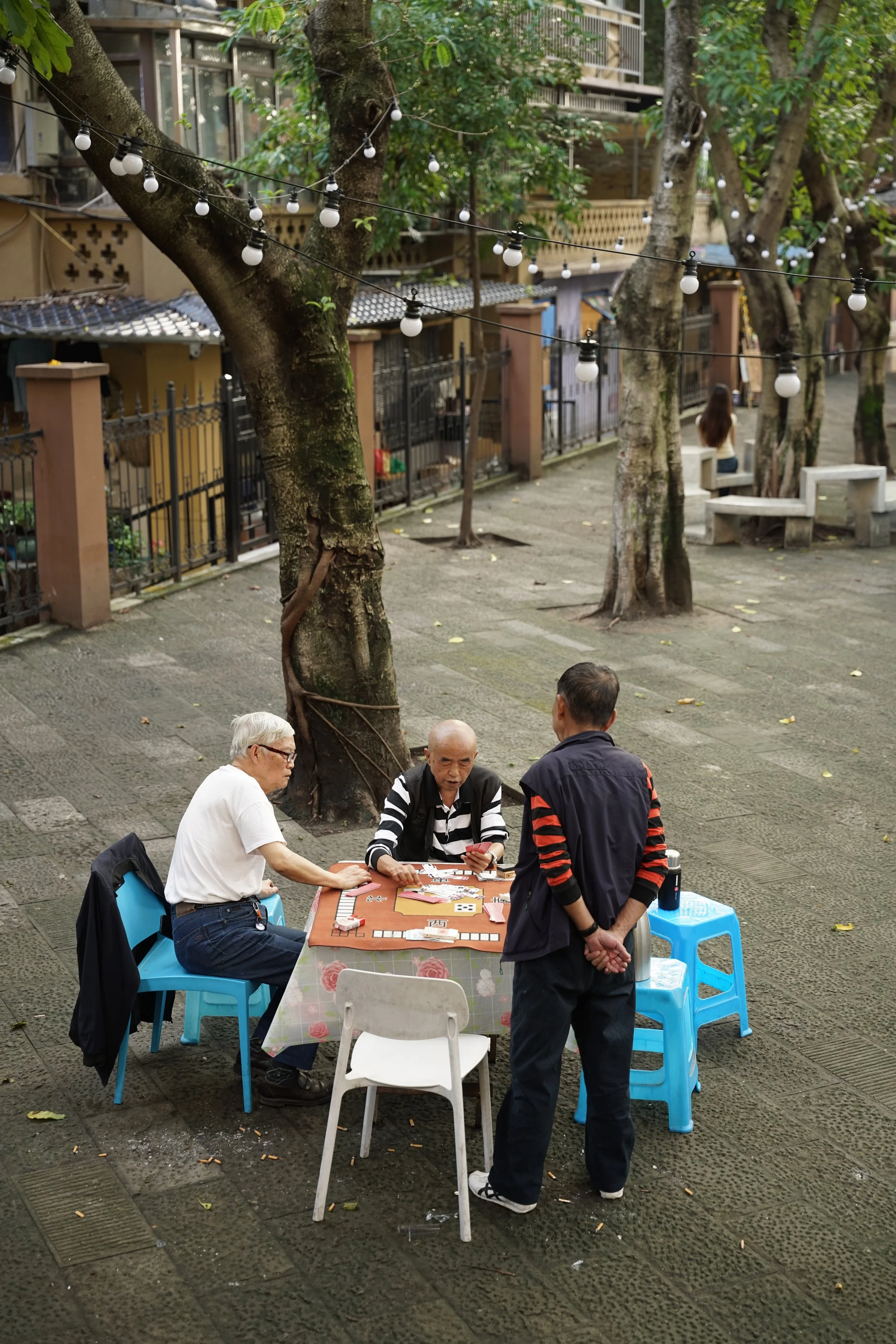
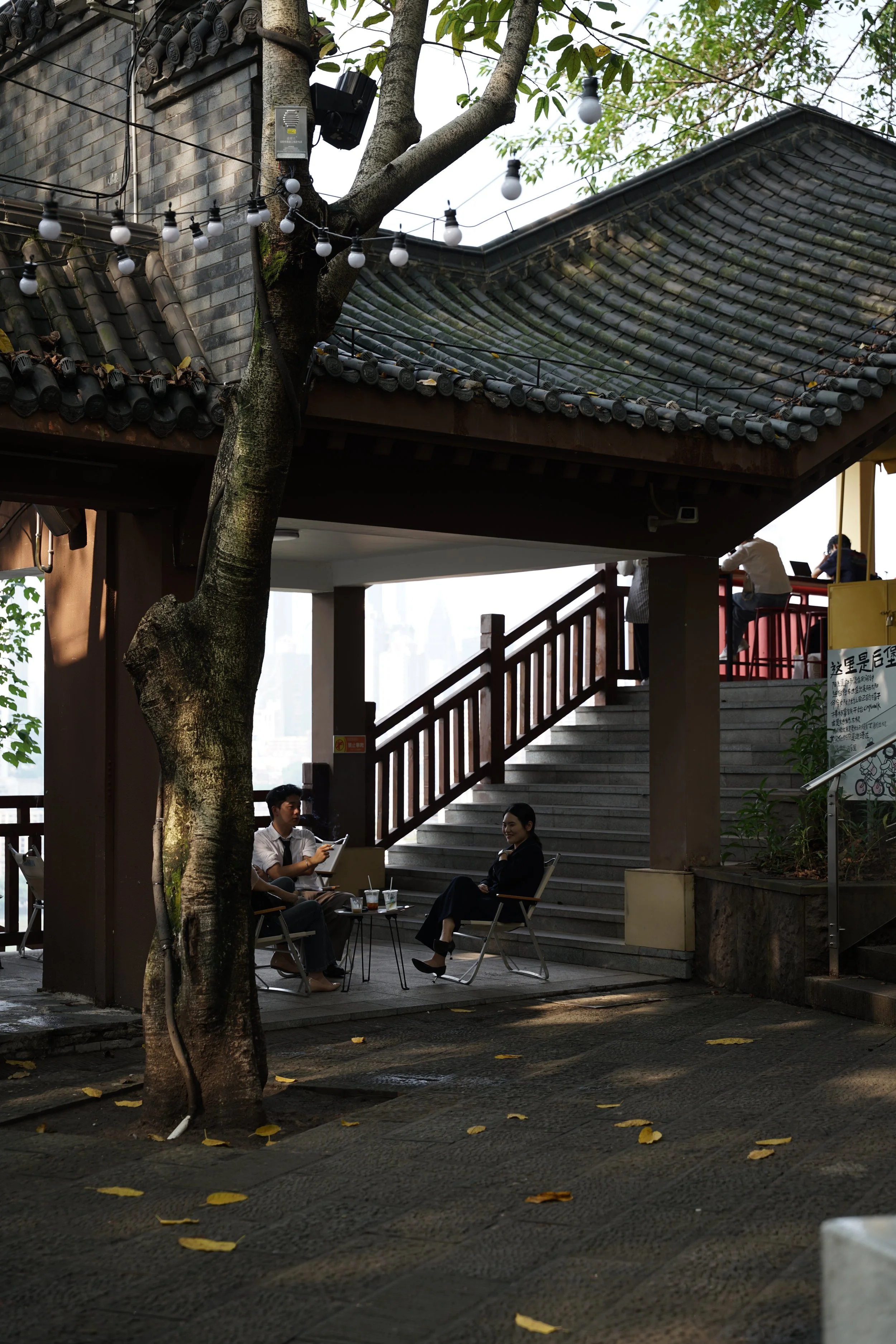
At six in the evening, the stools come out. Nobody quite owns them. They appear outside stairwells and shop doors, plastic and bamboo, none of them matching, and by the time the river turns gold the retired men of Houbao (后堡) have a chessboard balanced between their knees and an opinion on every move. Two steps away, someone in their twenties is ordering an oat latte. Neither group finds the other remotely strange.
This is what a Chongqing neighborhood looks like when it gets a second life and keeps its first one.
A corner the city stopped visiting
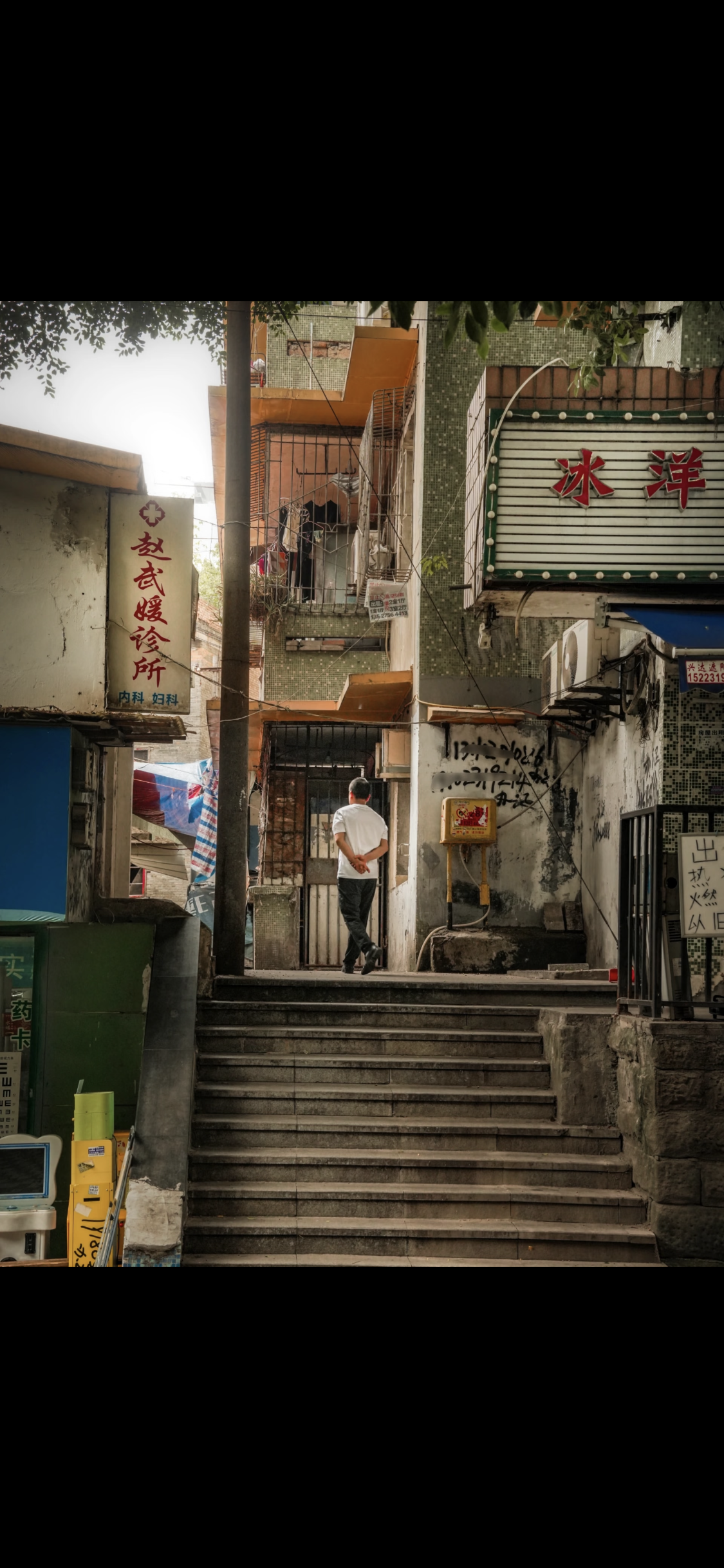
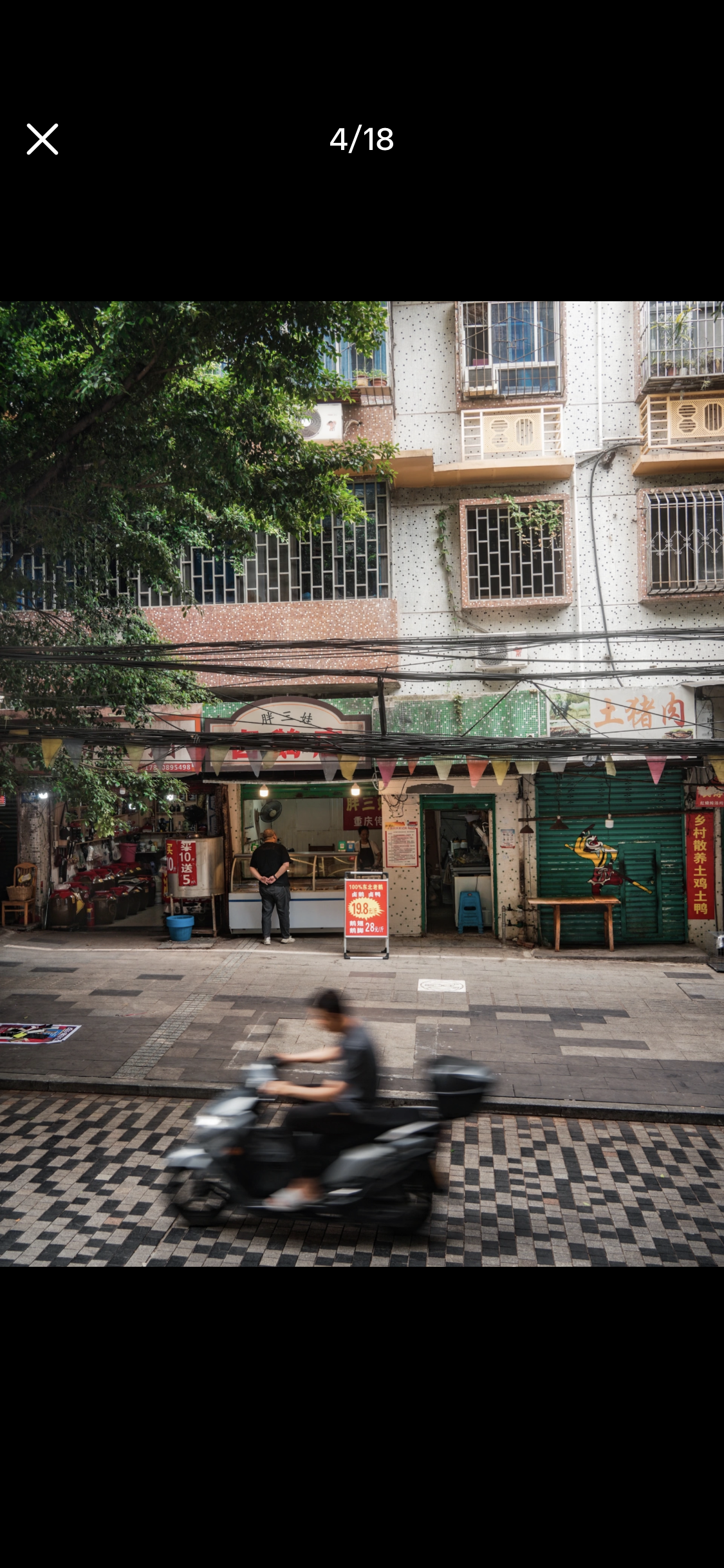
Houbao sits on the south bank of the Yangtze, in Nanping (南坪), a short hop across the water from the skyline everyone photographs. It holds central Chongqing’s largest cluster of 1980s apartment blocks, built for the families of the city’s early state factory workers. For a generation it was one of the liveliest corners of the south bank. Then the city’s center of gravity shifted, the residents grew older, the hills stayed just as steep, and Houbao slipped into a very Chongqing category: the place locals remember fondly and somehow stopped going to.
A renovation that started with listening
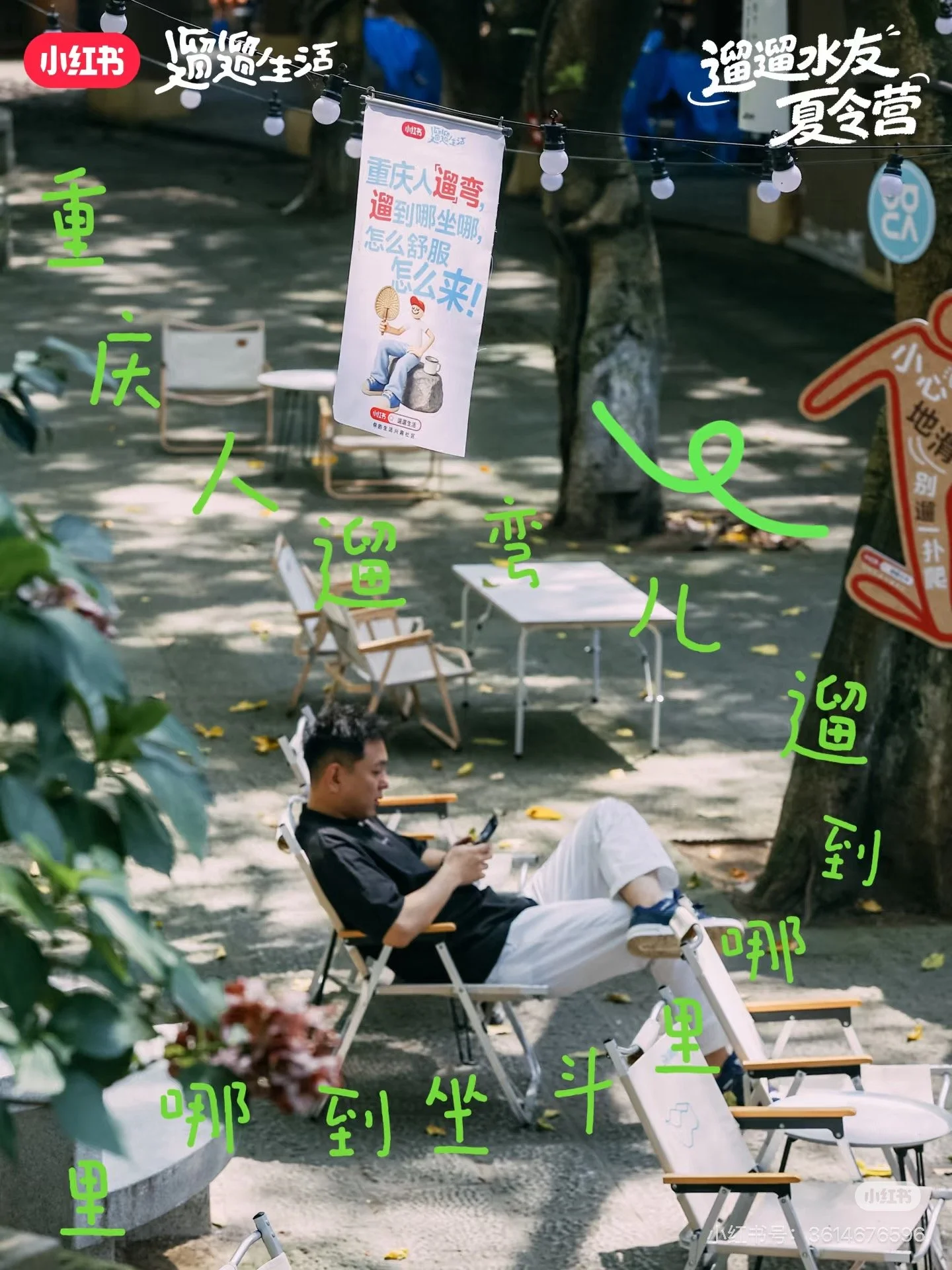
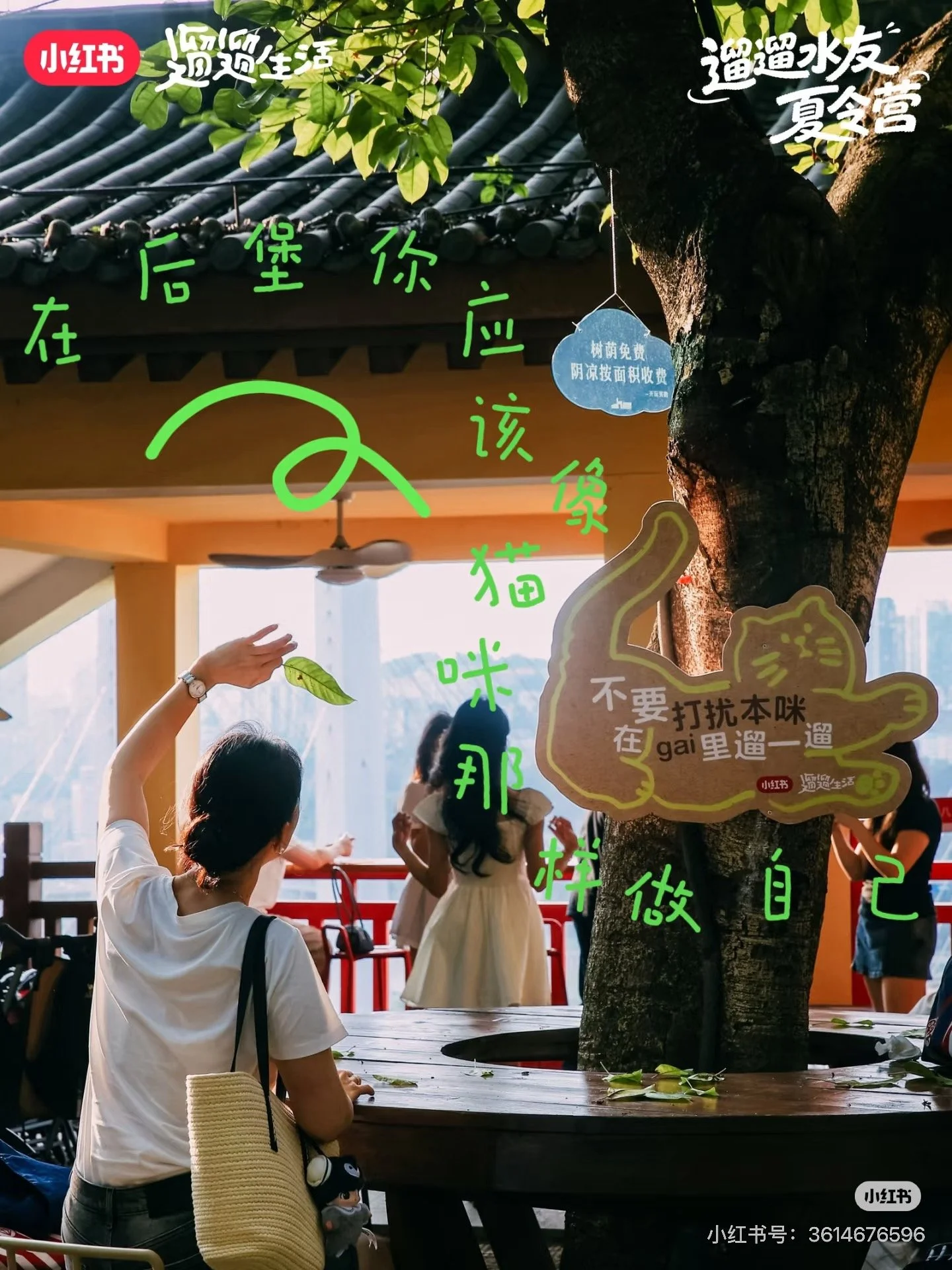
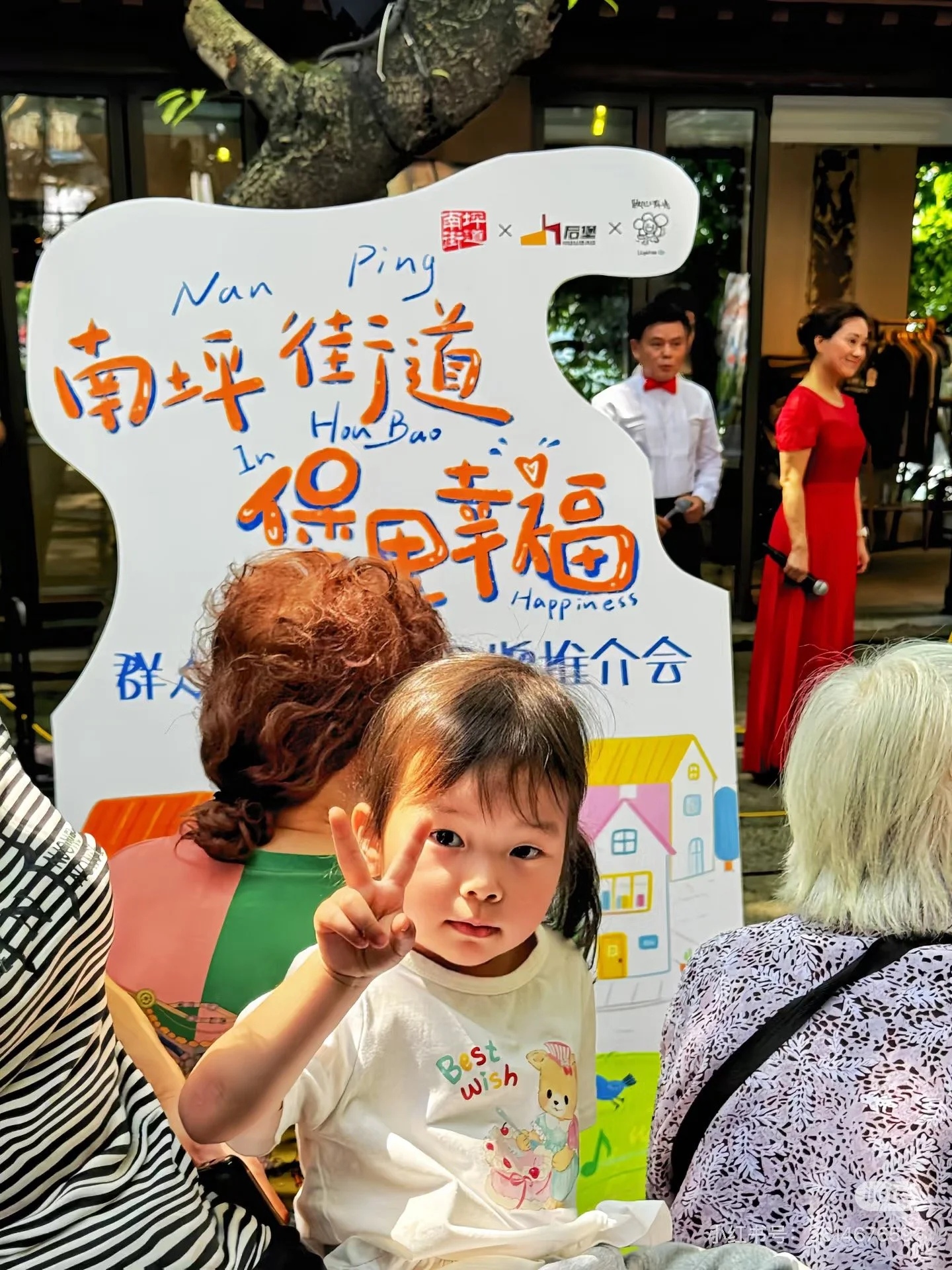
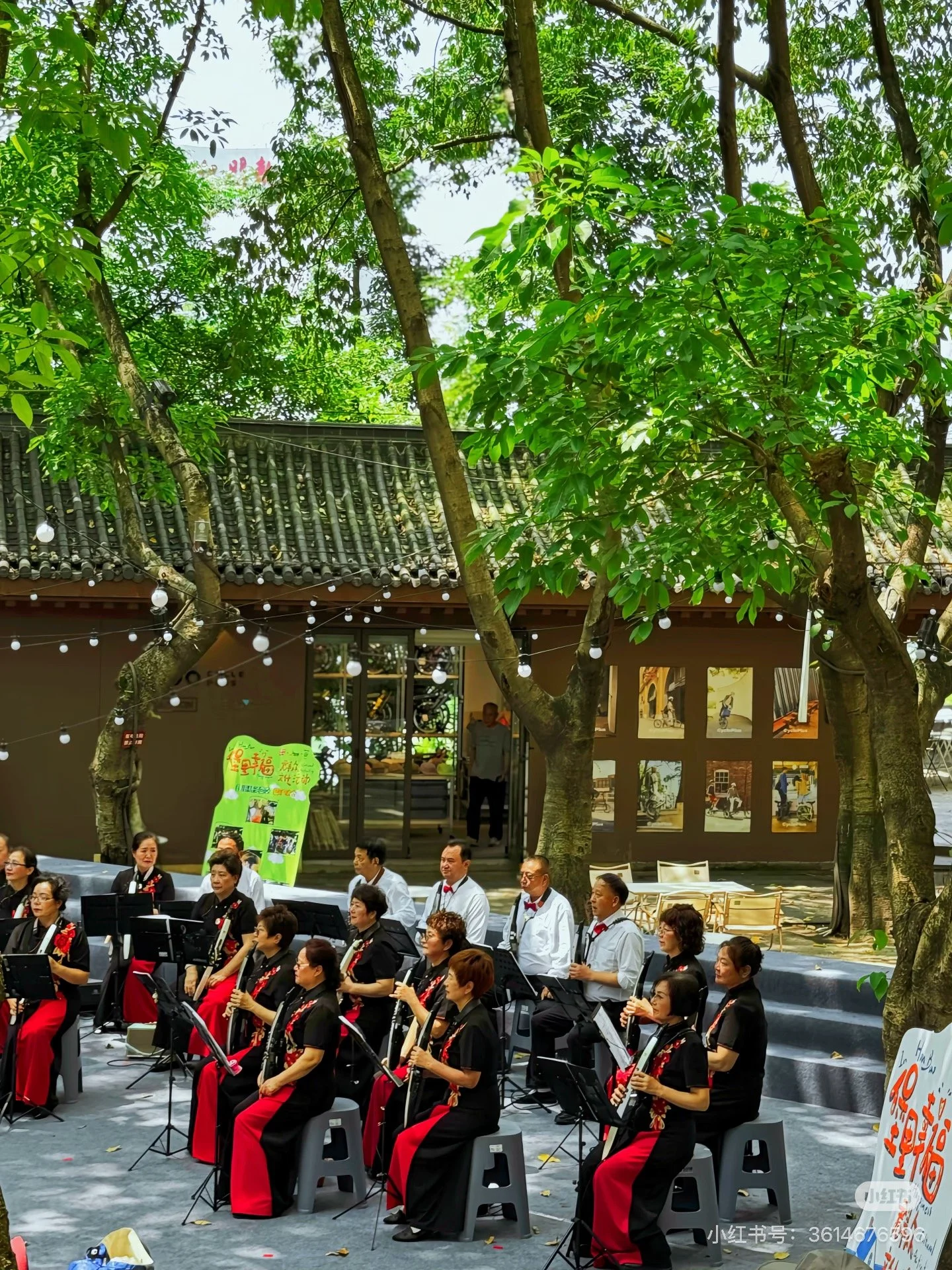
When Houbao joined the south bank’s urban renewal program in 2020, the easy version was obvious. Repaint everything, fill the ground floors with chain stores, call it a cultural street.
What happened instead was slower, and it began with a rule: nobody had to move out. Close to ten thousand people still lived here, so the team behind the project held the commercial side back and sent in a small community crew first. For a long stretch, their whole job was getting to know the neighbors. They borrowed stools from residents to stage pop-up exhibitions on the street, and returned every single one. When they noticed that the family-run kitchens had no way of reaching the office workers nearby, they organized a lunch blind box drop, carrying surprise lunches from neighborhood cooks to companies a few kilometers away.
The physical changes came after the trust did, and they were designed to stay small. The architects, WeLive Architects (未见筑), treated every new addition like a plug-in: a compact box for a café or a studio, slotted into a gap in the neighborhood, with open space deliberately left between one box and the next. That in-between space was the point. It’s where residents were already playing cards and sitting out the evening, and it’s still theirs. Upstairs, a shared living room now hosts the neighbors’ dance and singing sessions.
Facades went from tired grey to a warm apricot. The old Nanping Gate was restored. Houbao Park, the neighborhood’s main public space, took in fourteen small shops and studios (coffee, a bakery, a cycling store, a tiny bar), yet more of the park stayed public than commercial, so the people already sitting there could keep sitting there. A share of the rent now flows into a community fund that pays for street lights, cleaning and repairs. The new businesses help keep the old neighborhood running.
Who lives here now
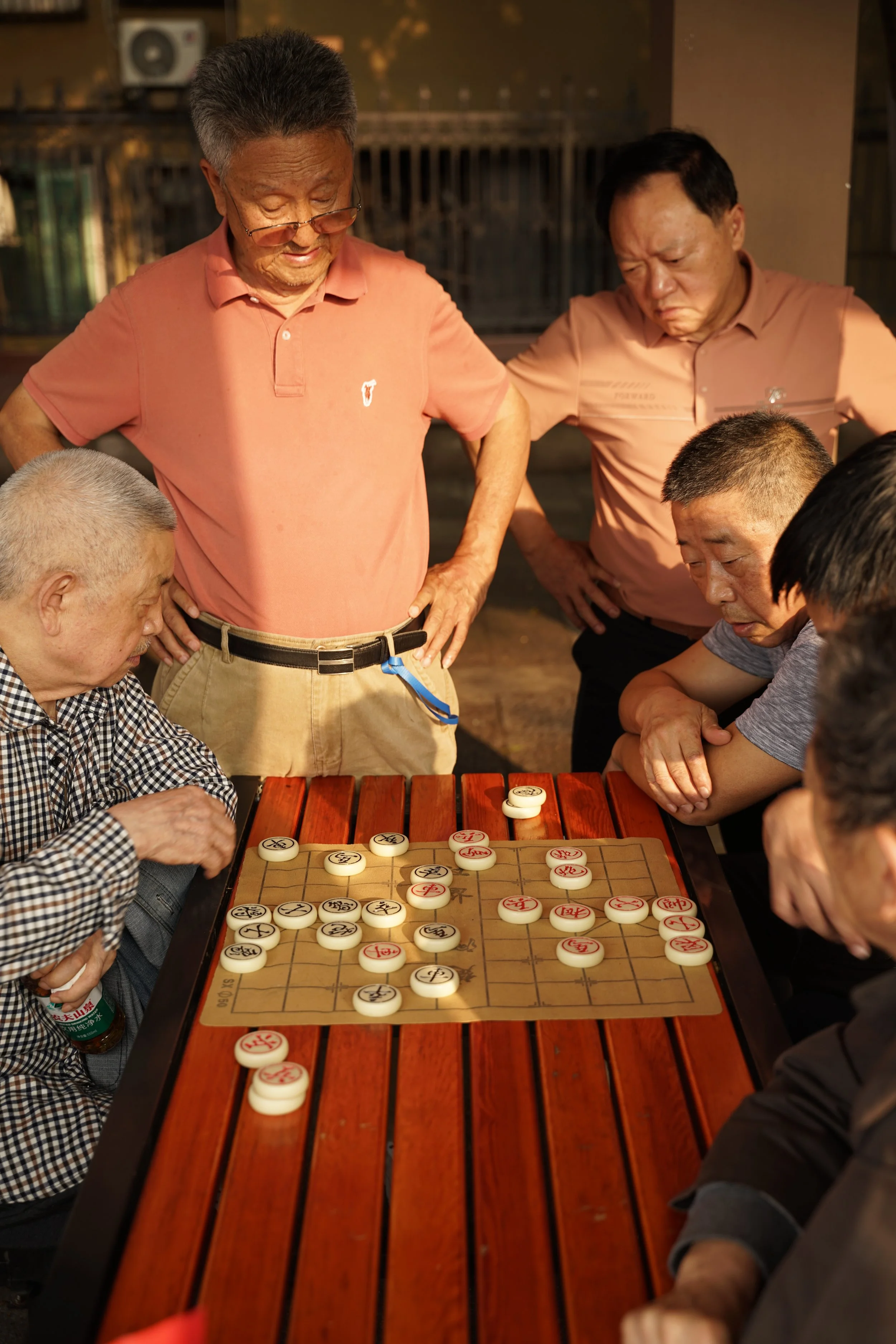
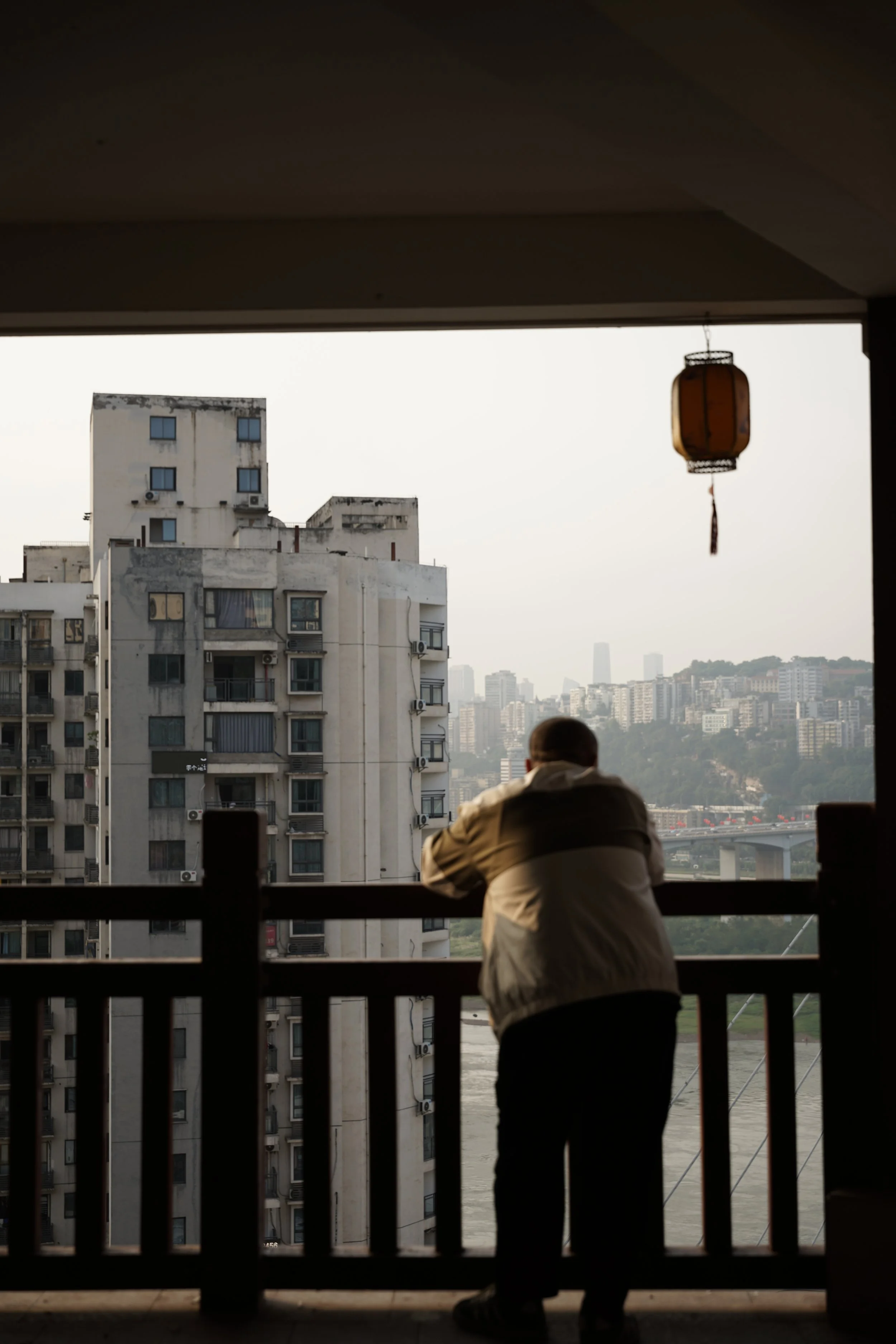
The clearest sign it worked: people are moving back. Former residents who left years ago have returned, and most renters today are in their twenties and thirties. The aunties (孃孃, niángniang) who once eyed the new coffee shop now carry its member cards. The old-timers (老辈子, lǎobèizi) still run the afternoon with open-air tea (坝坝茶, bàbà chá) and long rambling stories, the kind locals call bǎi lóngménzhèn (摆龙门阵). Visitors are welcome here, and the neighborhood still clearly belongs to the people who live in it.
Why Houbao tastes best after dark
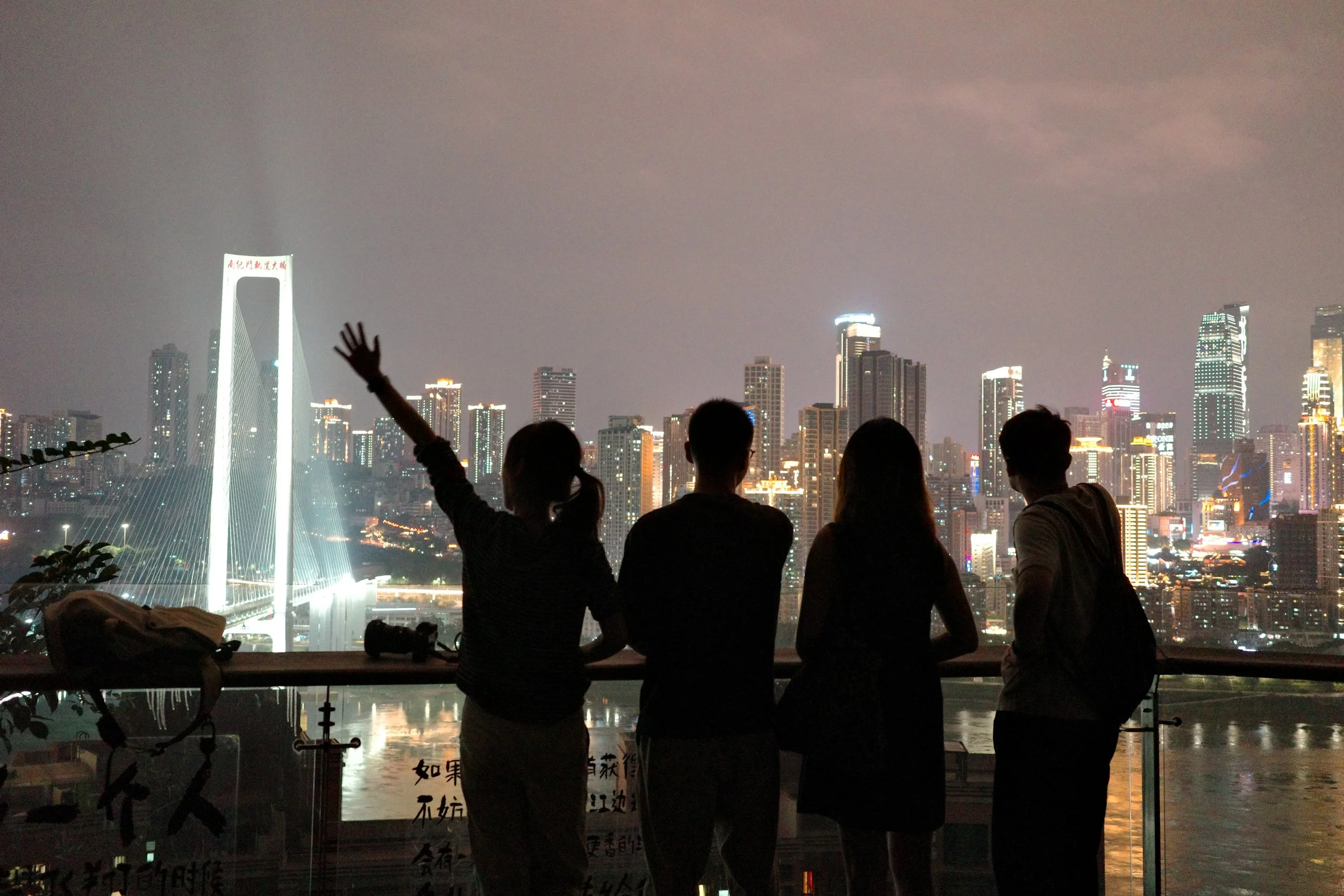
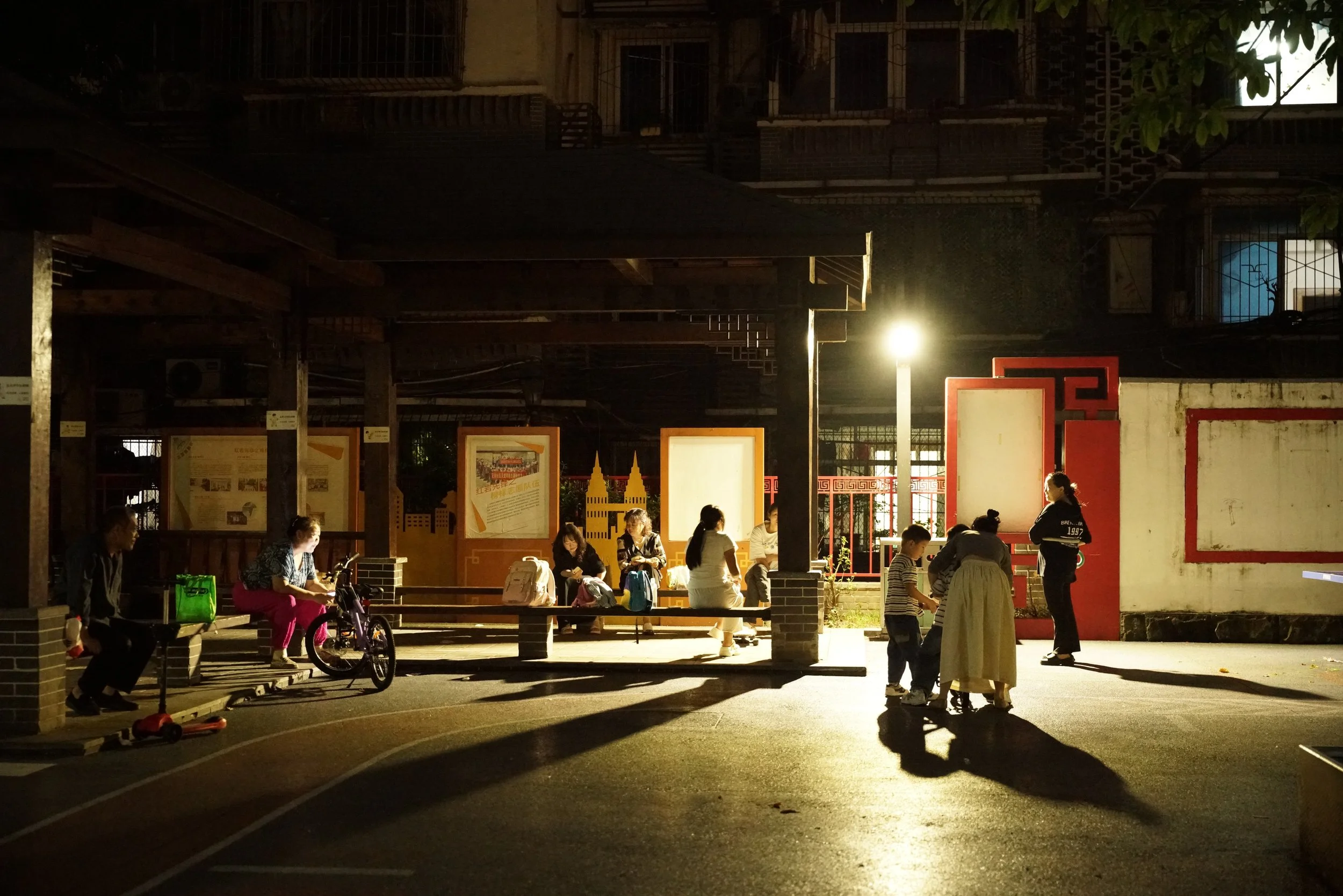
Most people who find Houbao find it in daylight, for the apricot walls and the photos. That’s the half-day version. The neighborhood really opens up once the office crowd clears out and the stalls light up: counters that have been frying the same thing for decades, a snack that only appears after seven, the bowl residents queue for that no review site has caught up with. Very little of it is signposted in English, and most of it sits one turn off the main path.
Then comes the climb. Houbao is built on a slope, so the evening ends higher than it started, at the edge of the park, with the Yangtze below and the lit-up peninsula across the water. After a few hours inside the neighborhood, that famous skyline looks different. You’re seeing it from where the people who live here see it.
Spend an evening here with us
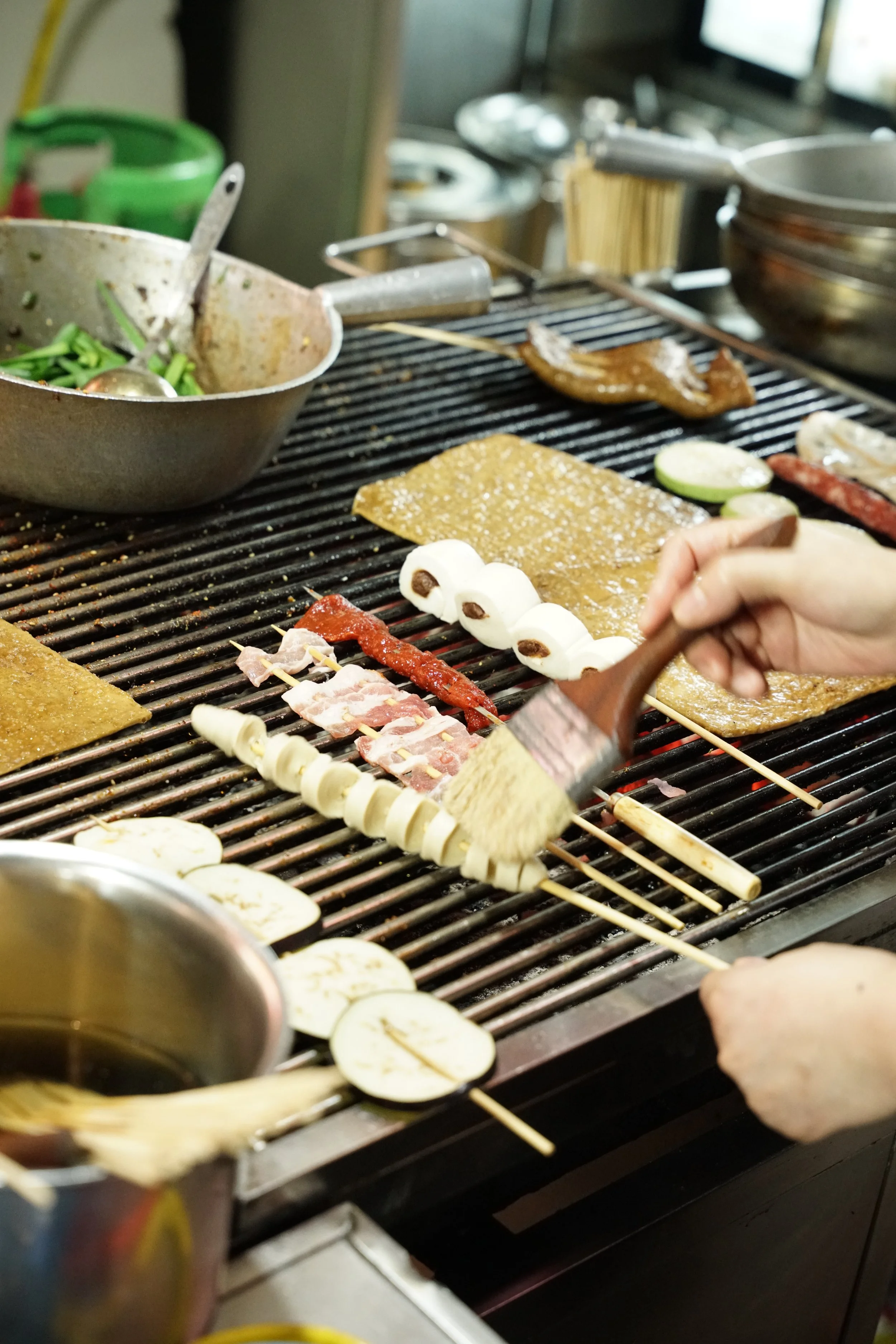
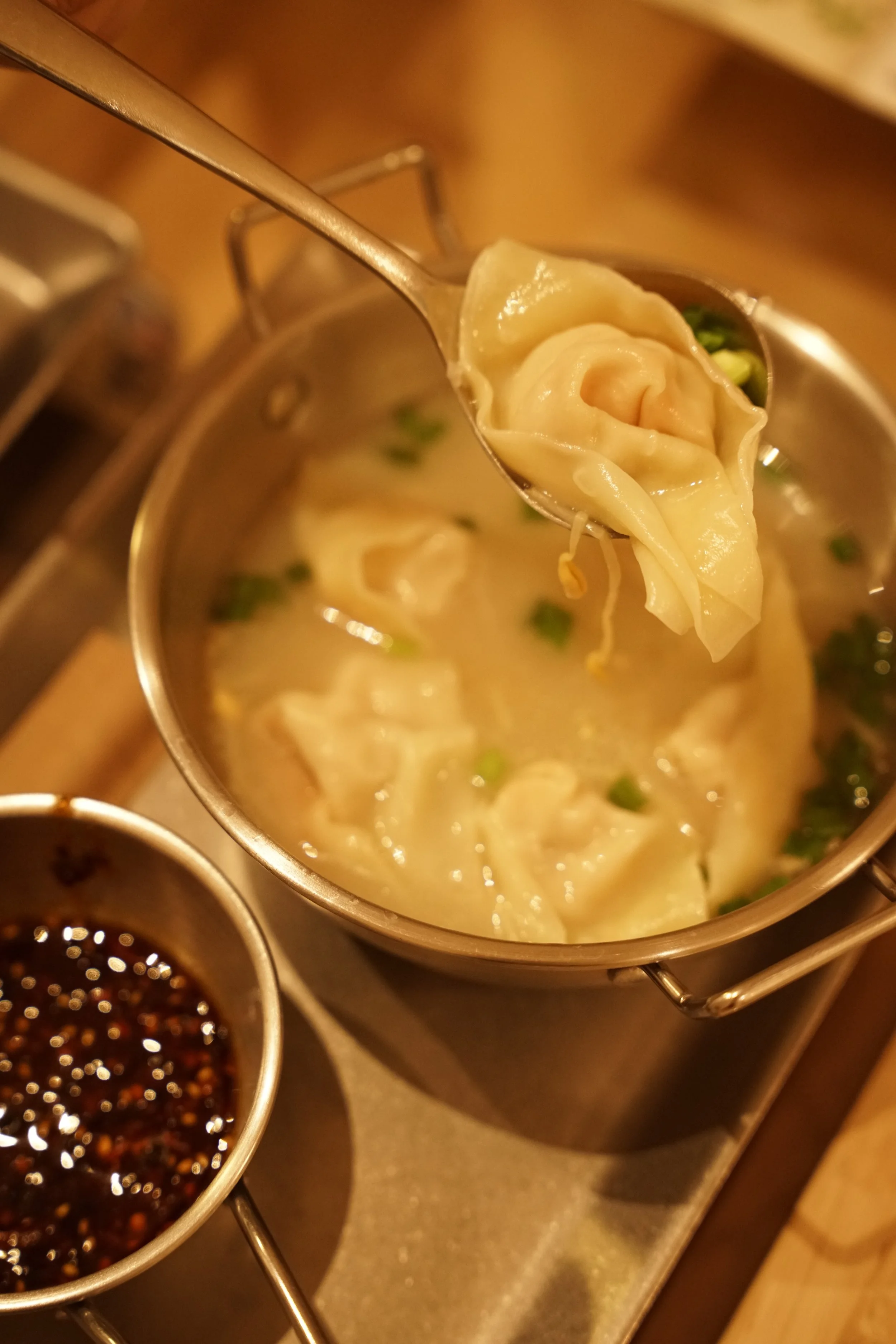
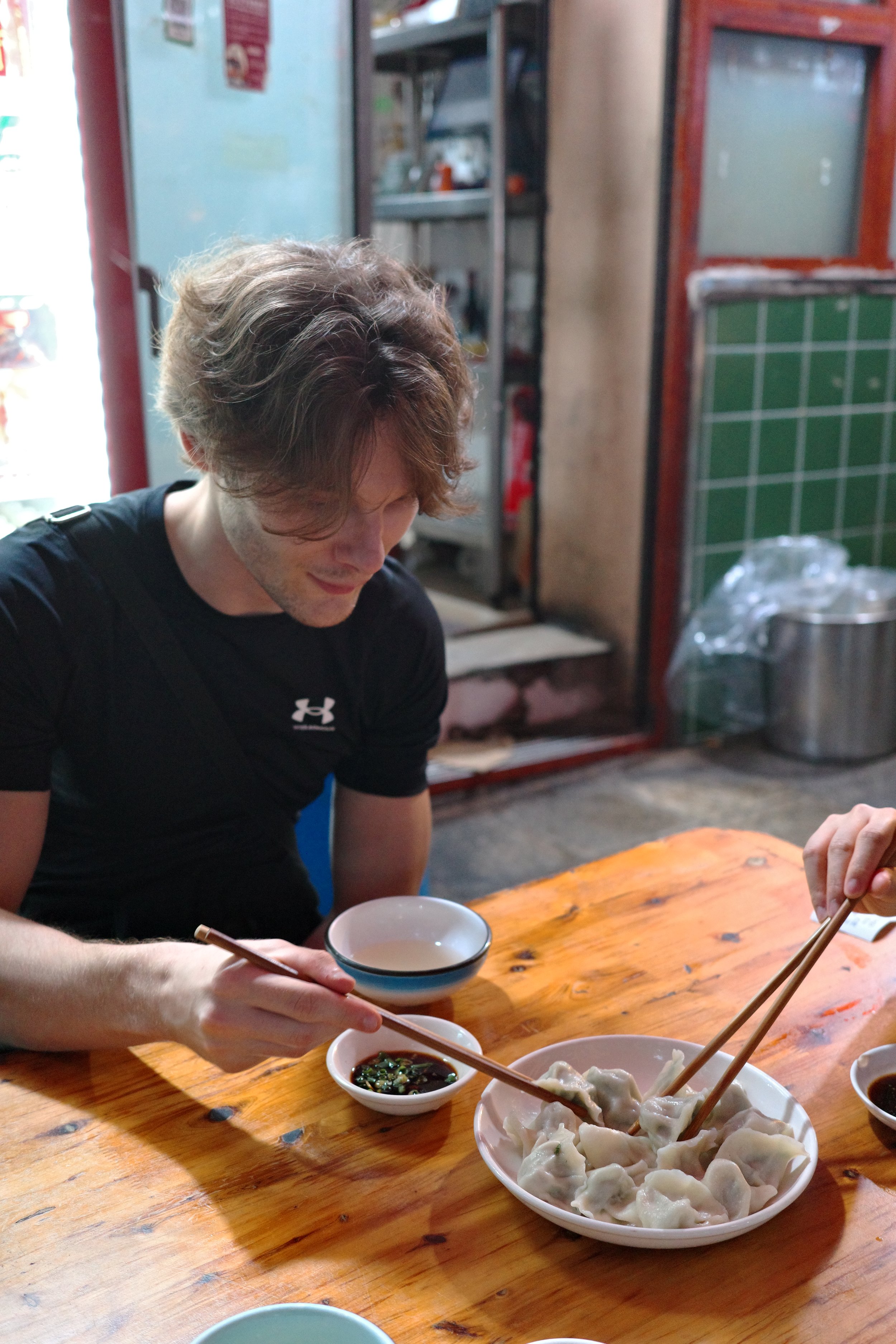
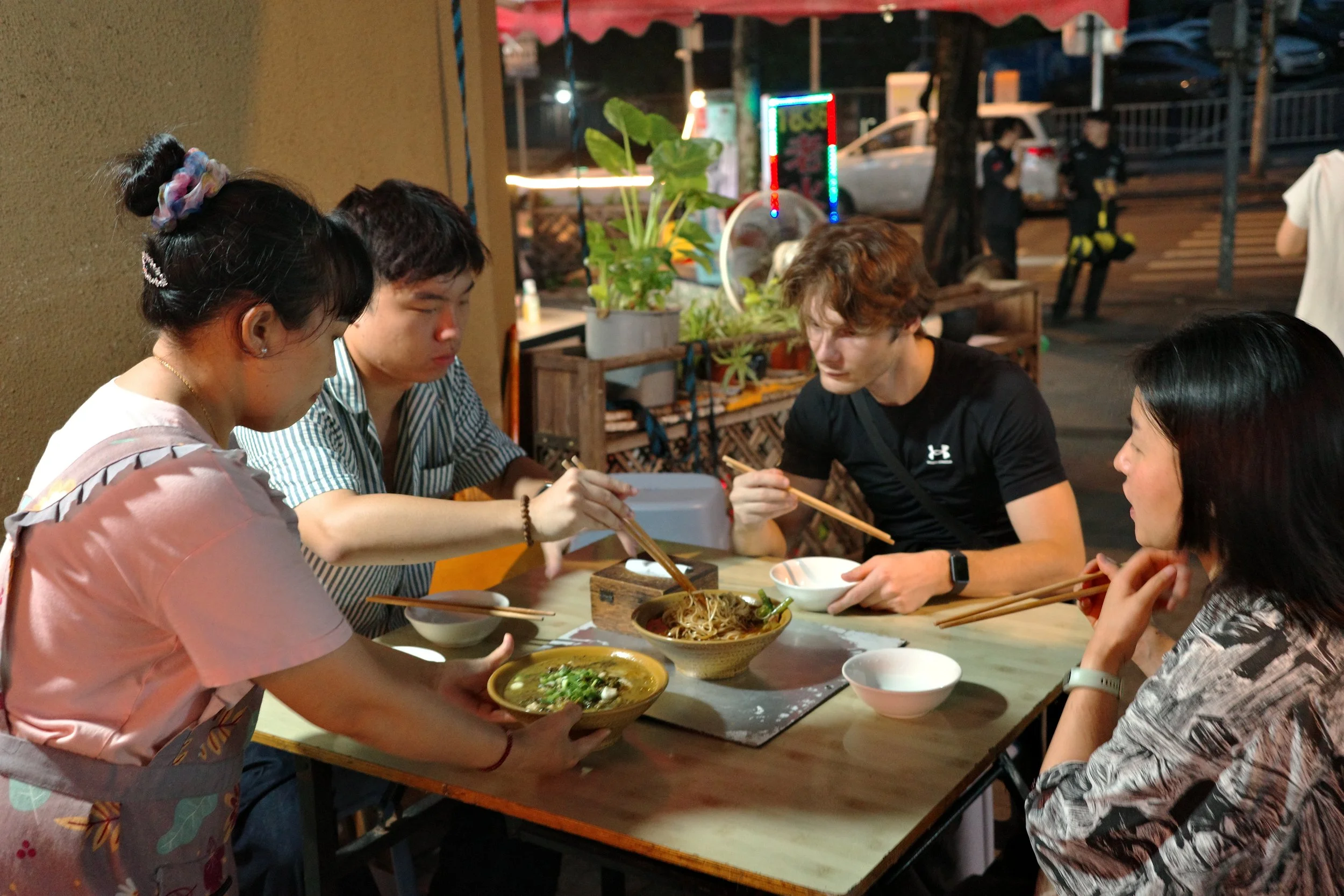
We’ve just opened an evening Houbao food tour: six street food stops, each one picked by our team the way we’d plan a night out for a friend visiting from abroad, ending at that view. Between stops, we’ll share more stories about this neighborhood and the city we grew up in.
For us, Houbao feels a lot like the Chongqing we grew up in: a little worn, very loud, generous with food and slow to say goodbye. Watching it come back to life without losing any of that has been one of the quiet joys of being home. We’d love to share it with you, one bowl at a time, until the river lights come on. Come hungry and curious.
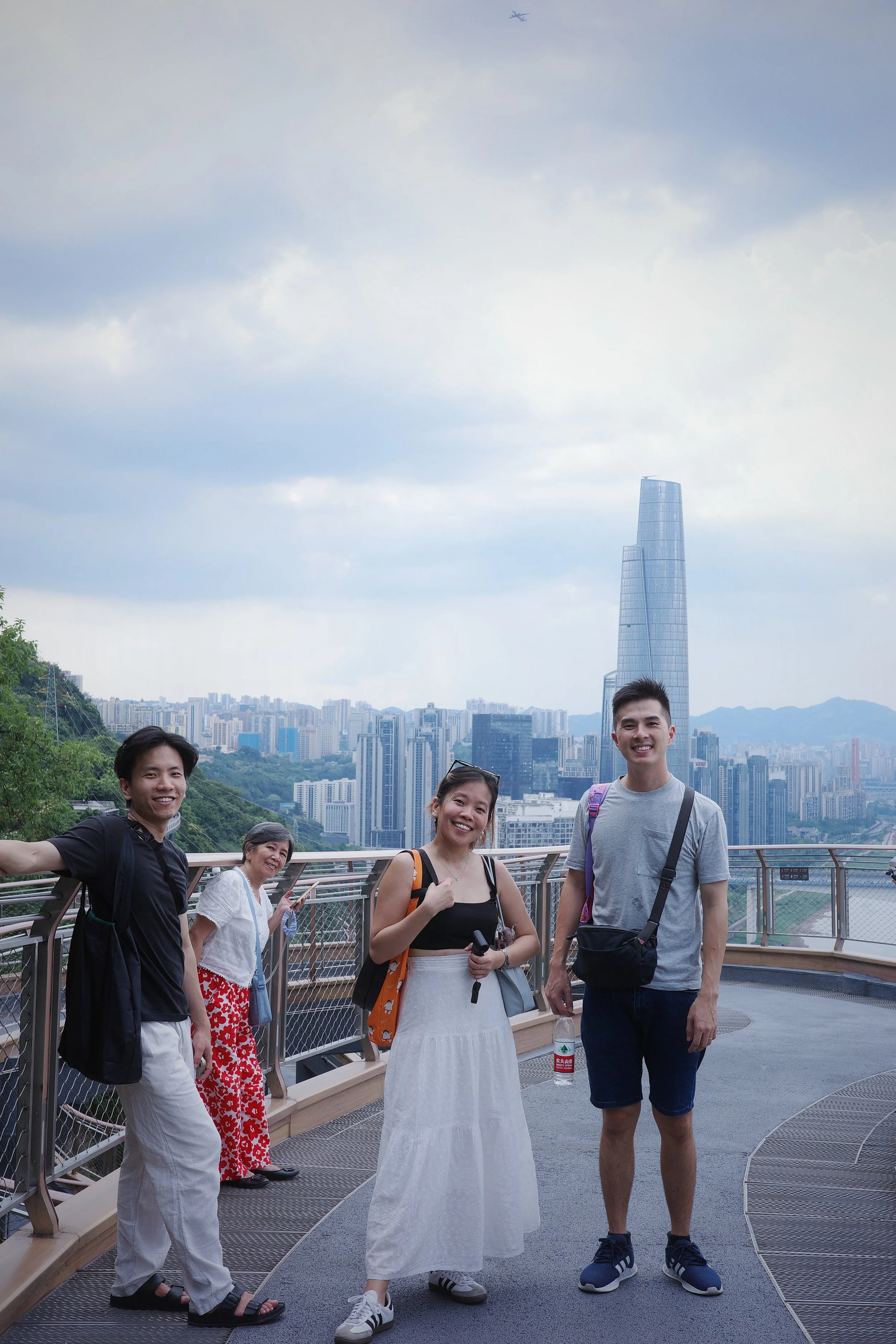
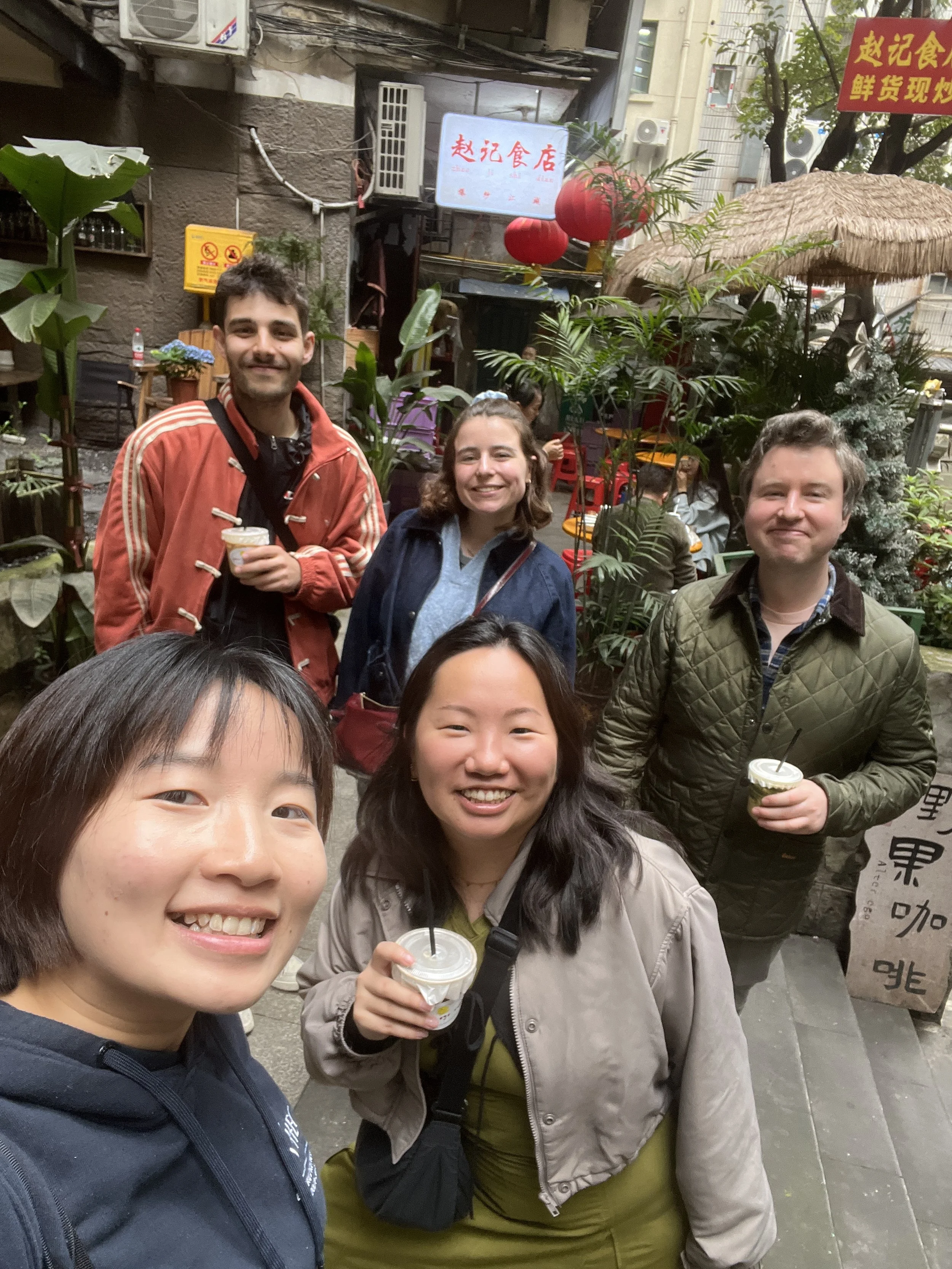
Three hours, six stops, one neighbourhood no tourist goes to.
We start at 6:30pm and eat our way down one street in Houbao, Chongqing locals’ reserved riverside block: hand-folded dumplings, steamed buns, ginger duck noodles, skewers over charcoal, wontons in red oil, and something cold and sweet at the end. Six stops, about a hundred metres apart, in groups of no more than six.
Your guide does the ordering, the translating, and the talking to the owners. When the last bowl is empty we walk five minutes uphill, and the whole river lights up below you.
¥500 per person. This €20 is the deposit; the balance is due on the night by WeChat, Alipay or cash. Message us with your date before you pay and we'll confirm the evening within 24 hours.