
Underneath Every Night Out in Chongqing, There's a War Nobody Mentions
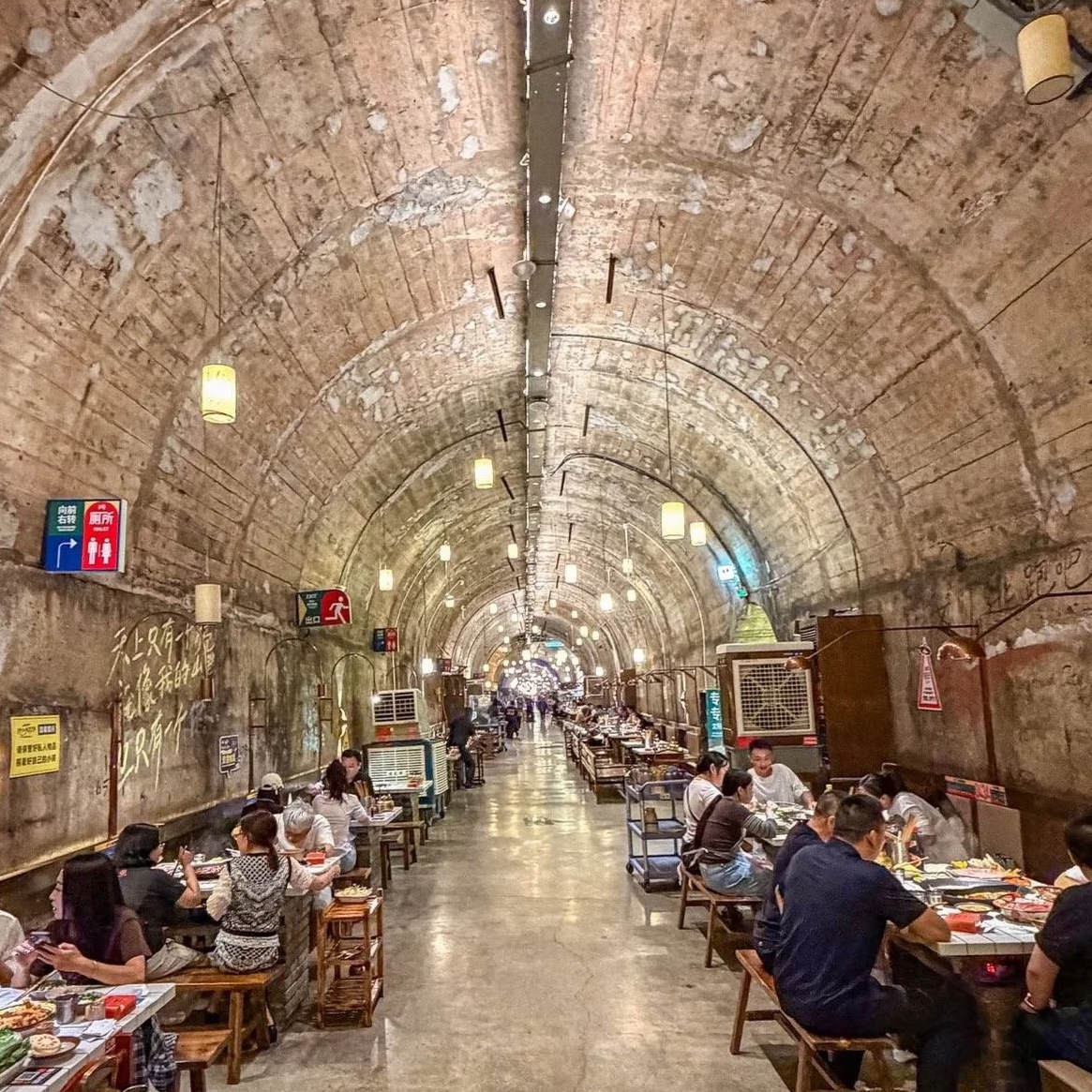
Underground World (地下之城)Hotpot
You're three bites into a plate of beef tripe (毛肚), chopsticks slick with chili oil, when you notice the ceiling. It curves. It's rock, not plaster, and it stays cold to the touch even while the broth in front of you rolls at a full boil. Nobody at the next table thinks this is strange. In Chongqing, eating dinner inside a bomb shelter isn't a theme, it's Tuesday.
For nine years starting in 1937, Chongqing was not just another Chinese city. When Nanjing fell to Japanese forces, the national government moved here and called it "Peidu (陪都)", the wartime capital, and spent the next several years trying to survive relentless bombing raids from the air. That history didn't get bulldozed when the war ended. It got built over, lived in, and eventually eaten in.
The square you already stood in
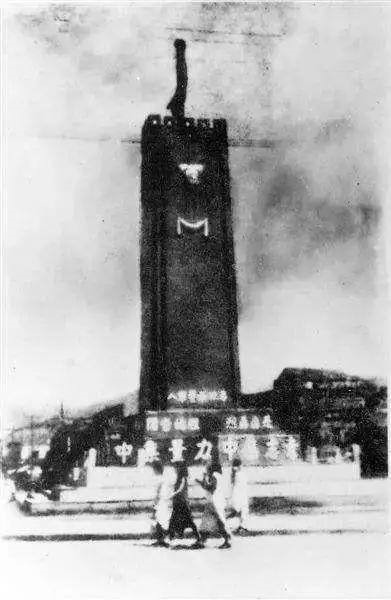
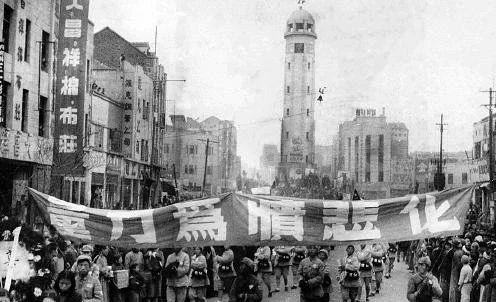
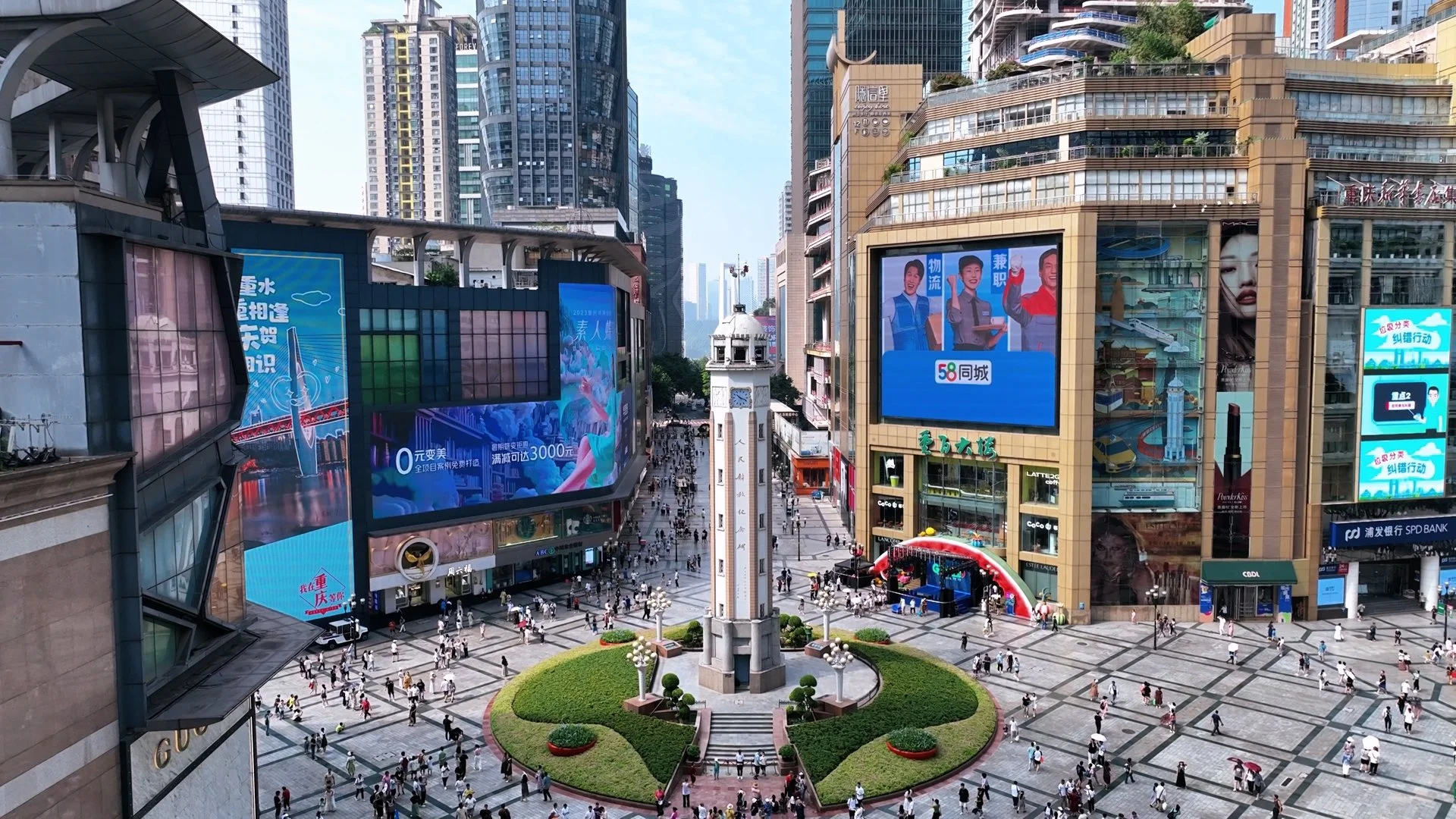
Every visitor ends up at Jiefangbei (解放碑, Liberation Monument) within a day of arriving. It's the LED-lit, shopping-bag-heavy center of the city, the square where every group photo gets taken. What almost nobody mentions is that the monument you're photographing started out as the spiritual fortress (精神堡垒), a black timber tower built in the early 1940s to sound air raid sirens while the bombing campaign was at its worst. It was built to symbolize the resilient spirit of Chongqing people during the war.
It didn't survive the war intact. What eventually went up on the same spot afterward was a proper monument to victory instead, later renamed the Liberation Monument you're standing under now, bubble tea in hand. It's also the only monument in the country built specifically to mark victory over Japan, which is part of why this square carries more weight for locals than a shopping district usually would. Same patch of pavement, three different chapters, and the city just kept building on top of itself.
Two rooms carved out of the same hillside
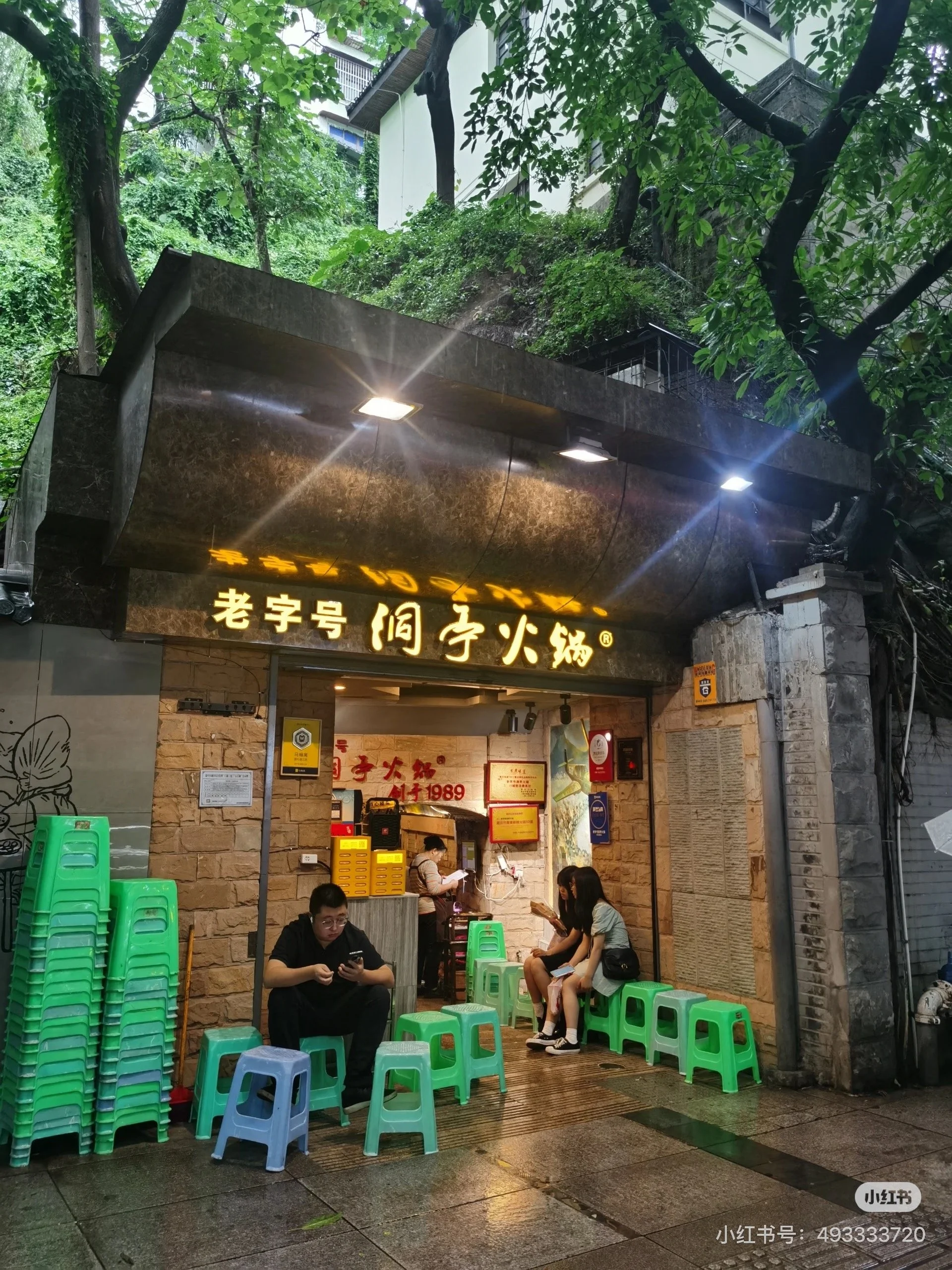
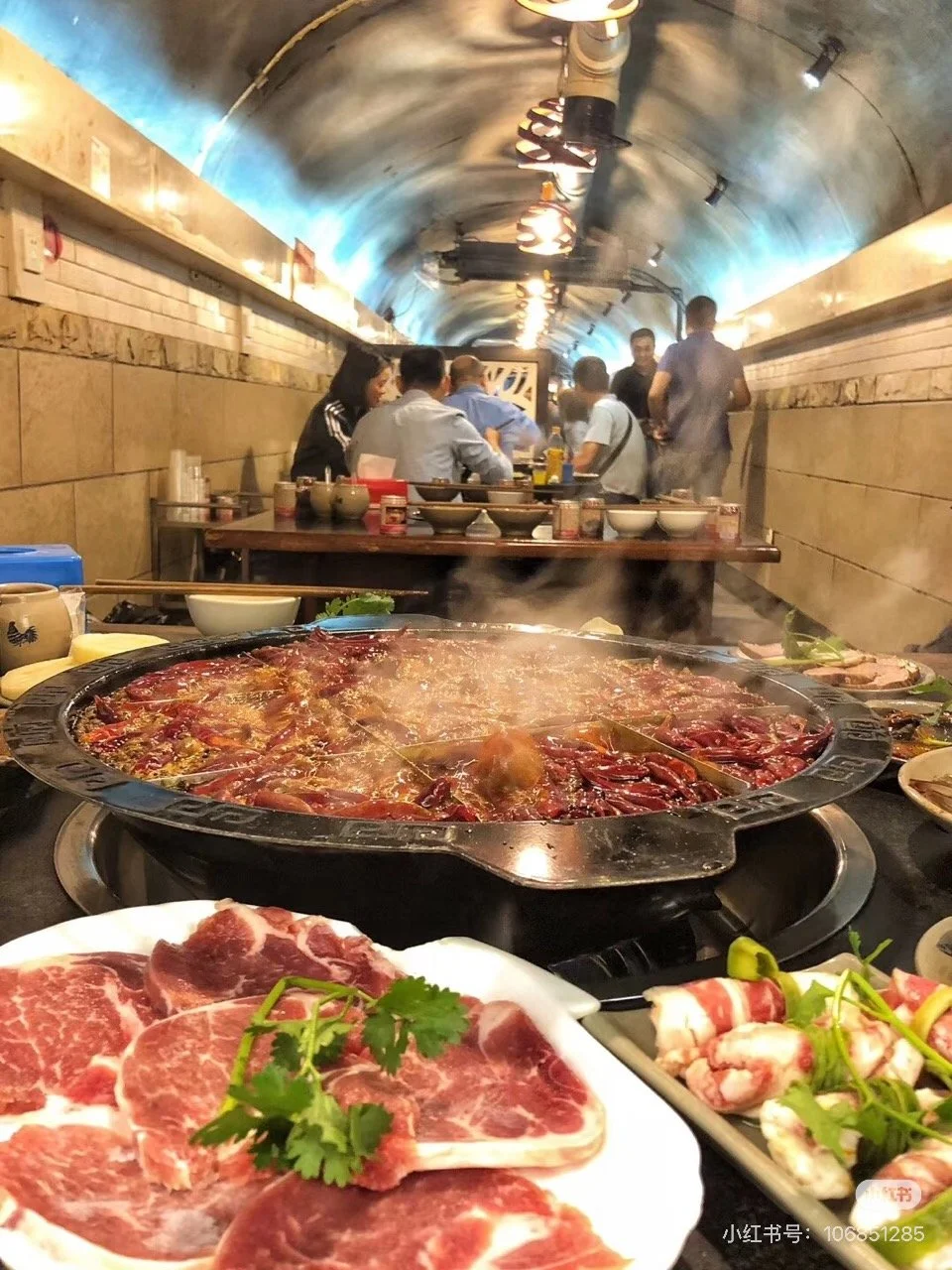
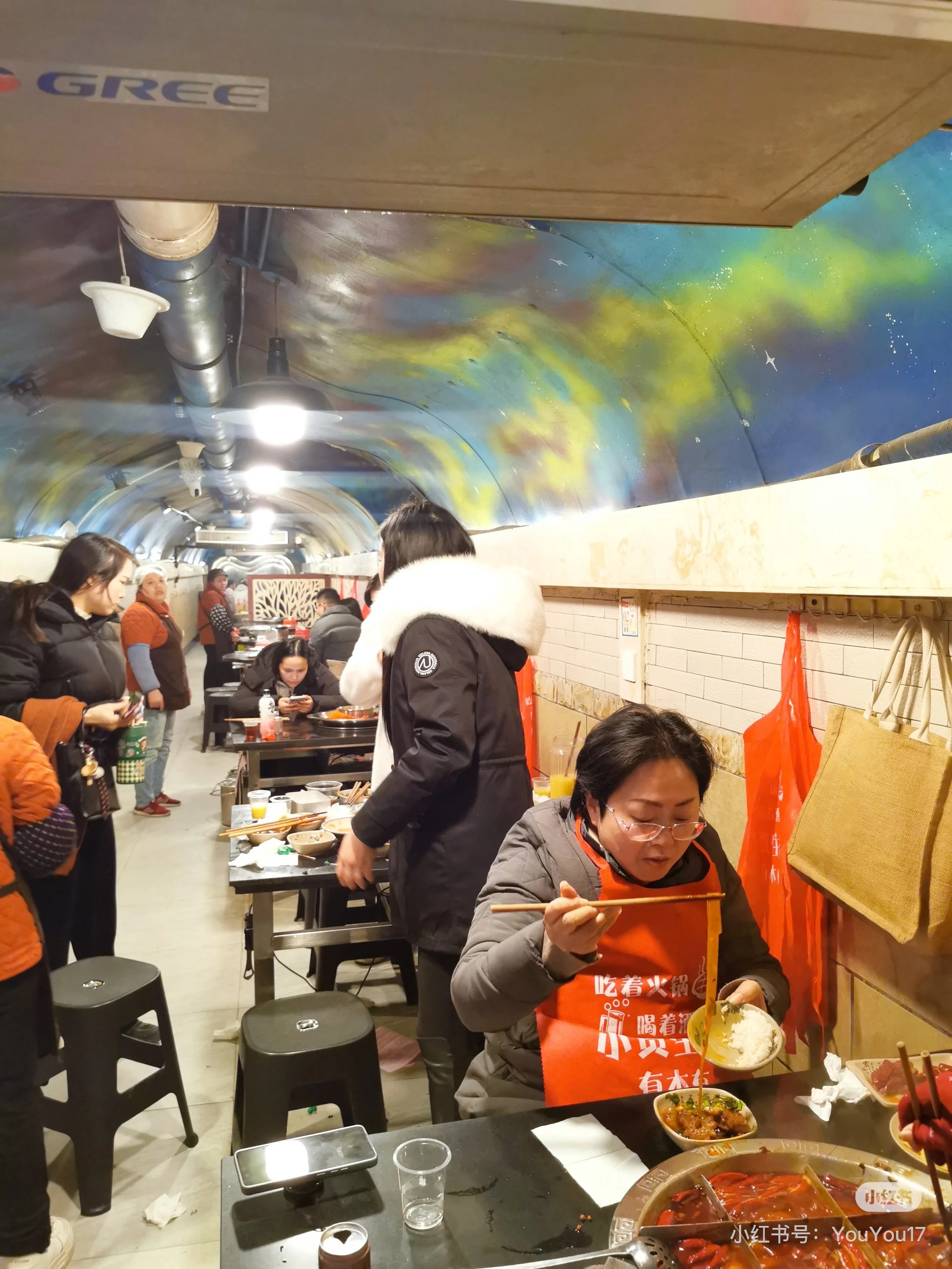
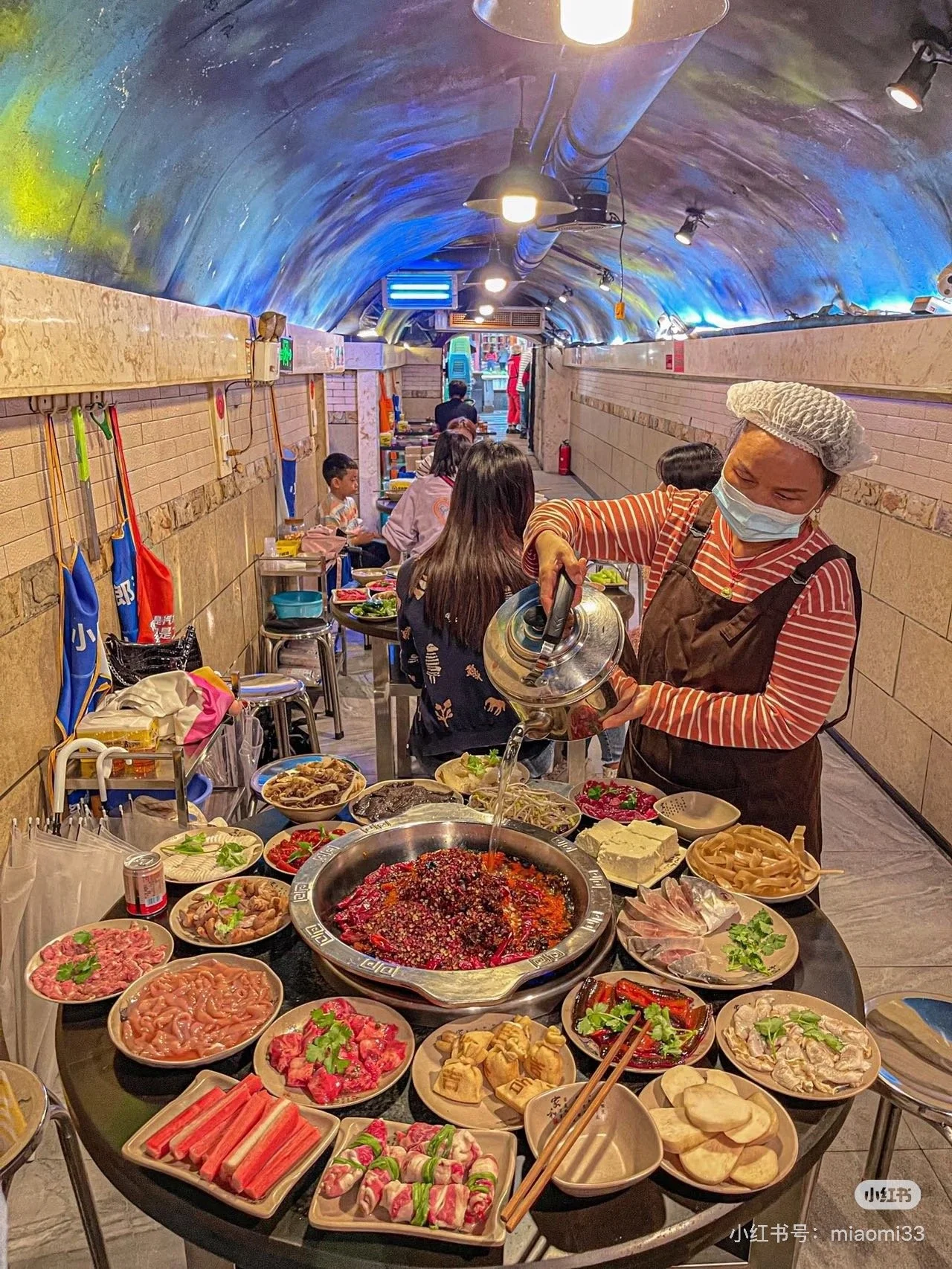
That habit of building on top of history lives most obviously underground. During the bombing years, Chongqing dug more than 1,600 air raid shelters (防空洞) into its hillsides, and when the war ended, the city never really stopped using them.
On Zhongshan San Lu Road (中山三路), Dongting Hotpot (洞亭火锅) has been serving nine-square-grid hotpot inside an actual shelter since 1989. The tables run single file down a narrow tunnel because that's the shape the rock gave them, and the temperature never shifts no matter the season outside.
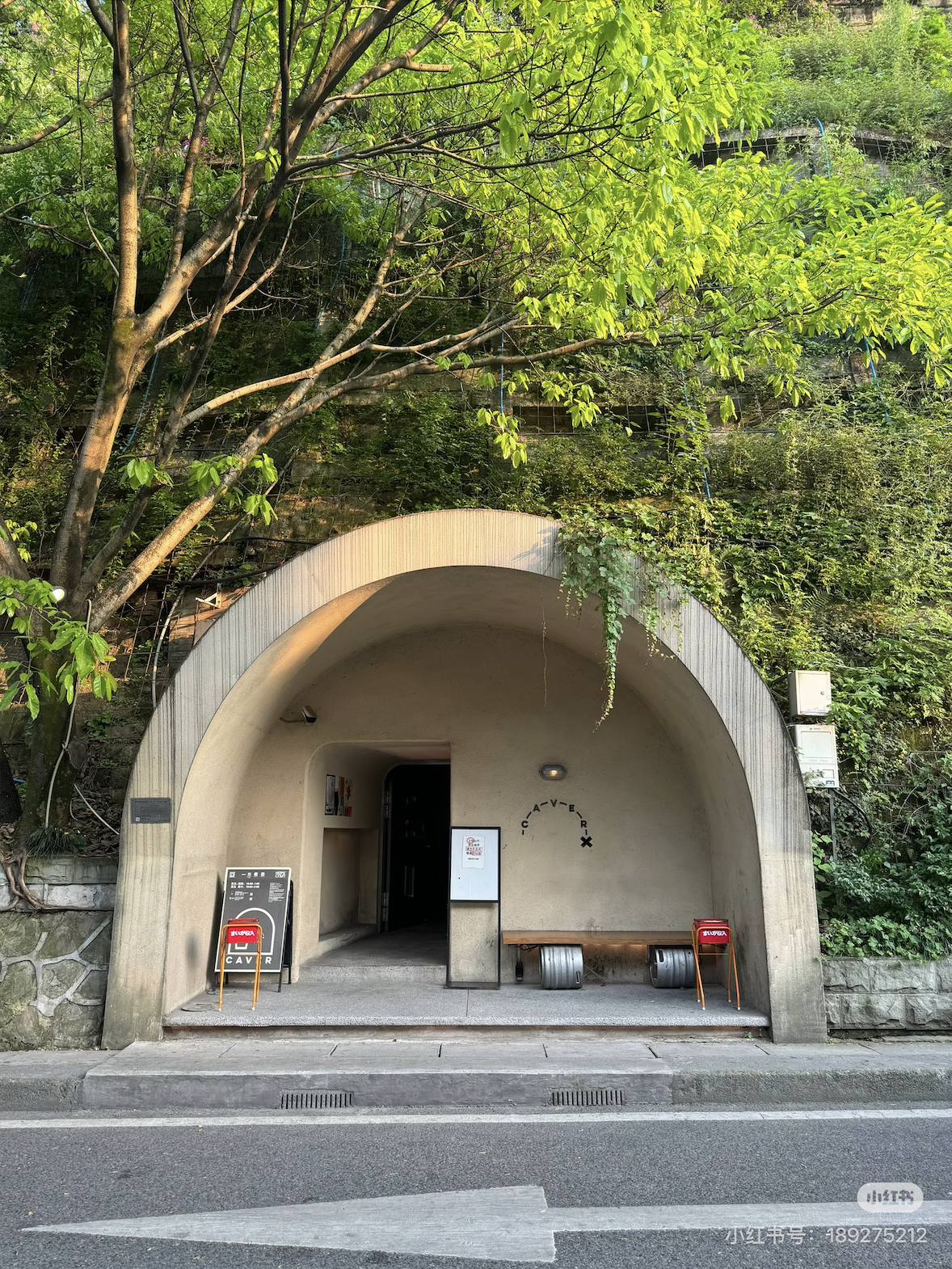
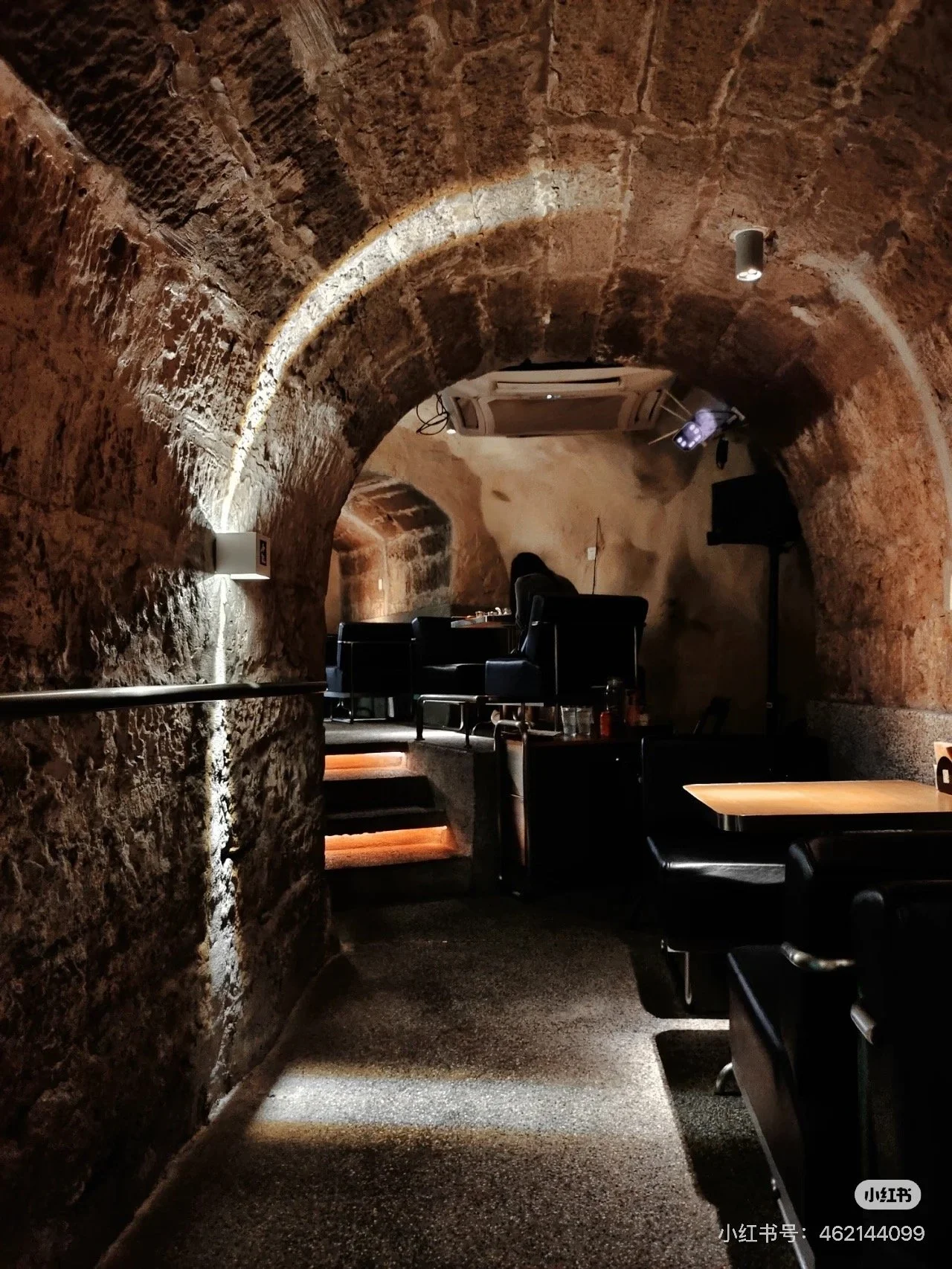
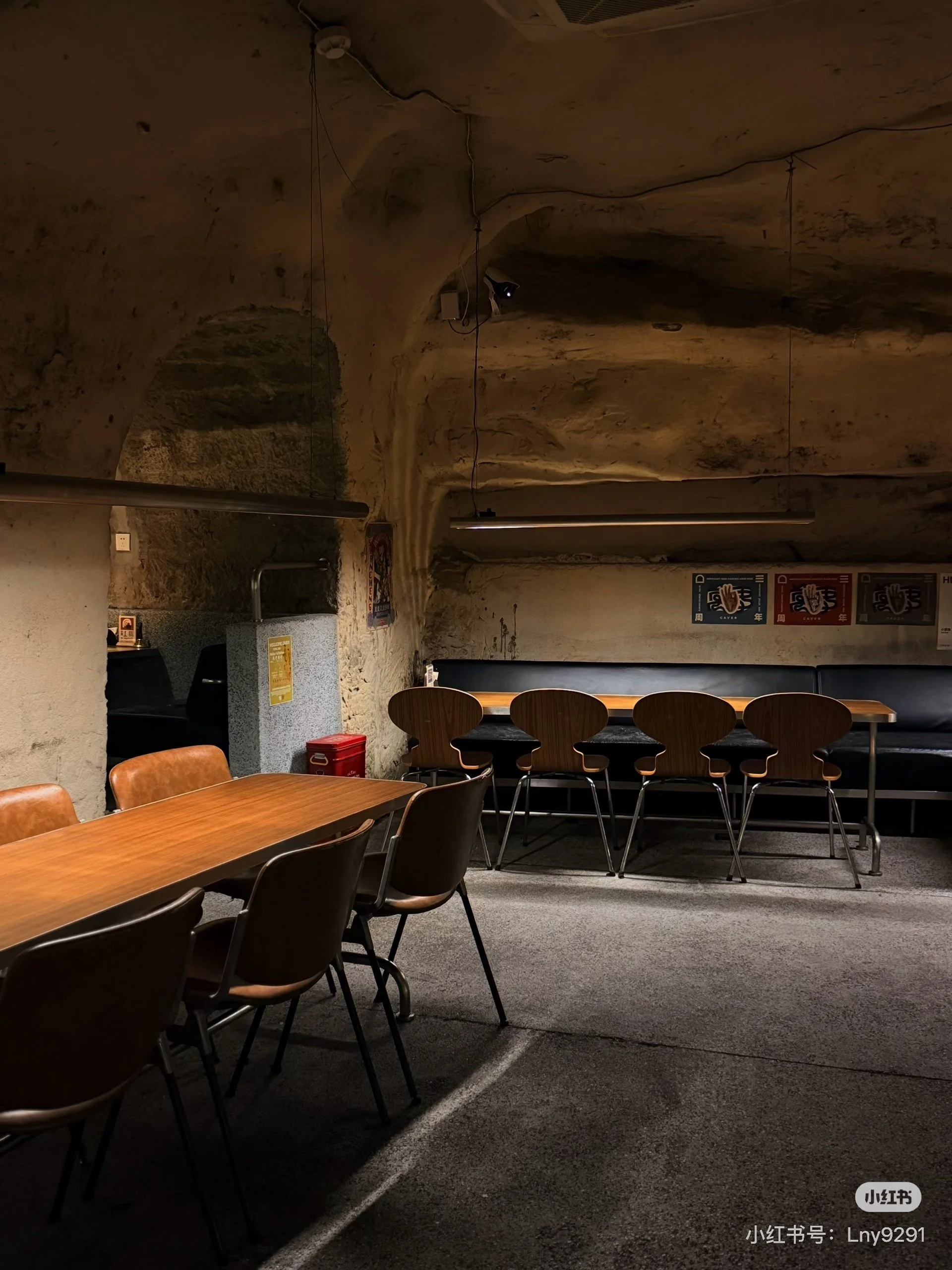
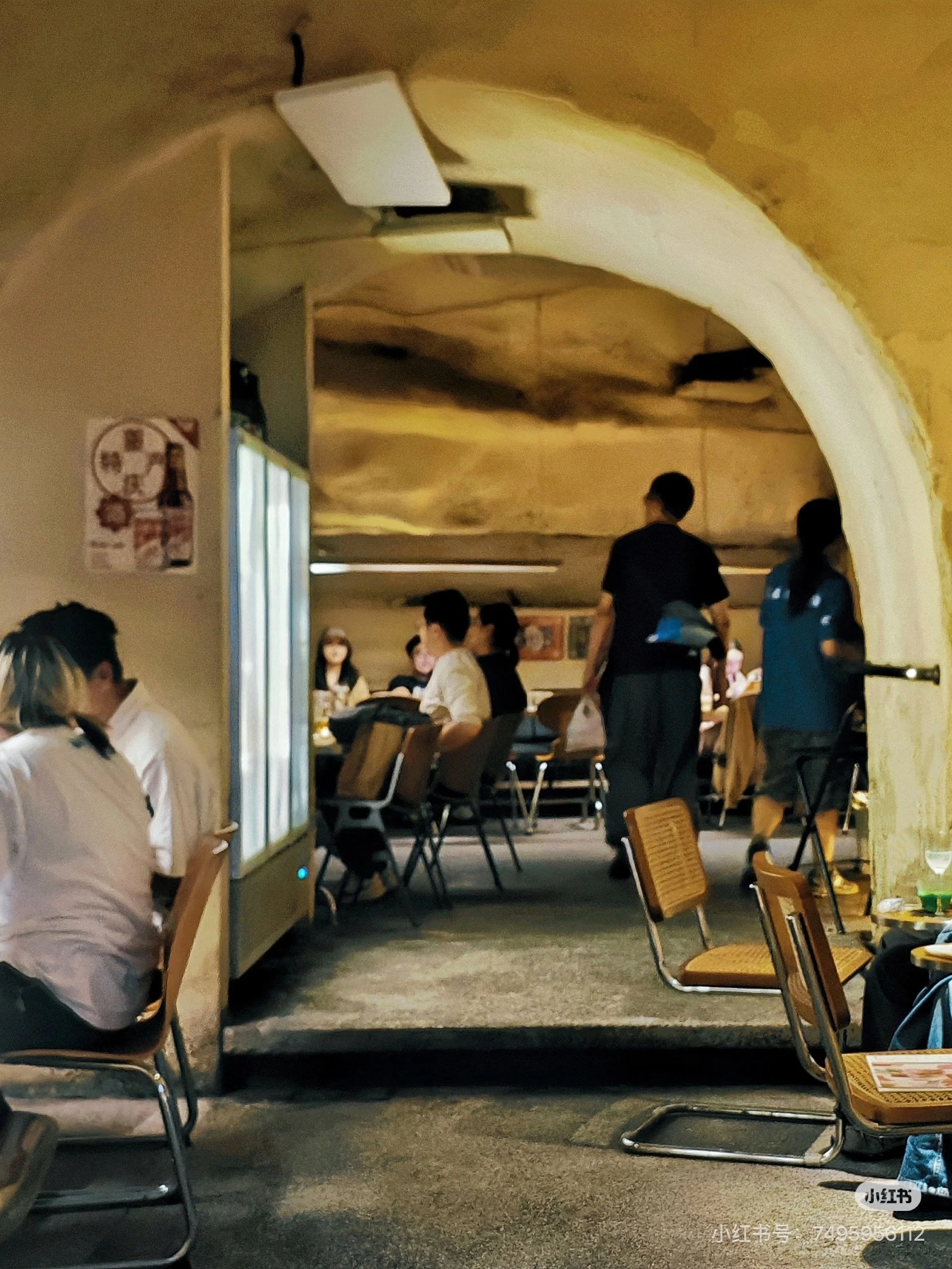
A short ride away on Liziba Zhengjie Road (李子坝正街), a different shelter became a bar instead. Caver keeps its entrance tucked into the same hillside as the monorail everyone already photographs cutting through a building nearby, and its interior still follows the original tunnel's uneven floor, one step down after another, deeper into the rock. The owner grew up cooling off in shelters like this one as a kid. Opening a bar in one wasn't nostalgia so much as just making official what the space had always been good for.
The maze under your feet
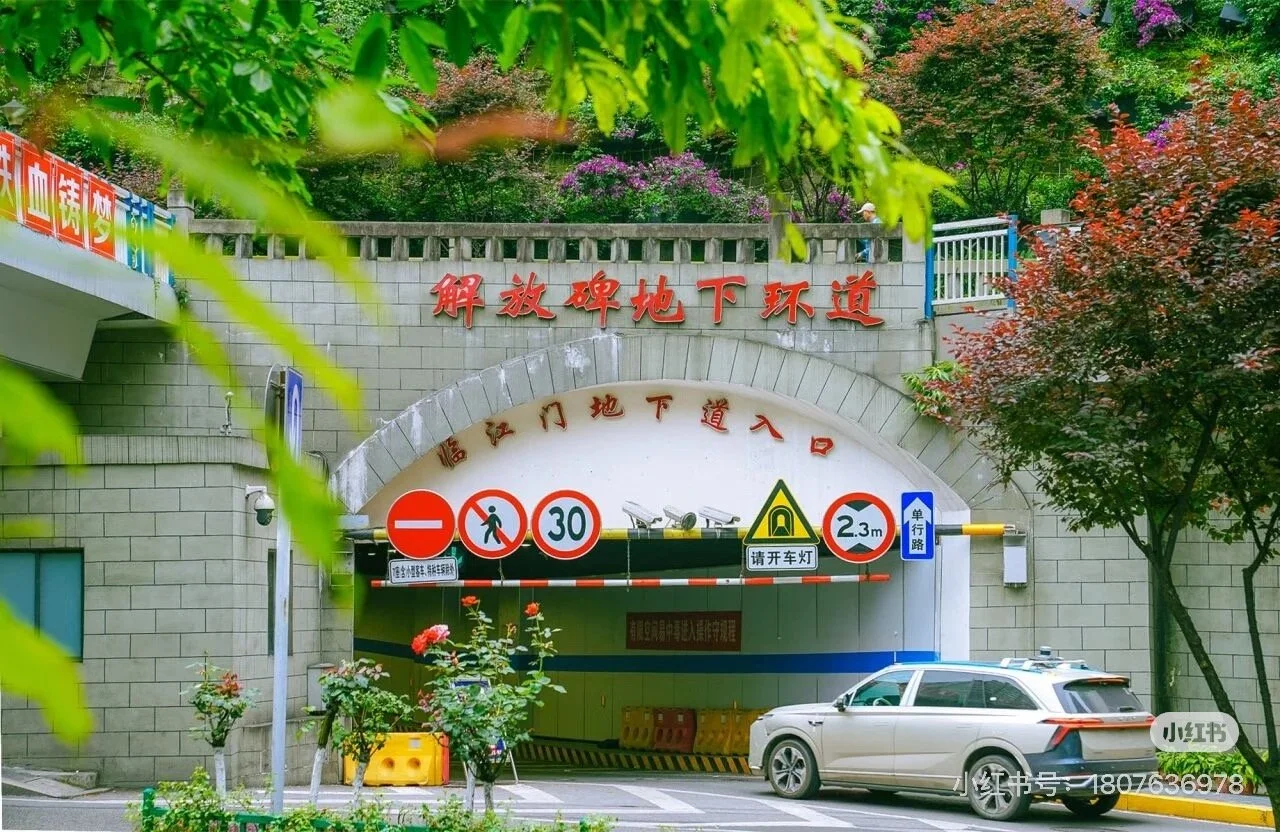
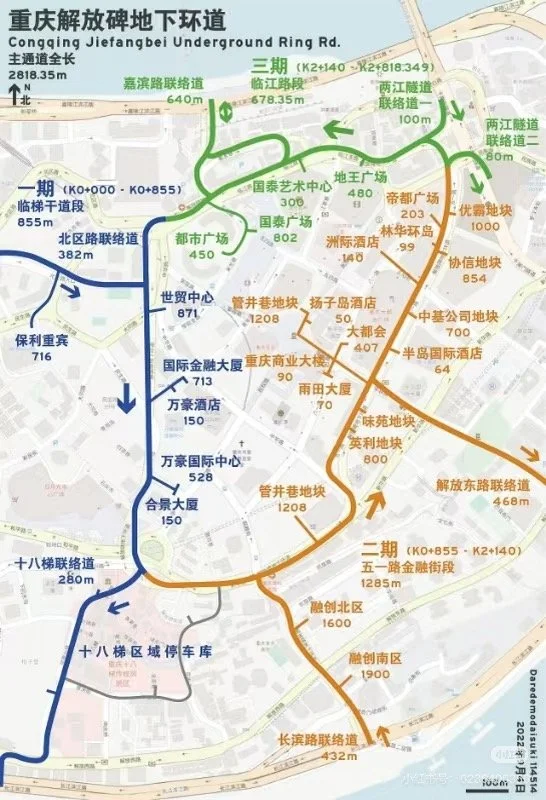
The clearest everyday example is the one running under Jiefangbei itself. Locals call downtown Chongqing's traffic system "8D" for the way it folds over and under itself, and the underground ring road that makes the shopping district navigable by car was built by expanding that same wartime tunnel network. The mall beneath the square runs on the same logic. What reads to a first-time visitor as futuristic urban chaos is, underneath, the city's oldest instinct: when the sky isn't safe, go under it.
None of this comes with a plaque, an audio guide, or a ticket booth. Chongqing has never been a city that sits with its own scars for long. It fills them instead, with chili oil and crowded tables and the ordinary noise of people getting on with their night, and there is something very Chongqing about that response: whatever the past asked of this place, today gets answered with more heat, more flavor, more life, not less.
We walk this city's best local spots with clients in person, stringing these spots into one whole day instead of leaving you to stumble onto them separately. If you'd rather do it with us, get in touch about our local-led walk.
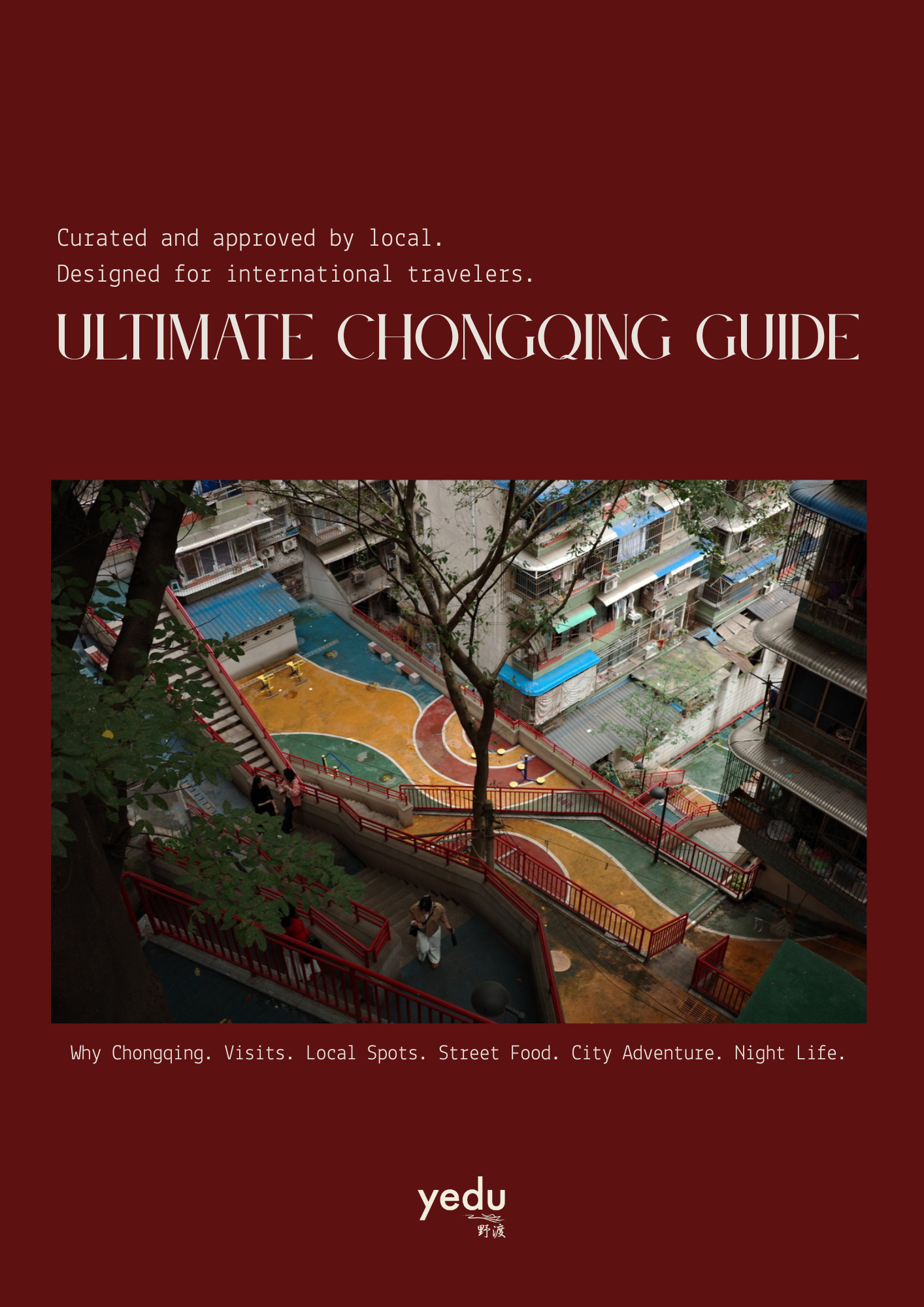
For the fuller map, 70+ spots like this across the city are already laid out in the Yedu Chongqing Ultimate Guide.
Seven hours, one local, the full shape of the mountain city.
Chongqing is a city best understood on foot. The hills, the staircases, the neighborhoods stacked on top of each other - none of it makes sense from a map. It only clicks when you're in it.
A full day gives you the whole arc: old lanes in the morning, a proper local lunch, and by afternoon you're on a ridge watching the Yangtze bend around the city. We walk through residential steps, hillside temples, ancient trials, and viewpoints only locals know. No rushing, no script, just a discovery day with enough time to actually read a city.
Come with good shoes and curiosity. Leave understanding why Chongqing doesn't look like anywhere else in China.