
Inside Chongqing's Teahouses: A Factory, a Railway Office, and a Design Studio
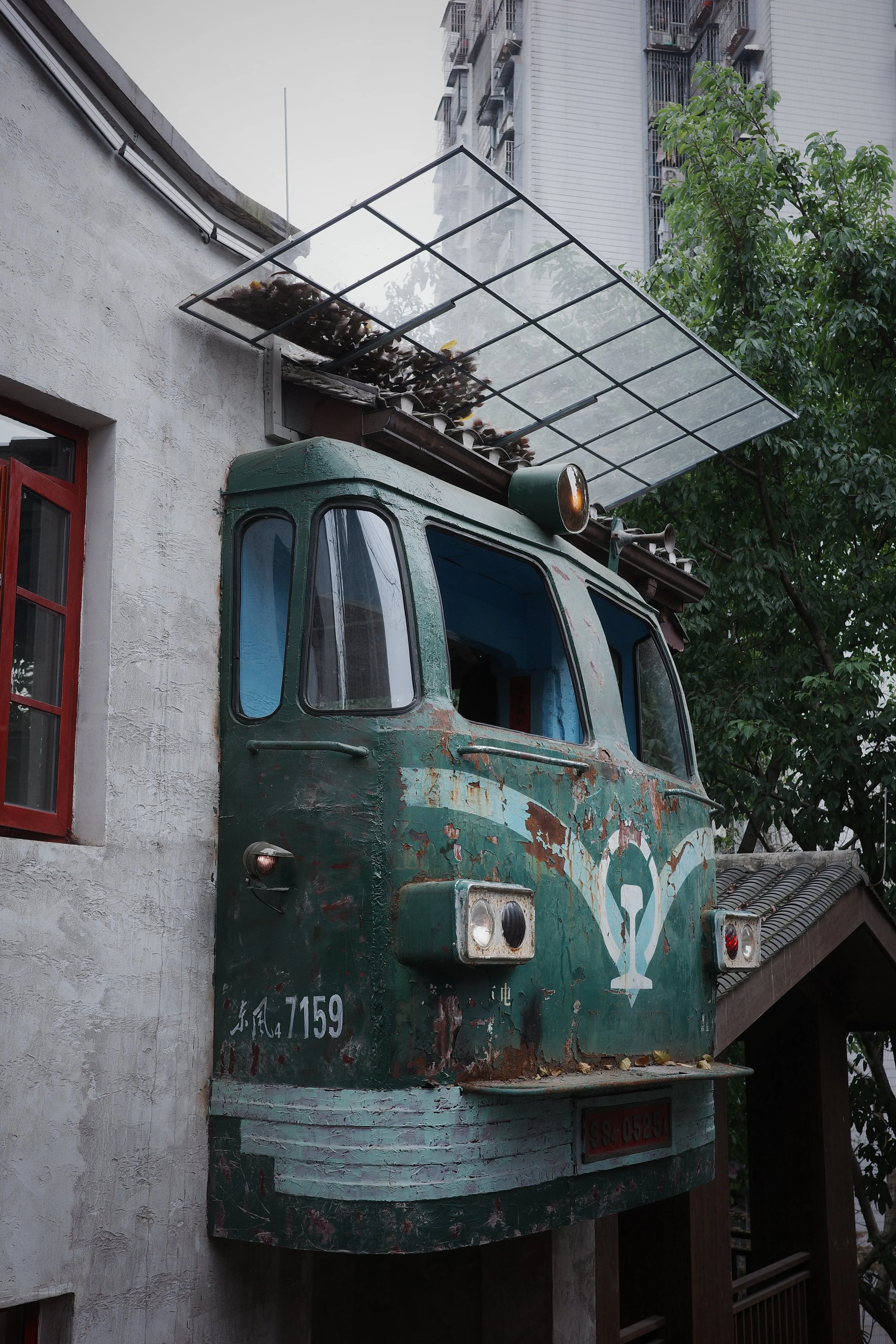
Pipashan Teahouse, Chongqing
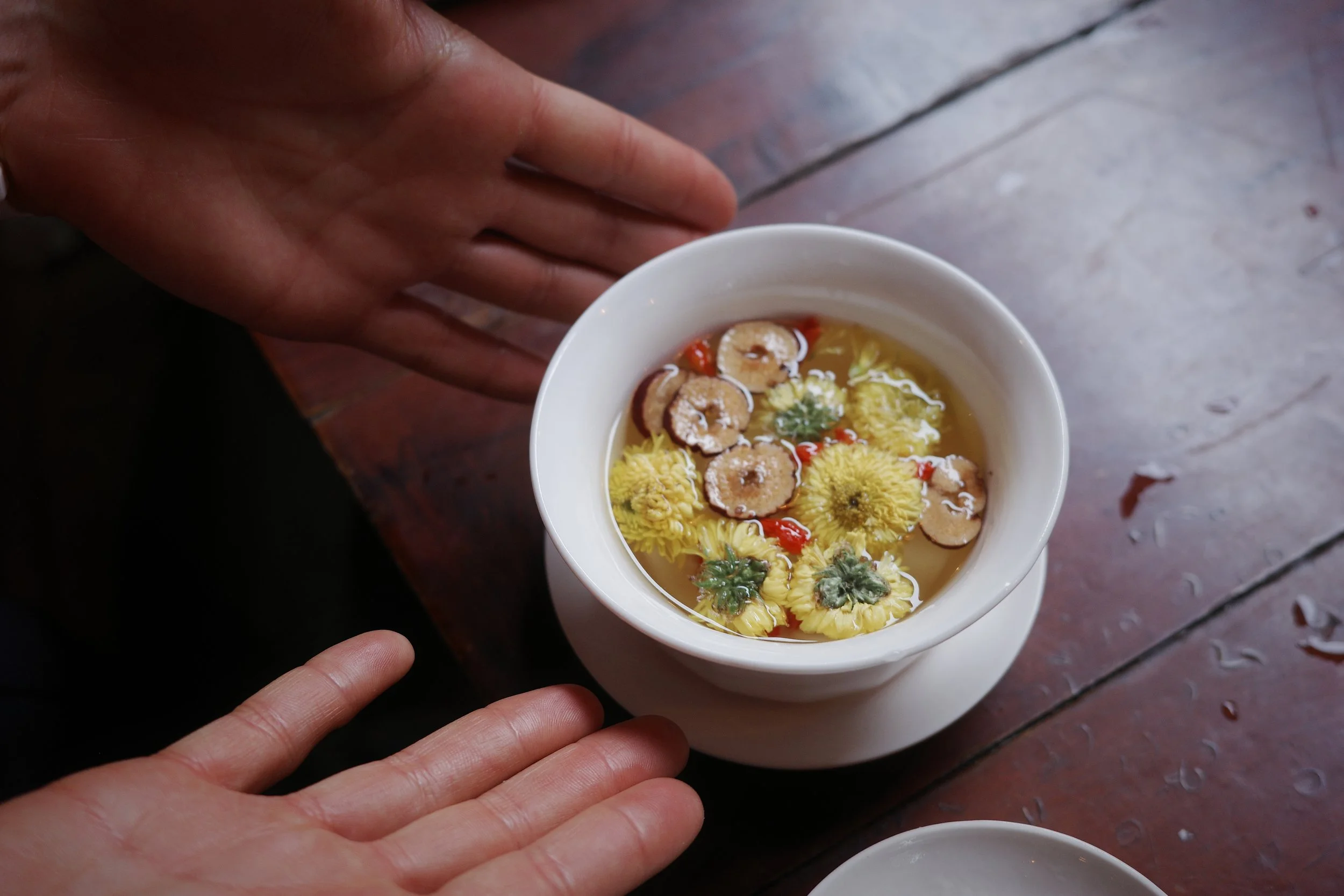
A locomotive sits inside a three story building on the hillside of Pipa Shan. Not a model, not a photograph. A real piece of a train engine, parked in what used to be an office of the Chengdu-Chongqing Railway. Around it, the room is quiet. People hold their gaiwan (盖碗), the lidded tea bowl, with both hands and let the afternoon pass.
Half an hour away, at Jiangling Teahouse, the same instinct to hold onto the past sounds completely different. It's loud.
Jiangling Teahouse 江陵茶馆: memory that talks back
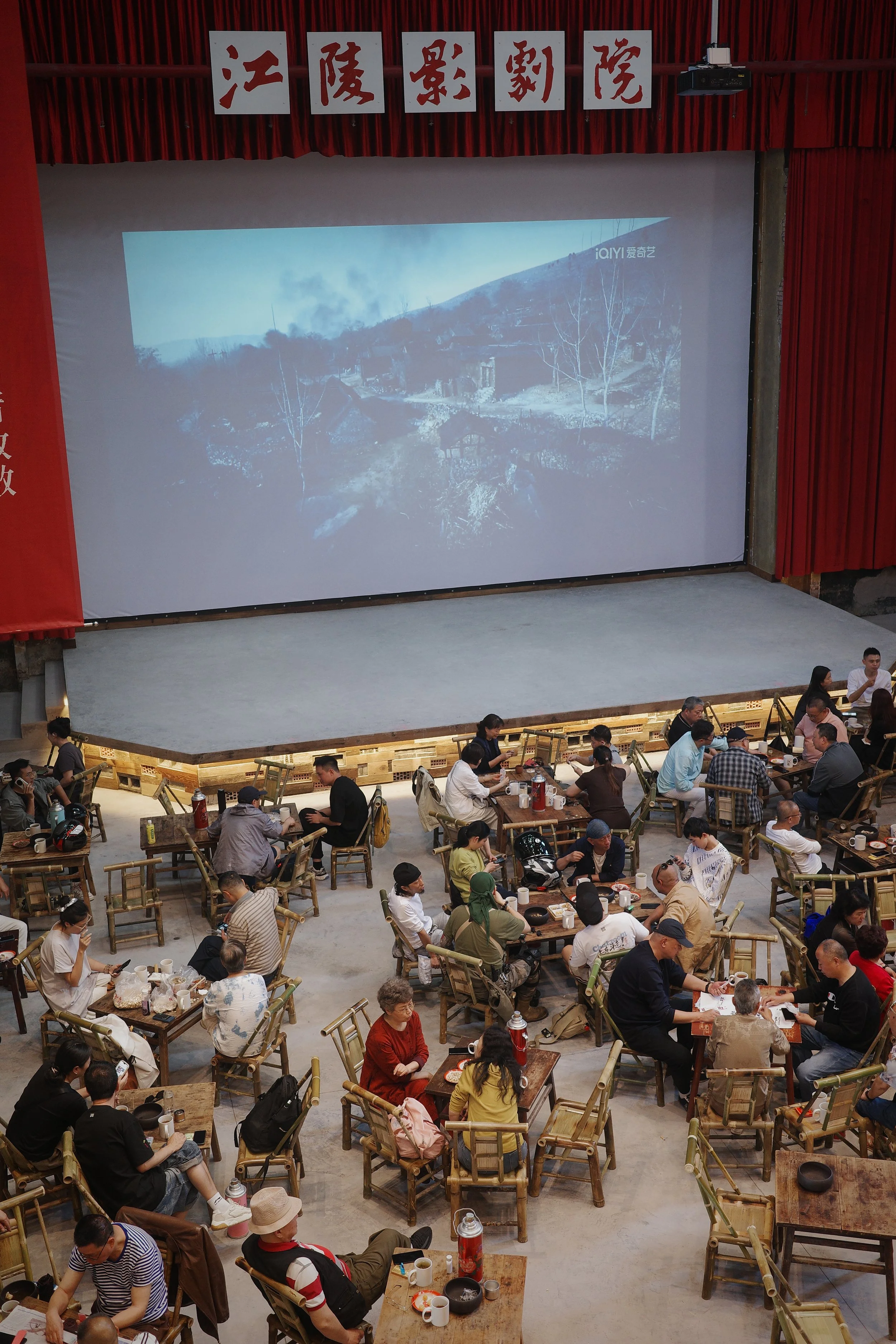
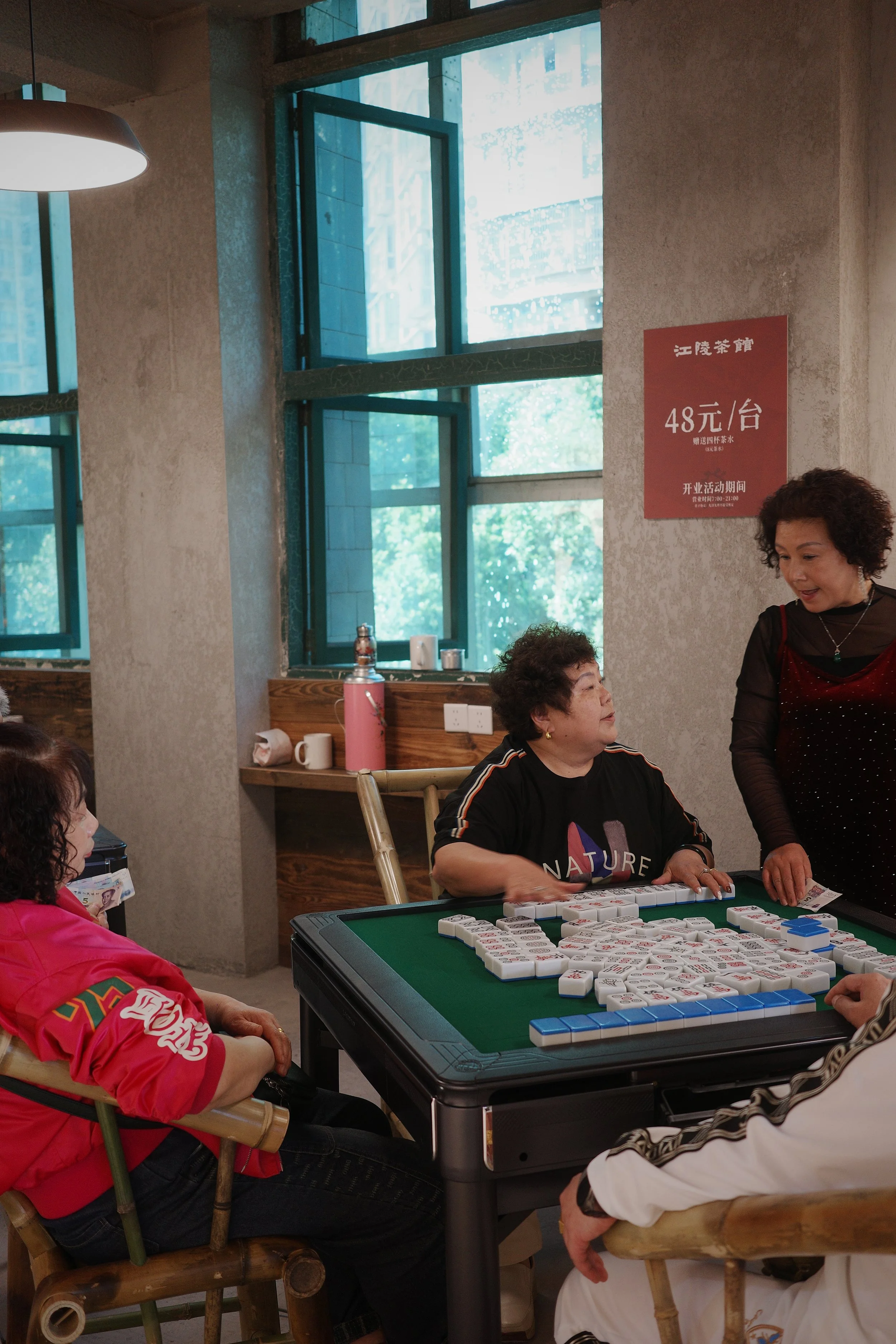
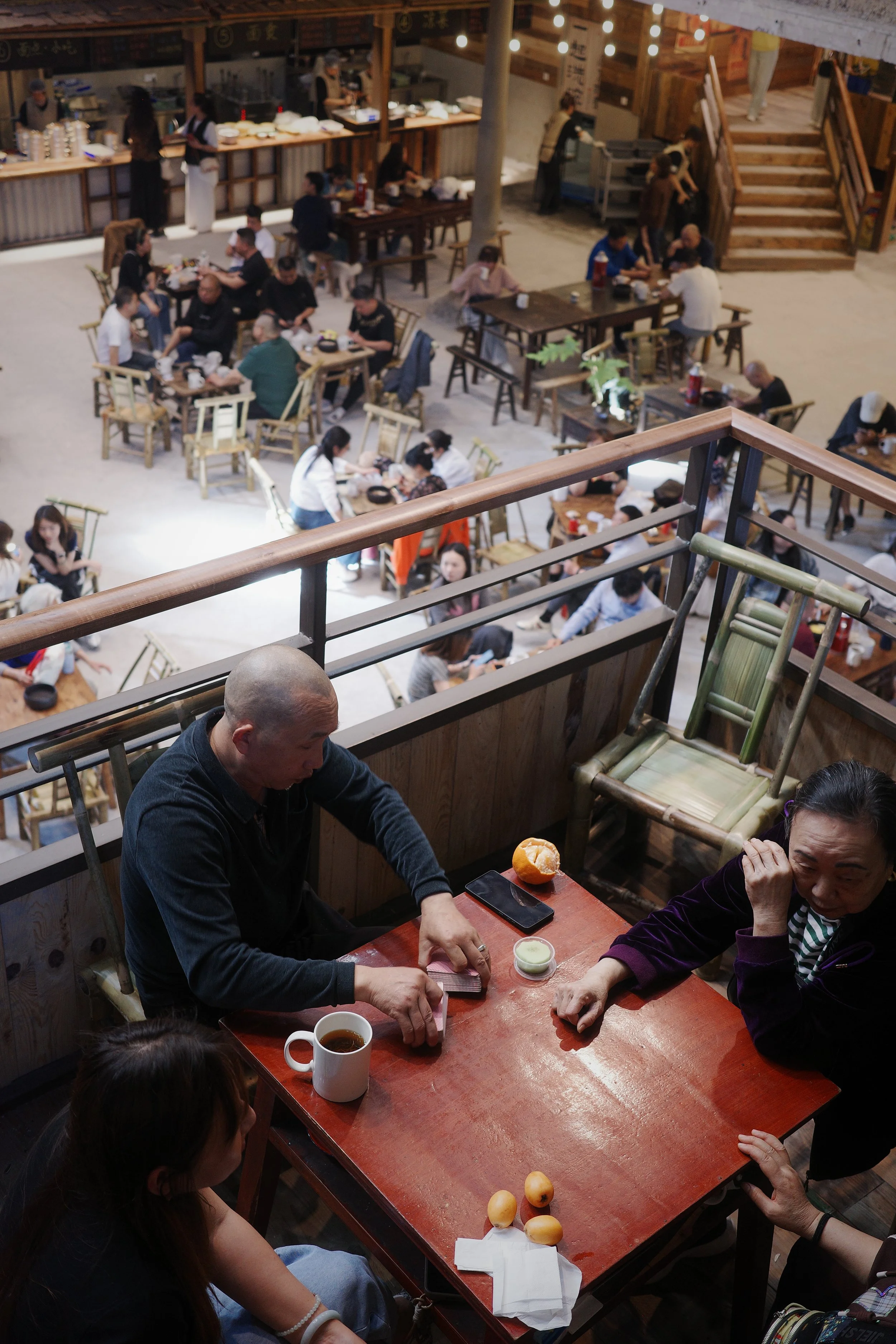
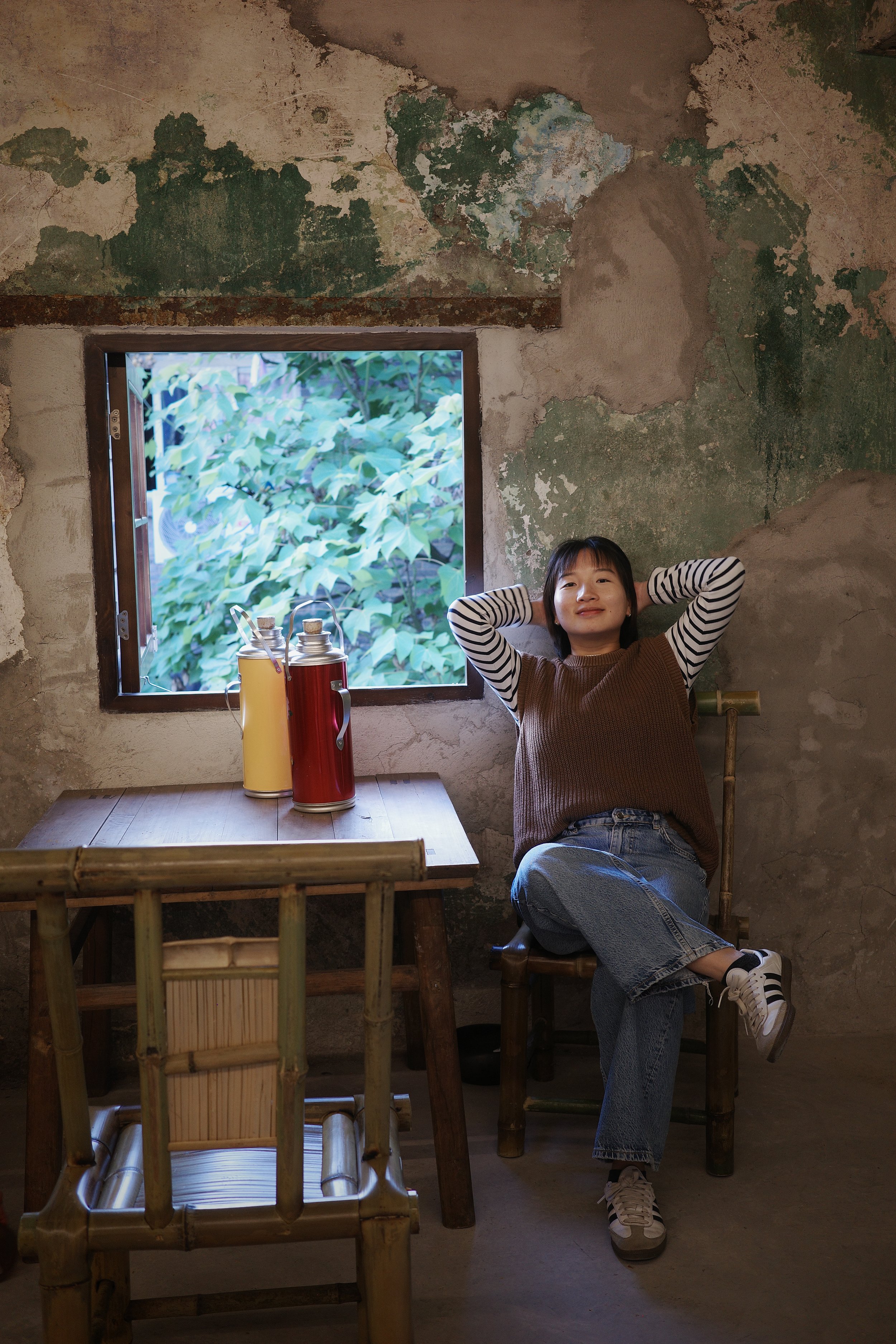
This building started in 1957 as the workers' theater of the Jiangling Machine Factory. When the factory moved and the theater closed in 2011, the space sat empty for years, eventually used as a parking lot. The renovation kept what mattered: the red brick walls, the old steel window frames, the stage.
Now it's a teahouse where the past gets interrupted constantly, in the best way. Old film projectors and cassette players sit near the entrance. Retired workers settle into a booth and start chatting (bǎi lóngmén zhèn, 摆龙门阵), the local art of unhurried, wandering conversation, in Chongqing dialect. Younger visitors pull up chairs nearby, half listening, half taking photos. Someone orders lidded bowl tea (gàiwǎnchá, 盖碗茶), and the room keeps talking over itself.
Pipashan Teahouse 枇杷山老茶馆: memory that keeps its voice down
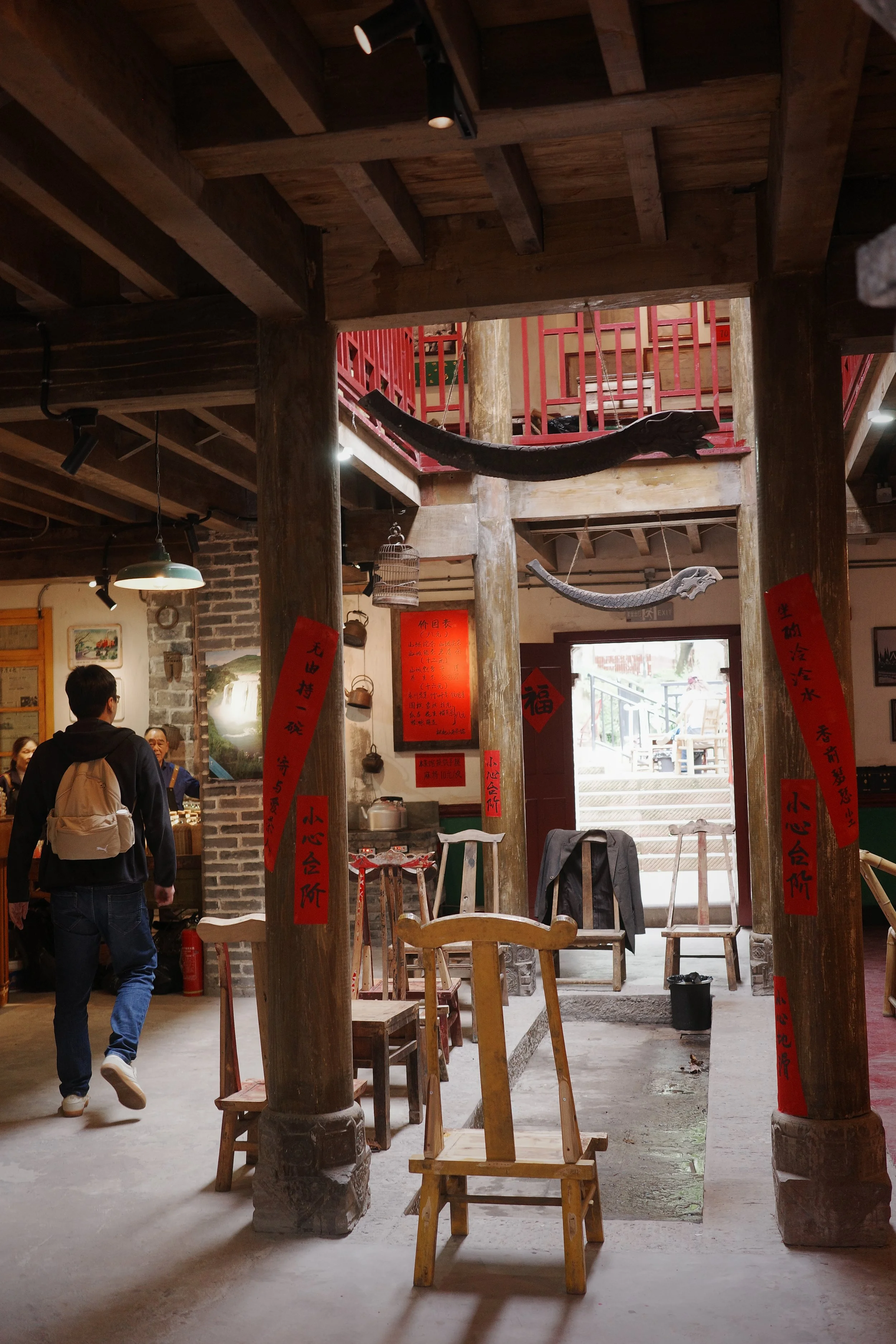
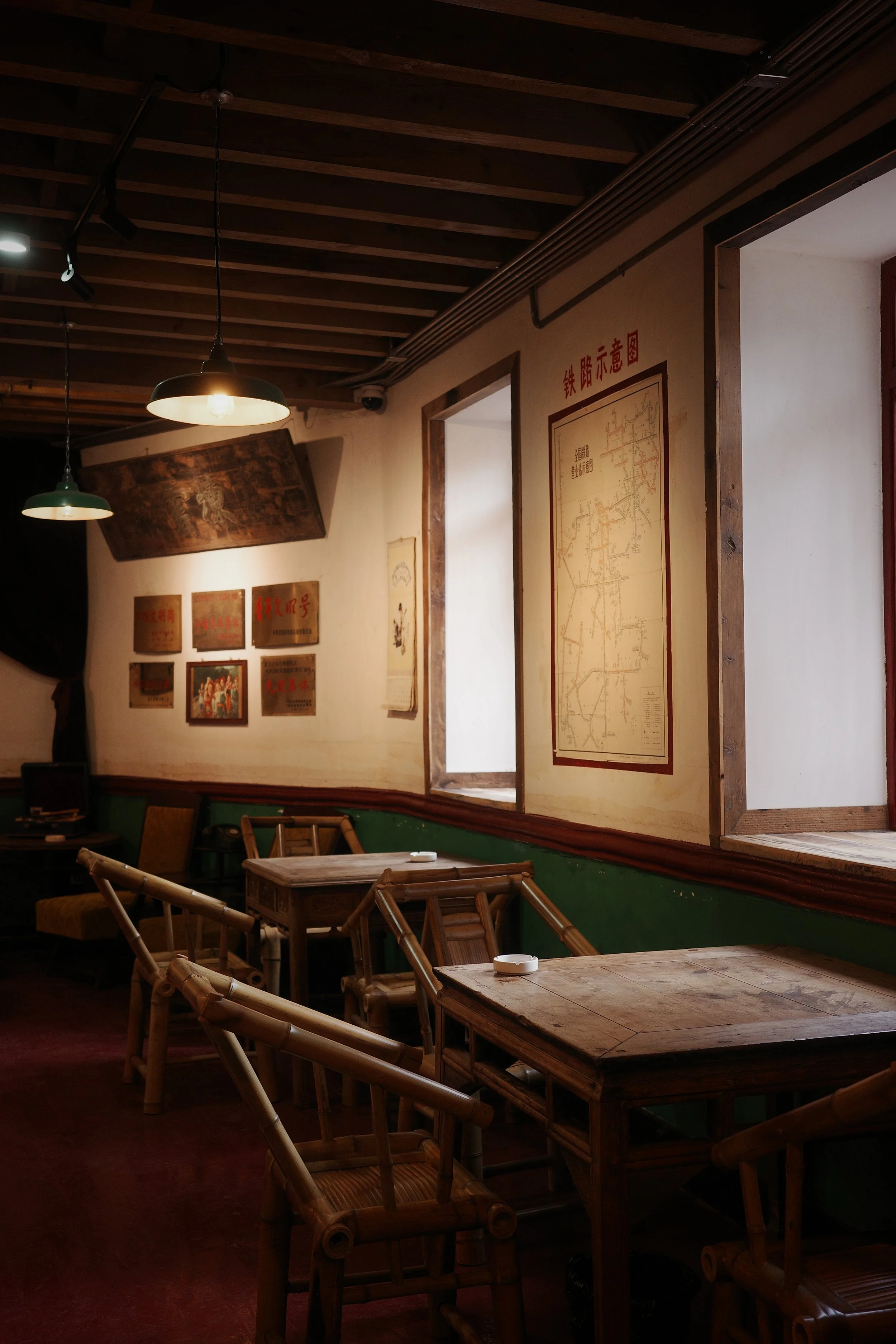
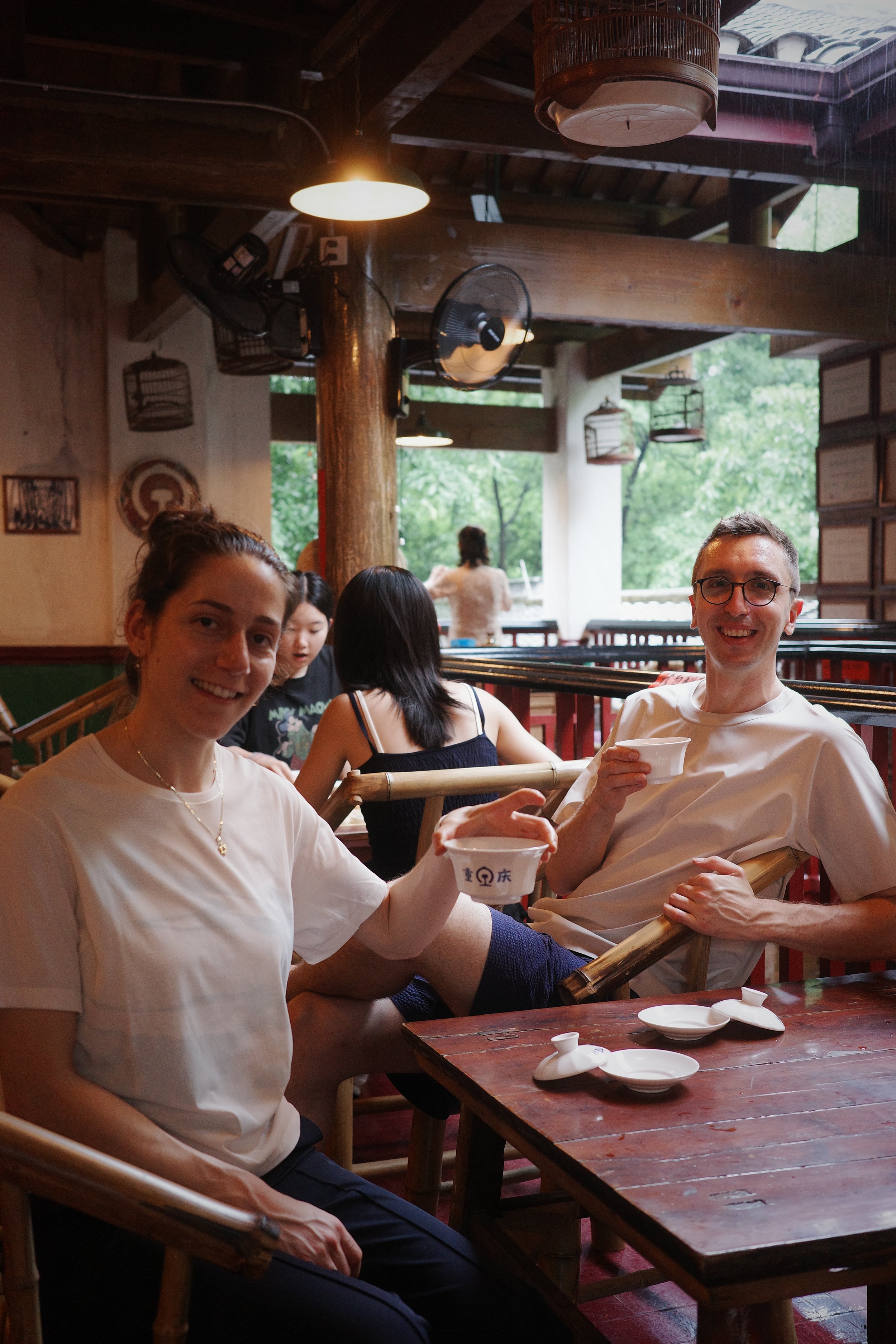
The building here used to hold the offices of the Chengdu-Chongqing Railway. Three floors, still intact. Instead of demolishing the railway's paper trail, the new owners kept it: old photographs line the walls, alongside railway tools and instruments from another era, and that locomotive piece in the main hall.
Some locals come here for something closer to solitude than socializing. A pot of gaiwan tea, a window seat, an entire afternoon that asks nothing of you. Where Jiangling turns memory into a shared performance, Pipashan lets it sit undisturbed.
Heshan Tearoom 和山茶食店: memory, redesigned
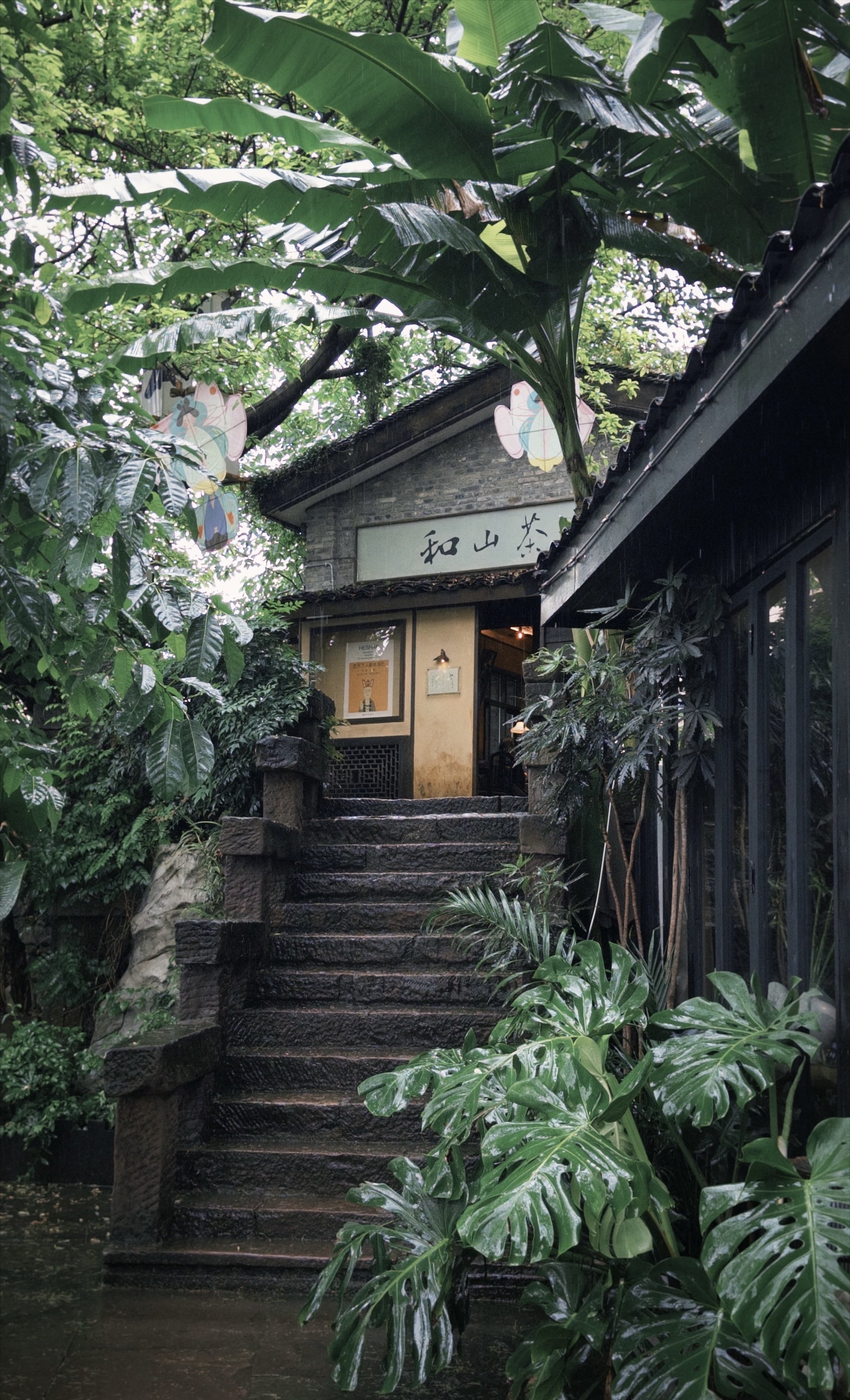
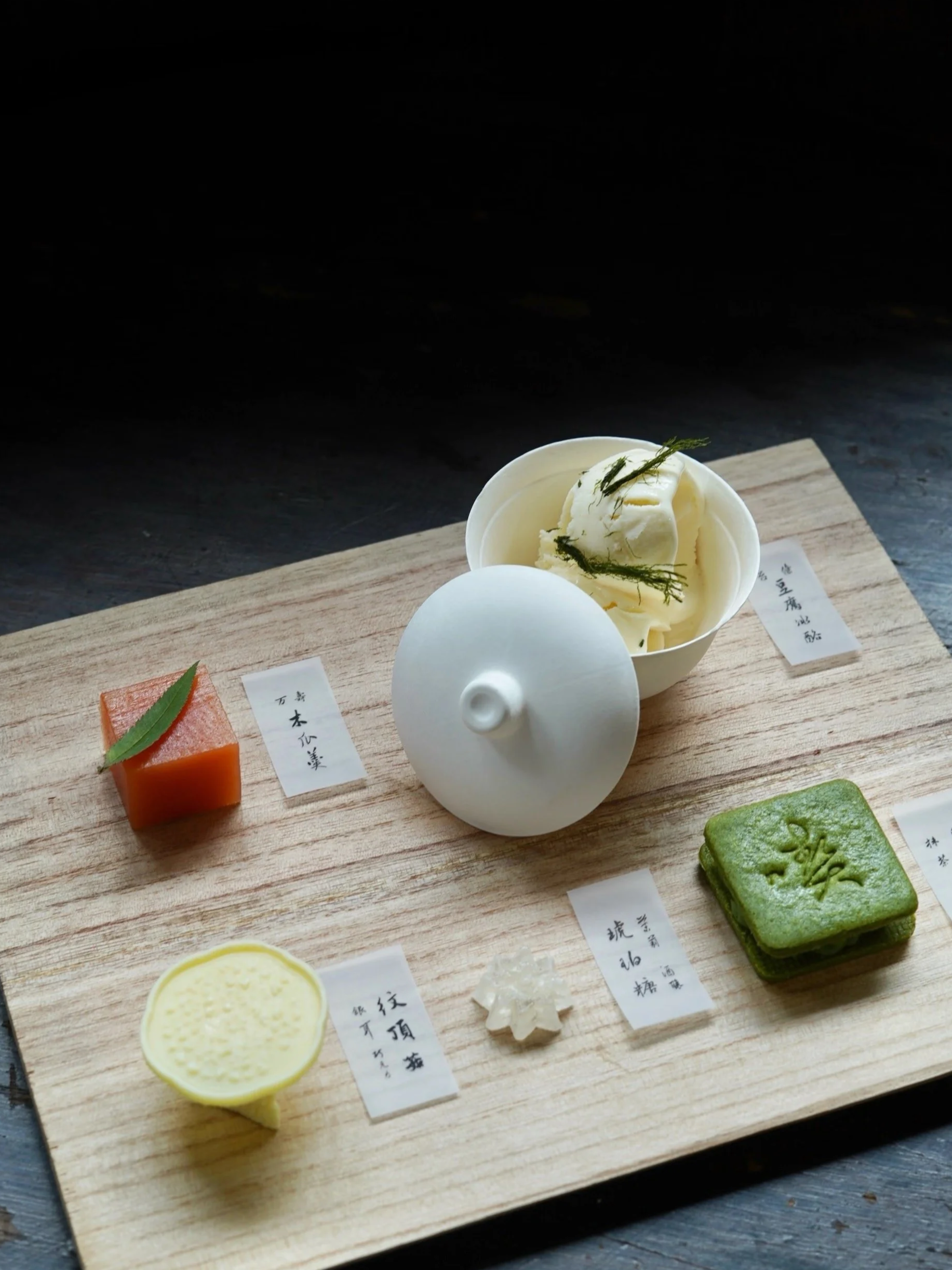
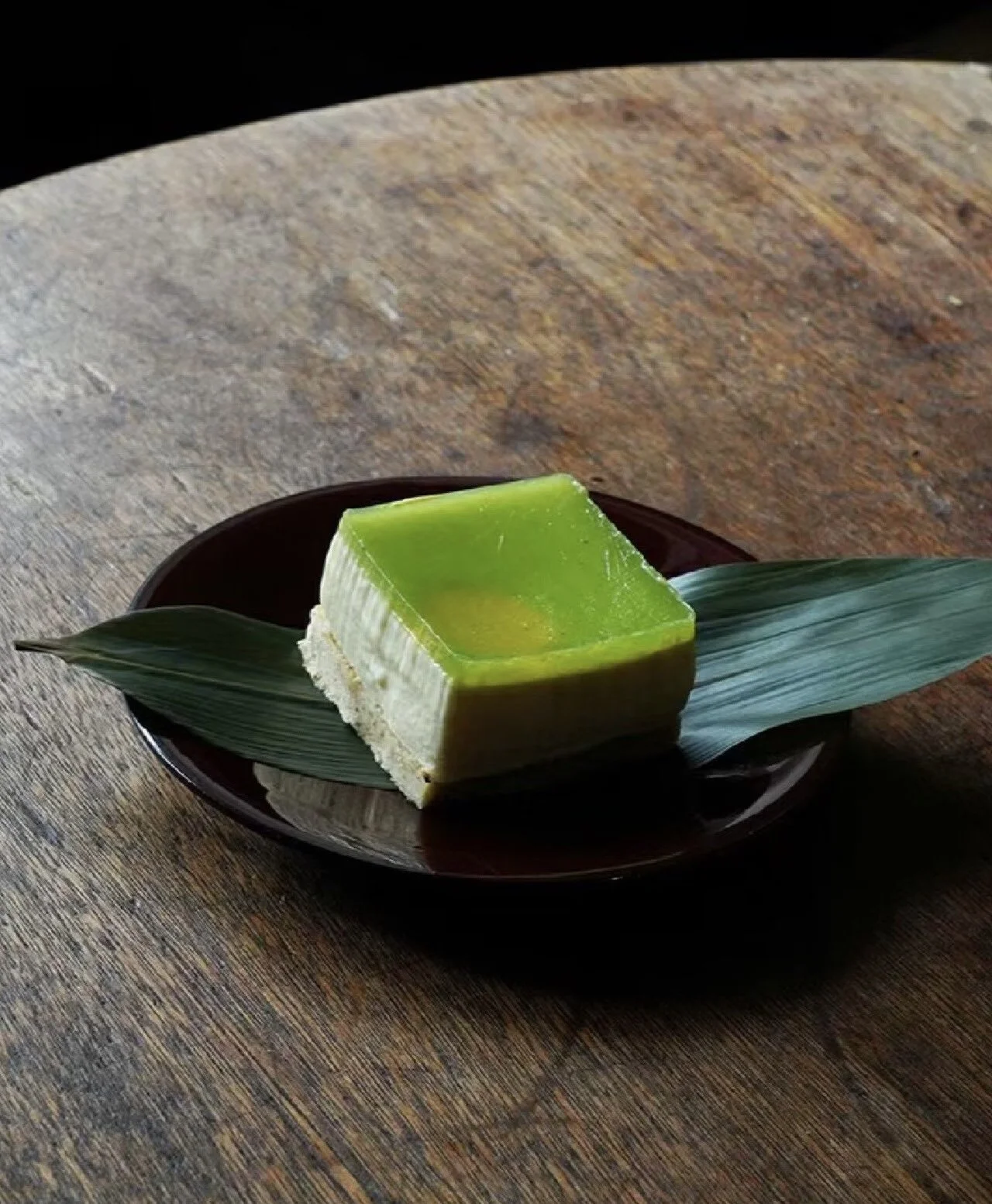
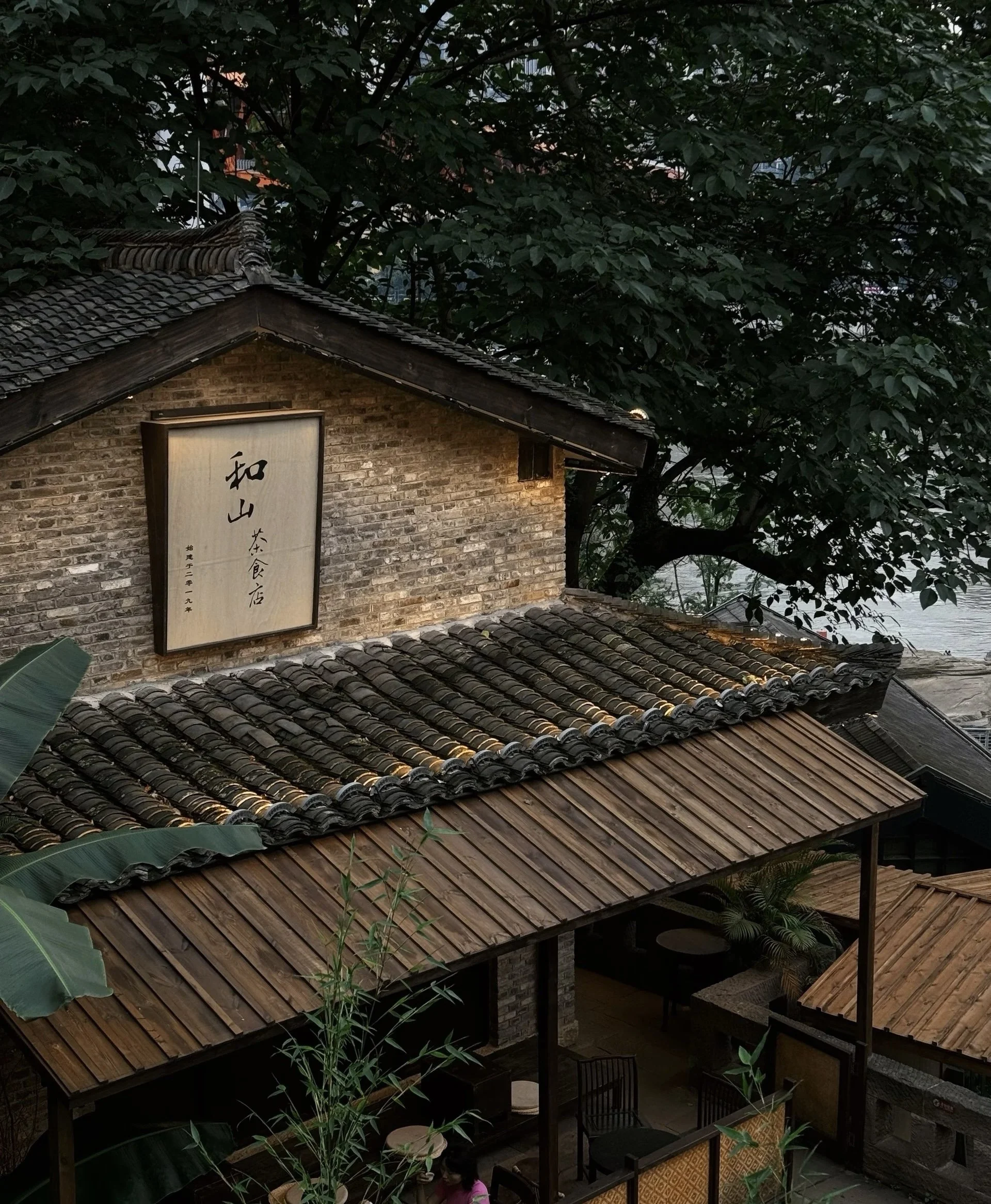
Not every teahouse in Chongqing is built inside an old building. Heshan Tearoom (和山茶食) started in 2019, founded by a husband and wife team, Li Xia and Lao Zhang, both graduates of the Central Academy of Fine Arts. Li Xia trained in interior design, Lao Zhang in photography. What they opened feels closer to a design studio than a dessert shop, one built around a single question: what happens when traditional Chinese tea food meets contemporary design.
Their signature piece, Red Dragon cake (赤龙糕), takes its shape from the dragon face roof tiles found at Laojun Temple on Nanshan. It tastes like jujube and cheese, and pairs well with oolong. Huā Zhōu (花舟), or "flower boat," wraps osmanthus jelly in traditional zong leaves, the grassy scent working against the sweetness inside. Their almond tofu (xìngrén dòufu, 杏仁豆腐) has quietly become a favorite of its own. The shop now sits on Xiahao Lane, a neighborhood already thick with its own layers of history.
Three teahouses, one word that means different things
Chongqing doesn't have one version of slow. It has a factory that turned its silence into noise, a railway office that kept its shape intact, and a design studio that built something new out of an old idea. Sit in all three in the same week and you'll notice the city isn't nostalgic. It's just particular about how it remembers.
If a Chongqing trip usually means hotpot and cable cars, these three rooms are where the pace resets.
We've mapped more places like this inside the Chongqing Ultimate Guide, for the days you'd rather spend somewhere no one else found first.
Seven hours, one local, the full shape of the mountain city.
Chongqing is a city best understood on foot. The hills, the staircases, the neighborhoods stacked on top of each other - none of it makes sense from a map. It only clicks when you're in it.
A full day gives you the whole arc: old lanes in the morning, a proper local lunch, and by afternoon you're on a ridge watching the Yangtze bend around the city. We walk through residential steps, hillside temples, ancient trials, and viewpoints only locals know. No rushing, no script, just a discovery day with enough time to actually read a city.
Come with good shoes and curiosity. Leave understanding why Chongqing doesn't look like anywhere else in China.