
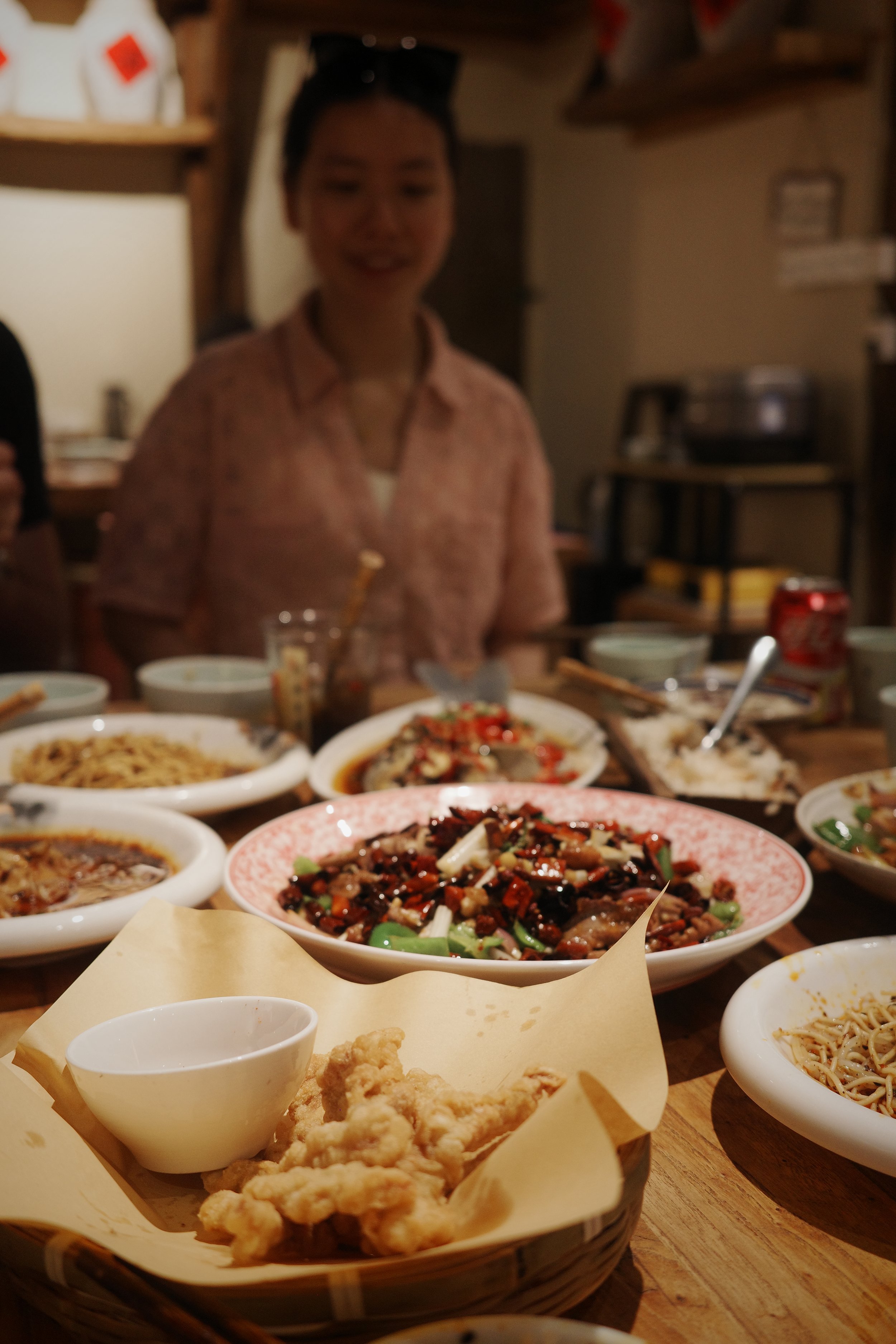
Chunyang Old Tavern, Chongqing
Hotpot is what Chongqing is famous for. It is not what Chongqing eats every day.
We eat hotpot the way other cities book a table for a birthday: with a group, for hours, on purpose. The everyday city eats somewhere else. At a low plastic stool on the pavement, from a bowl that arrives before you've finished sitting down.
And it eats in a rhythm. Something fiery first, something softer in the middle, something cold and sweet to finish. Once you notice it, you see it on every street: the noodle counter, the skewer grill and the dessert cart are rarely more than a few doors apart.
So here is the rest of the menu, in the order we actually eat it. (If you came for hotpot, we've written about that here: Chongqing Hotpot: How to Eat It Like You Belong There.)
Part 1: The Fire
Xiaomian (小面), the breakfast that runs the city
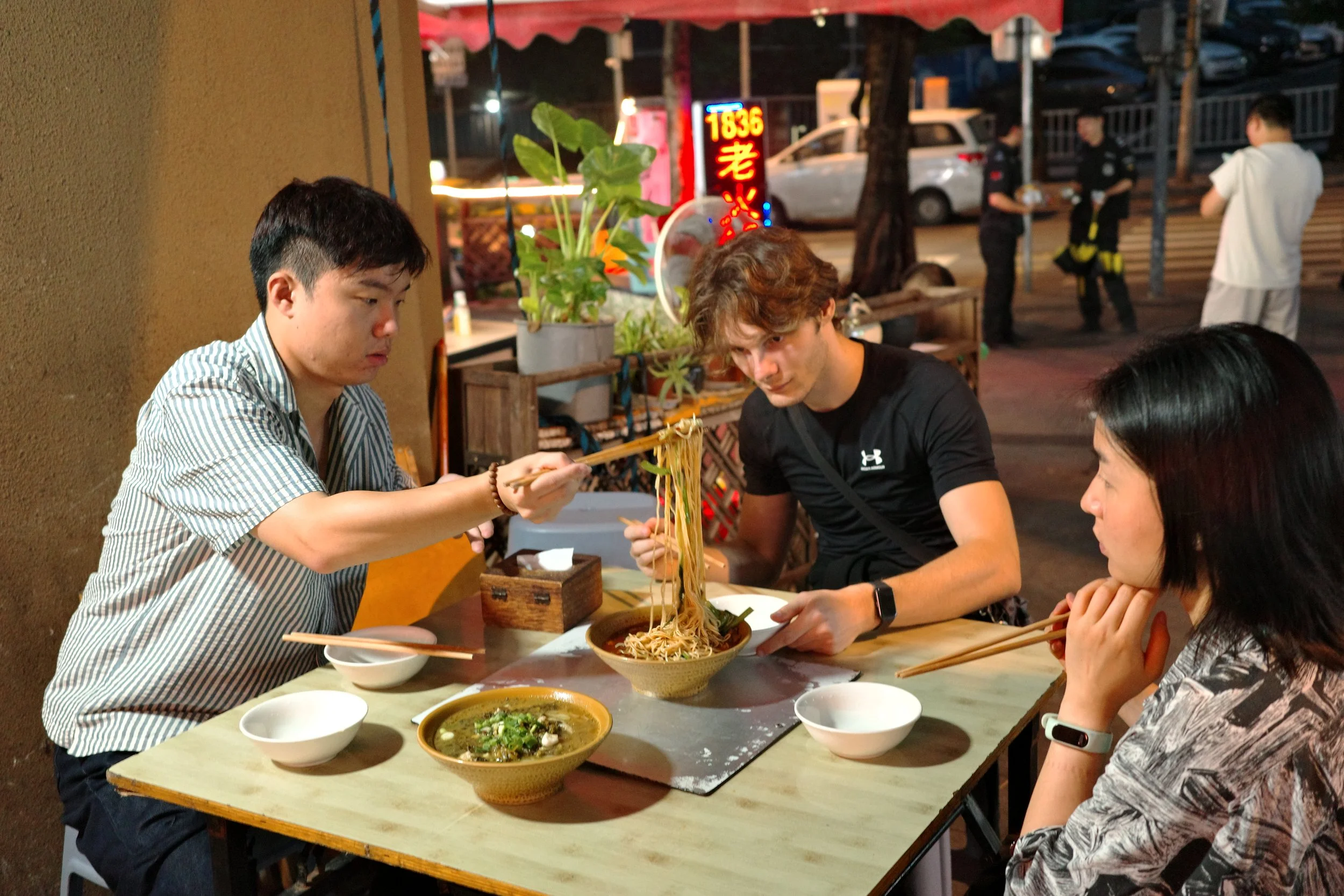
Yedu Night Food Tour in Chongqing
When someone in Chongqing says "let's get noodles," they mean 小面 (“small noodles” by translation). Wheat noodles, chili oil, ground Sichuan pepper, a spoon of crushed peanuts and a few leafy greens, in a bowl about the size of two open hands. The "small" is about how simple it is, not the portion.
Portions are counted in liang (两), a traditional Chinese unit of weight. One liang is 50 grams of uncooked noodles, so two liang, 二两 (èr liǎng), is a normal bowl. Three if you walked up a lot of stairs to get there, which in Chongqing you usually did.
Then come the details everyone calls out at once:
干溜 (gān liū), "dry": almost no broth, the noodles coated and glossy
宽汤 (kuān tāng), "wide soup": extra broth
提黄 (tí huáng), "lifted while yellow": noodles taken out early, so they keep their bite
微辣 (wēi là), "a little spicy": mild, and a perfectly respectable order
Put together, "老板,二两小面,干溜,微辣" ("Boss, two liang of xiaomian, dry, a little spicy") is a complete Chongqing sentence. 老板 (lǎo bǎn), boss, is what everyone calls the person at the pot.
For a gentler bowl, we point friends to 豌杂面 (wān zá miàn): the same noodles under soft yellow peas and a savoury minced pork sauce.
Shaokao (烧烤), after dark
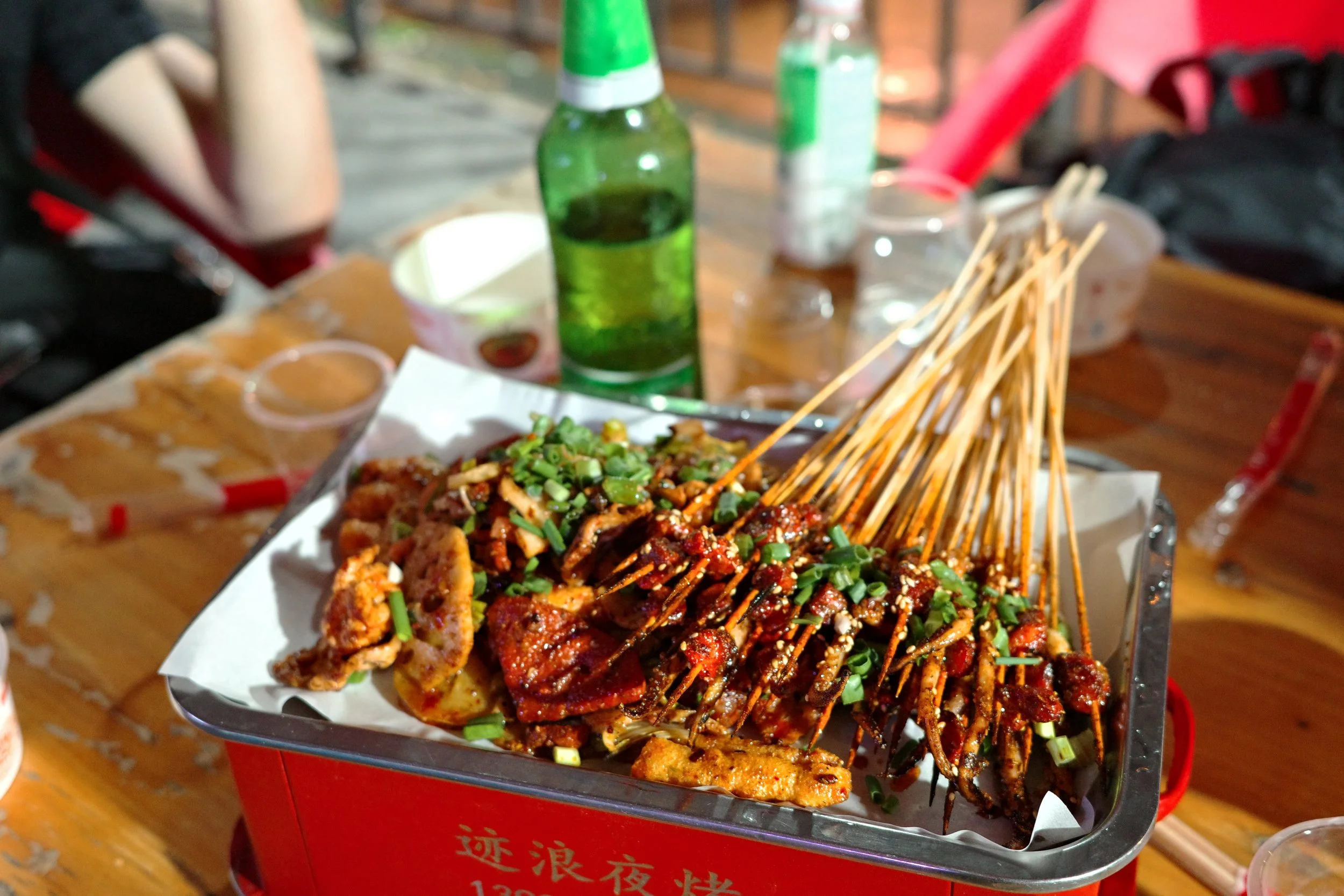
Chongqing style night barbecue
Once the sun goes down, the charcoal comes out. Chongqing barbecue is skewers chosen from a tray, grilled, brushed with oil and shaken with a dry mix of chili, cumin and Sichuan pepper until they're red to the edges.
Two things worth looking for:
苕皮 (sháo pí): a sheet of sweet potato starch grilled until it blisters, painted with chili, then folded around pickles and scallion. Crisp at the corners, chewy in the middle.
烤茄子 (kǎo qié zi), grilled eggplant: a whole eggplant split open over the charcoal, its flesh piled with minced garlic, chili and scallion until it collapses into something soft and smoky. You eat it with a spoon.
On almost every table you'll see the same bottle: 唯怡奶 (Weiyi penut milk), sweet and nutty. Locals drink it with barbecue the way other places drink beer, and it softens the heat between skewers.
Part 2: The Soft Landing
Chaoshou (抄手), the bowl in between
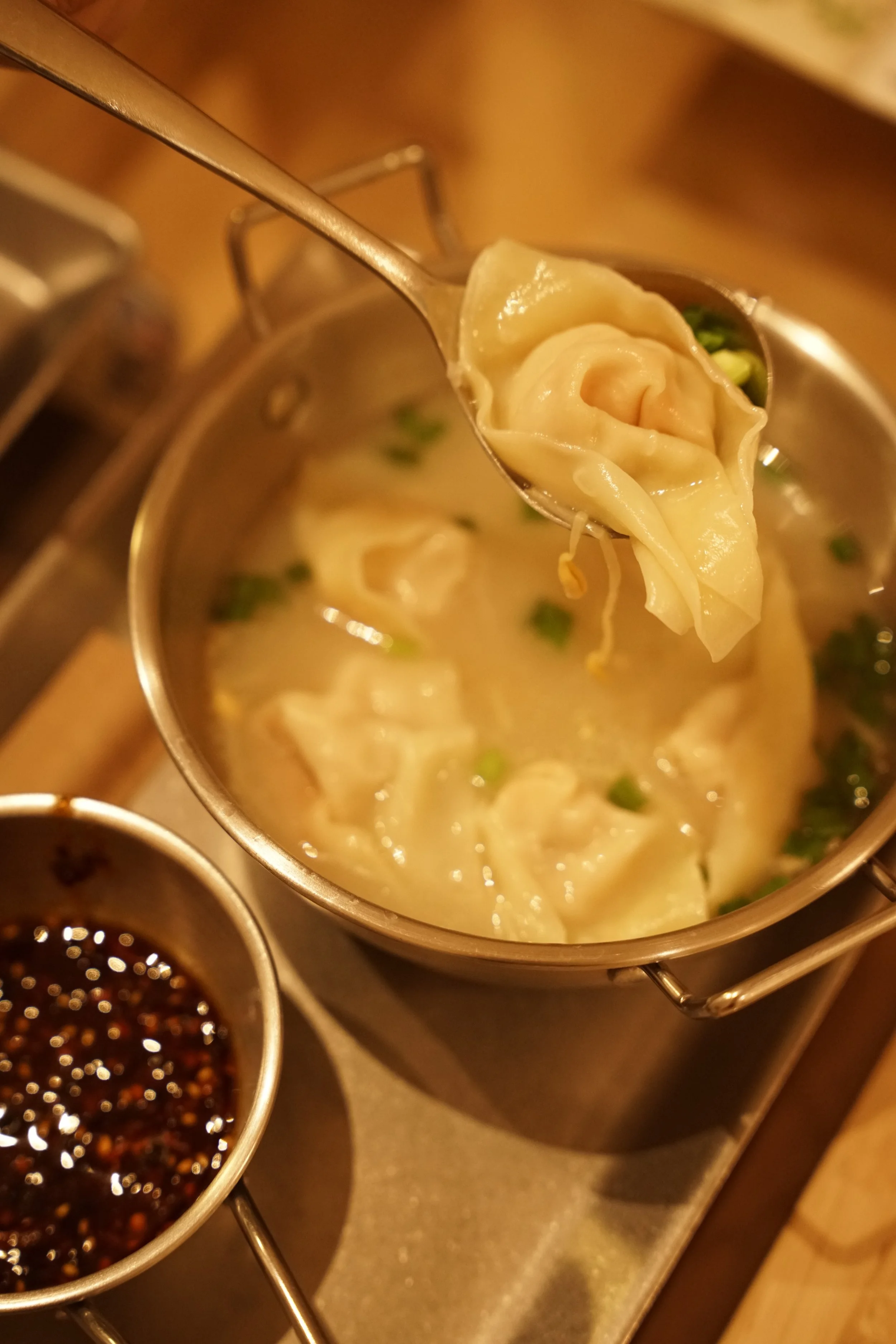
Chongqing style wonton: Chaoshou
Chaoshou is what Chongqing calls wontons. The name means "folded hands": the two corners of each one cross over, like arms tucked into sleeves on a cold morning.
The skins are thin enough to go silky in the bowl, wrapped around a small knot of pork. They come two ways:
红油抄手 (hóng yóu chāo shǒu): in red chili oil, with a little soy and a little sweetness underneath the heat
清汤抄手 (qīng tāng chāo shǒu): in clear broth, light and salty, the bowl you want at the end of a long day
This is the dish that sits between the fire and the ice. We order red oil when the night is still young, and clear broth when it isn't.
Part 3: The Cooldown
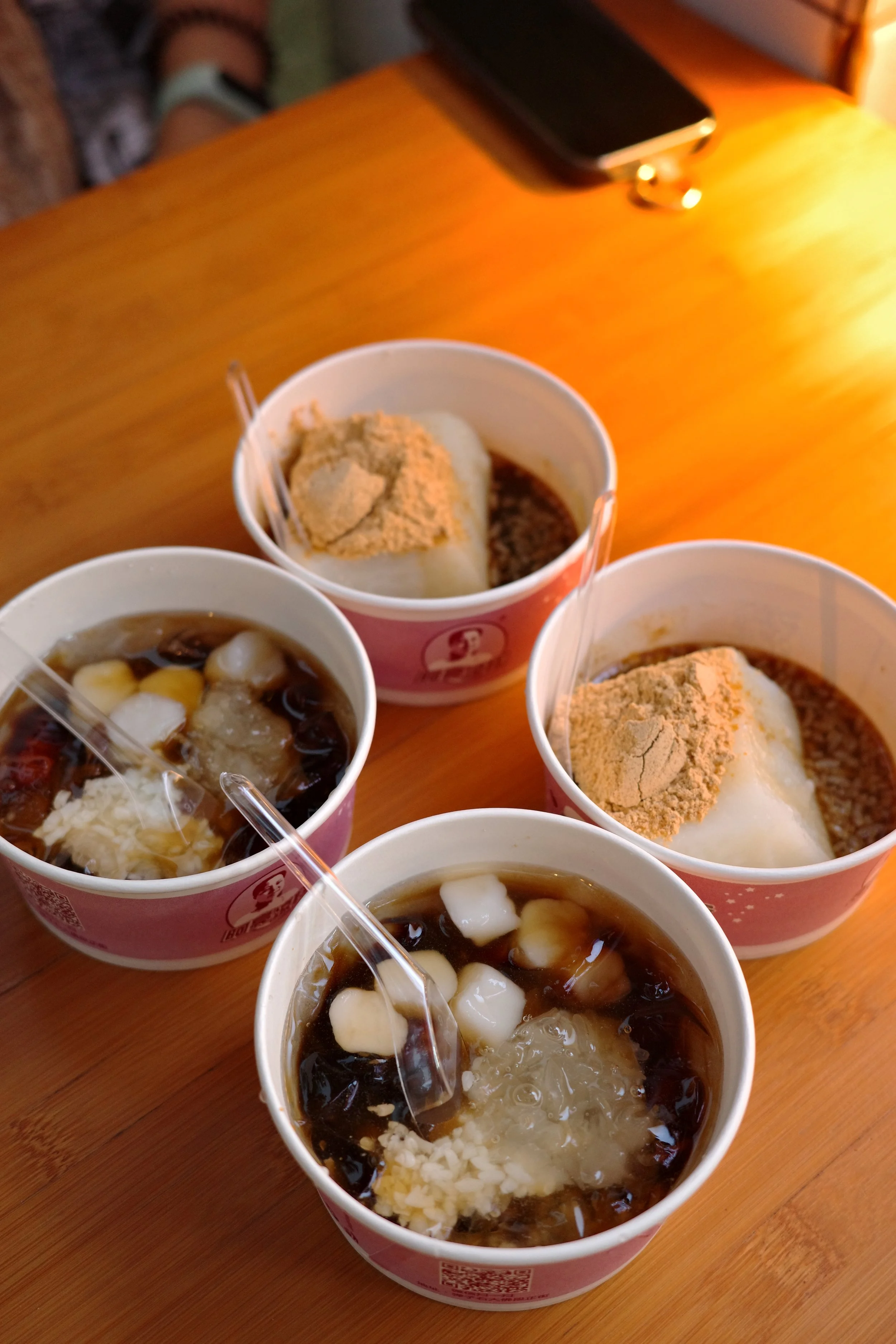
Bingfen and Lianggao, the two classics of Chongqing desserts
Every Chongqing meal with chili in it has an exit plan, and it's usually cold and sweet. You'll find these desserts all year, next to the grills and inside every hotpot restaurant, because their job is putting out the fire, not cooling down a summer afternoon.
Bingfen (冰粉), the clear one
A bowl of trembling, glass-clear jelly, traditionally made by rubbing the seeds of a local plant in cold water until the whole thing sets. On its own it tastes of almost nothing. It's there for the texture, cool and slippery, and to carry everything else.
The flavour comes from what goes on top. First brown sugar syrup, 红糖水 (hóng táng shuǐ), then a handful of toppings: hawthorn flakes, raisins, crushed peanuts, sesame, sometimes a spoon of sweet fermented rice, 醪糟 (láo zāo). Every cart has its own combination, and every regular knows exactly which toppings they want.
Lianggao (凉糕), the white one
Lianggao looks like bingfen's cousin and eats like something else entirely. It's made from rice, steamed and set, then cut into soft white blocks. Firmer, a little chewy, with a faint sweetness of its own before the same dark brown sugar syrup goes over it.
Bingfen slides, lianggao has bite. We usually order one of each and share.
For a Proper Table: Jianghu Cuisine (江湖菜)
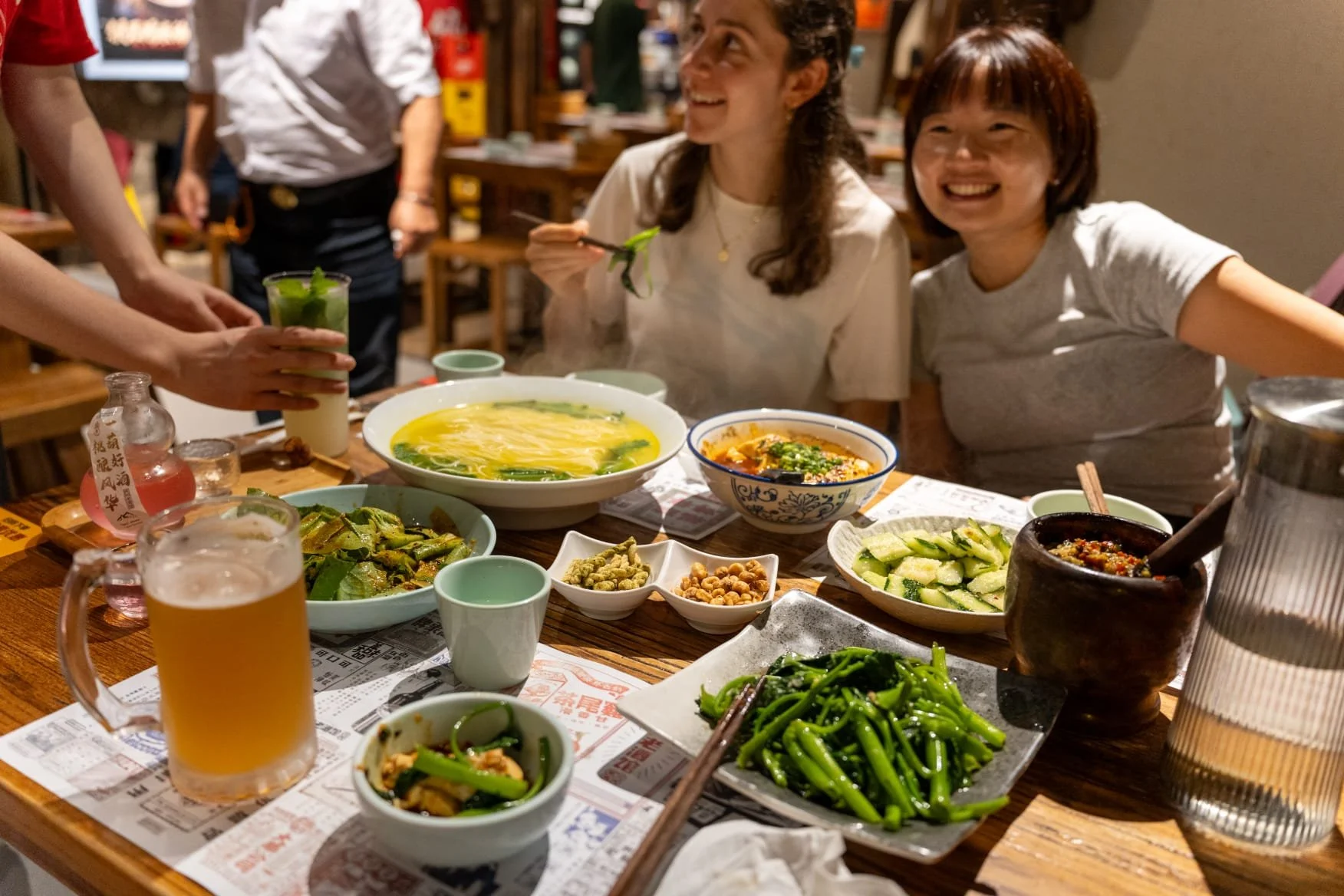
Chunyang Old Tavern with Yedu guests
Everything above is eaten on a stool or standing up. When Chongqing sits down at a proper table for lunch, it orders Jianghu Cusine (江湖菜), literally "rivers and lakes food": the big, unfussy dishes that grew out of dockside kitchens and roadside canteens. Plates come piled high, chili comes by the handful, and a little mess is part of the meal.
Our table for it is 纯阳老酒馆 (Chunyang Old Tavern). It started in 1986 as a neighbourhood place with a few square wooden tables and long benches, and the same family has run it across three generations since. The room still feels like old Chongqing, just tidier.
What we order:
鱼香肉丝 (yú xiāng ròu sī), "fish-fragrant pork": slivers of pork and scallion in a glossy sauce of pickled chili, garlic, ginger, vinegar and a little sugar. The Chongqing version keeps it to just those two, so there is nothing to hide behind: the balance of sweet, sour and heat is everything, which makes it the dish that tests a Sichuan cook. And there is no fish in it. The name comes from the seasoning, once used for cooking fish.
酸菜鱼 (suān cài yú), "pickled greens fish": tender slices of fish in a sour, golden broth of pickled mustard greens, chili and Sichuan pepper. It comes in a bowl big enough for the whole table, and the broth is as good over rice as the fish.
活捉莴笋 (huó zhuō wō sǔn), "celtuce caught alive": the house cold dish, crisp celtuce in a sesame and chili dressing. The name is playful, the crunch is serious.
It is still a tavern, too. The house wines, a sorghum liquor and a long list of fruit flavours, arrive in small pots with tiny cups to match.
Lunch here is part of Yedu Full-Day Signature Walk for groups of three or more, so this table lands right in the middle of the day's route.
One Evening, the Whole Curve
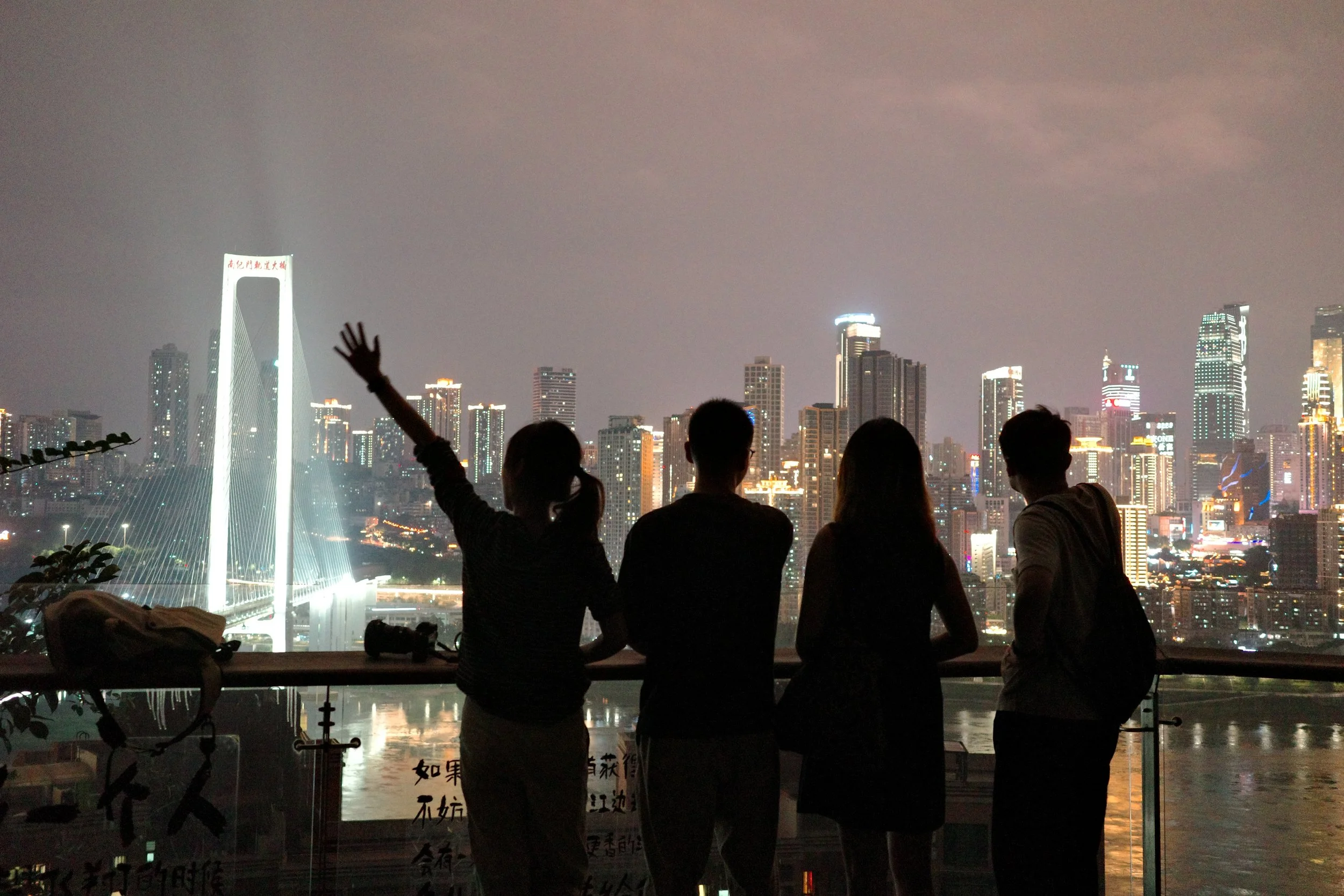
Yedu Night Food Tour ending point at Houbao, Chongqing
Noodles, skewers, wontons, then something cold. In Chongqing all of it fits into one evening and a few streets, if you know which doors to walk through.
For us, those streets are in Houbao (后堡). The evening starts when the grills go up along the pavement and the smoke drifts between the plastic stools. Noodle pots steam under bare bulbs, the dessert cart waits at the bottom of the stairs, and the street gets louder as the tables fill. Then the last flight of steps, and the noise drops away. From Houbao Park the city spreads out below you, lit all the way to the edges.
That's roughly the order of Yedu Night Food Tour: six street food stops, ending with that view. If you'd like to eat it with us, the walk is here. Or write to us at contact@yedutrip.com and tell us which spot you want to try with us.
Still early in your planning? Our free First Timer Kit covers the basics for a first trip to China, from payments to getting around.
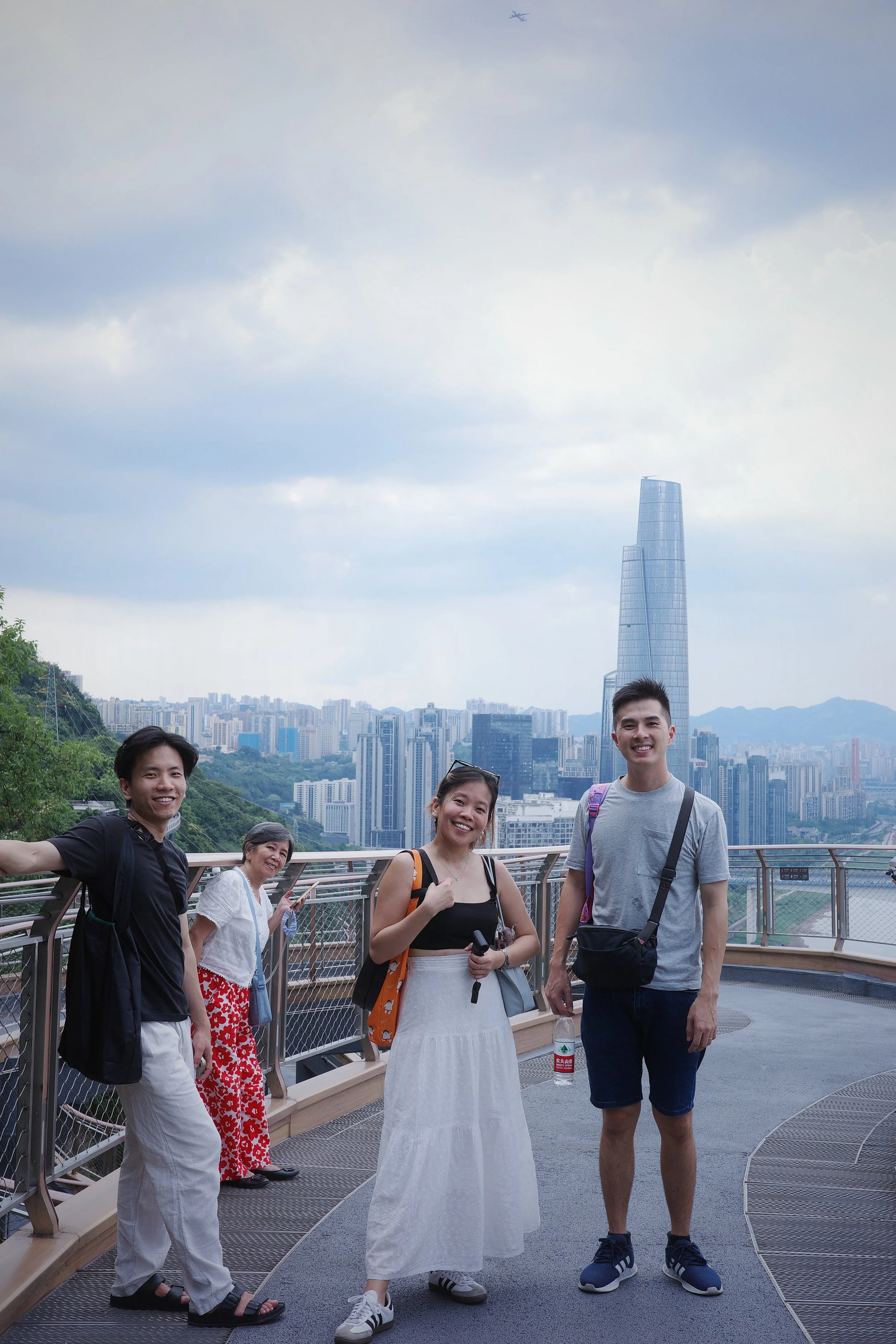
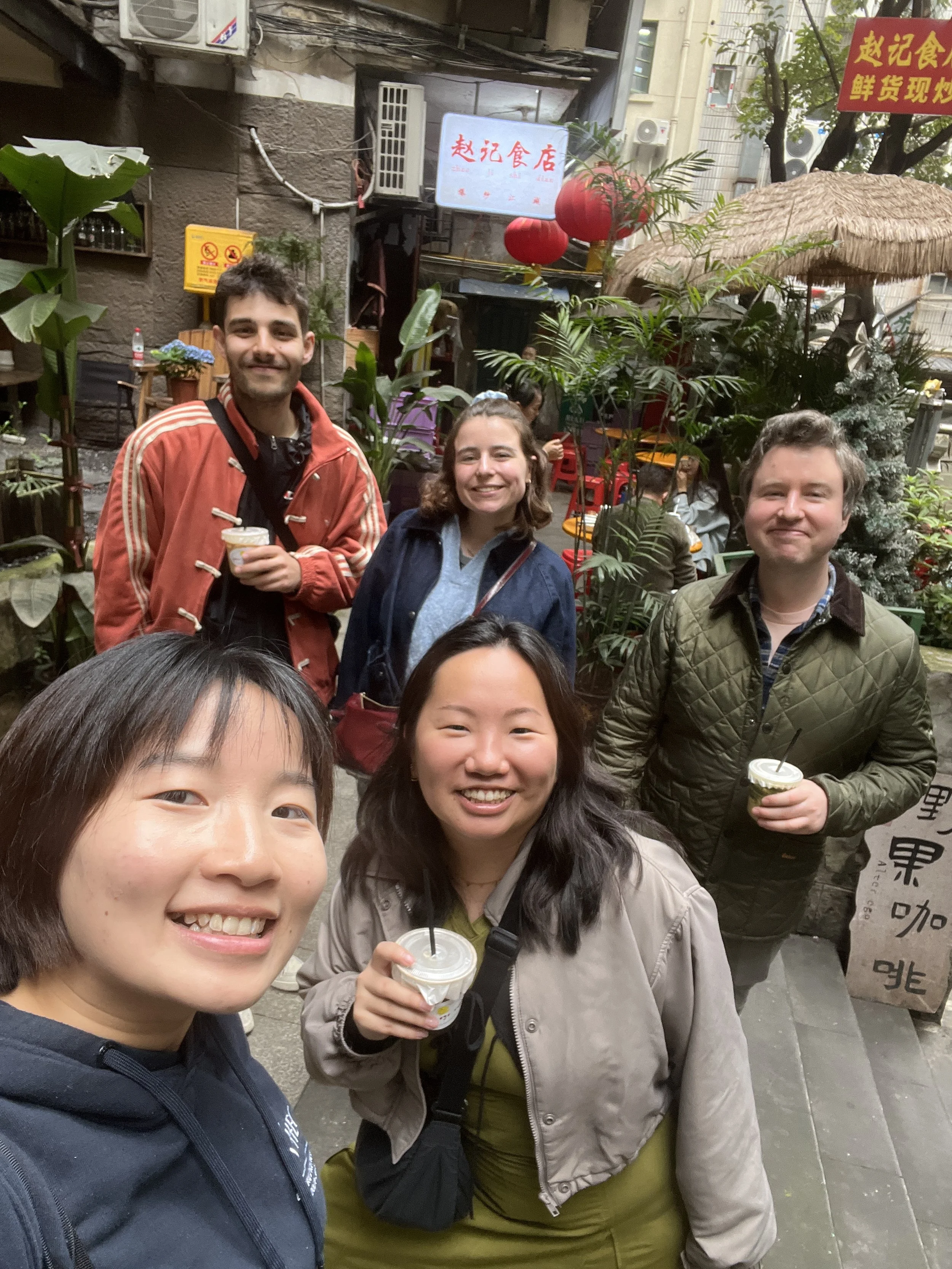
Three hours, six stops, one neighbourhood no tourist goes to.
We start at 6:30pm and eat our way down one street in Houbao, Chongqing locals’ reserved riverside block: hand-folded dumplings, steamed buns, ginger duck noodles, skewers over charcoal, wontons in red oil, and something cold and sweet at the end. Six stops, about a hundred metres apart, in groups of no more than six.
Your guide does the ordering, the translating, and the talking to the owners. When the last bowl is empty we walk five minutes uphill, and the whole river lights up below you.
¥500 per person. This €20 is the deposit; the balance is due on the night by WeChat, Alipay or cash. Message us with your date before you pay and we'll confirm the evening within 24 hours.